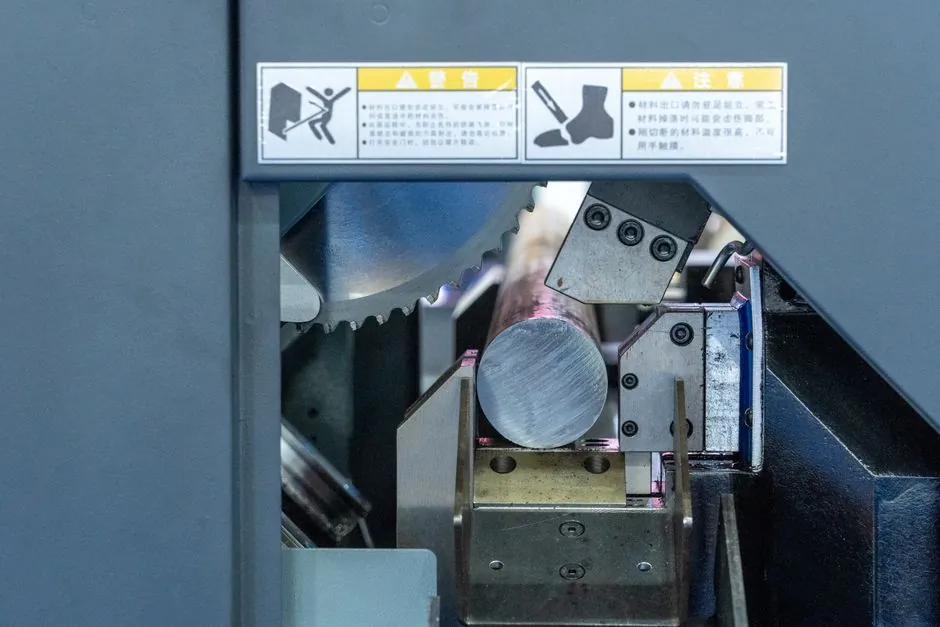
For energy-equipment housings, inverter shells, EV charging module enclosures, and high-power LED heat sinks, cold-chamber aluminum HPDC machines in the 350T-3050T clamping-force band are the dominant selection in 2026, with IATF 16949 / ISO 9001:2015 certification now treated as a baseline supply-side credential [S5][S4].
Energy-equipment buyers typically push the machine specification around four anchors: clamping tonnage matched to projected area, shot weight matched to the heaviest single shot, alloy family (A380 / ADC12 / A360 / 6061), and whether the machine is a cold-chamber HPDC unit or a vacuum-assisted HPDC unit for leak-tight or porosity-sensitive parts [S2][S7].
Why Energy Equipment Drives HPDC Spec Choices
Energy-equipment castings are leakage-sensitive, thermally loaded, and dimensionally tight: inverter housings, PV junction-box bodies, and battery-module end plates all push the same set of process windows [S9]. Aluminum HPDC gives thin-wall capability (typically 2-4 mm) and high thermal conductivity (around 90-120 W/m·K for A380-family alloys), which suits heat-sink and enclosure duty where conventional stamping or plastic molding fails on thermal path or creep [S9][S7].
Selection logic: any casting with a projected area above roughly 400 cm² and a wall below 3 mm usually drops out of gravity die casting economics and into HPDC, because gravity fill cannot sustain the required fill velocity without cold-shut or misrun defects. Buyers who need both thin walls and pressure-tightness typically also rule out zinc die casting machines, since zinc alloys cap out at lower tensile strength and higher density than aluminum [S2][S9].
Clamping Tonnage, Shot Weight, and Machine Class
For energy enclosures and heat sinks, the practical clamping-force envelope sits between 350T and 3050T, which is the working band of the major Asian OEM catalogs sampled for this map [S5]. A 400T cold-chamber unit such as the Shimi 400T machine lists at US$71,143-80,136 per set, giving a real price anchor for small heat-sink and accessory parts [S2]. A Longhua horizontal cold-chamber machine (general-purpose range, not the 431,700 US$/set pot-lamp line) sits in the US$49,685-49,885/set band, useful as a mid-volume reference [S7].
For larger inverter housings and EV charging enclosures, the 800T-2000T class is common, and full line integrations (machine + auto-trim + degassing + molten-metal refining) can run from the US$6,800-7,000 range for ancillary items up to the US$431,700-432,200 range for a complete pot-lamp line [S7]. The Lanson and Longhua catalogs both confirm that machine builders now bundle shot-end controls, hydraulic or servo-driven locking, and robot-extract interfaces as standard, not as options [S8][S7].
Alloy Selection for Energy-Service Castings

For energy-equipment housings where thermal conductivity and corrosion resistance both matter, the working alloys are A380, ADC12, A360, 6061, and 6063, with 6061/6063 favored where the part is also machined or anodized, and A380/ADC12 favored where high fluidity and minimal hot-tearing are the priority [S9]. A360 is the standard pick when the buyer needs pressure-tightness above 1-2 bar, because its lower Fe content reduces the intermetallic stringers that leak under thermal cycling [S9].
Forged or machined billet alternatives (6061-T6) remain stronger but cost more per kg of finished part once section thickness drops below 4 mm, which is why HPDC keeps winning on cost for high-volume energy SKUs [S3][S9]. Buyers who need post-cast T6 tempering should confirm the HPDC cell includes solution-treatment and aging ovens, because HPDC porosity collapses under standard T6 heat-treatment unless the process is controlled [S5].
Process and Quality Controls That Matter
Vacuum-assisted HPDC is now the spec of record for any energy-equipment casting that will see pressurized dielectric fluid, hydrogen, or refrigerant, because it brings casting porosity down to a level that survives helium leak-decay testing at the OEM [S9][S5]. Real-time shot control (variable velocity, vacuum valve timing, die-temperature mapping) is offered by Tier-1 suppliers as a standard feature, not a retrofit, on machines above roughly 800T [S5].
Post-cast operations stack predictably for this sector: shot-blast, CNC mill (5-axis for inverter covers with boss features), leak-test, anodize or powder-coat, and final electrical-isolation test for any part that touches a live busbar [S5][S9]. Buyers who skip in-house tooling or DFM and farm tool-build out usually see 4-8 weeks of additional lead time, which is the single most common program slip on energy OEM builds [S5].
Certification, Capacity, and Supplier Risk
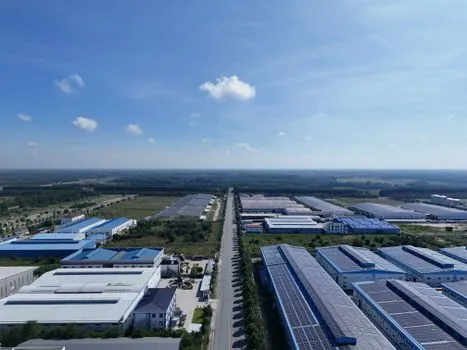
ISO 9001:2015 is now the floor: Bardane Manufacturing (Jermyn, PA) holds ISO 9001:2015 from TUV-Rheinland of North America across a 93,000 sq ft facility running 23 die casting machines with finishing, CNC, drilling, tapping, and minor assembly on site [S4]. For grid-storage, EV, and Tier-1 automotive adjacencies, IATF 16949 is the next gate, and Chinese Tier-1 suppliers (EMP Tech, Shimi, Longhua, Lanson) advertise it on their public profile pages as of 2026-08 [S5][S2][S7][S8].
To compare options cleanly, line the alternatives up against four criteria, as the table below does for three common machine classes in this segment.
For comparison context on adjacent casting selection logic, see the 2026 spec map for gravity die casting in aerospace and the pump and valve gravity die casting spec map, which both lean on the same tonnage and alloy framework but with different acceptance windows.
Where HPDC Is the Wrong Choice
For any energy part with a wall thickness above 6 mm, an as-cast tolerance band above IT12, or a post-weld assembly that will see sustained service above 200°C, HPDC is not the right call: solidification shrinkage on thick sections drives sink marks, and standard HPDC alloys lose meaningful strength above that temperature band [S9]. In those cases, gravity die casting or sand casting with 6061-T6 post-machining is the more defensible route, with a known cap on geometric complexity [S9].
For any part where the buyer is locked to a zinc die casting machine for cost reasons (smaller, decorative, low-mechanical-load housings), the HPDC comparison breaks down: zinc offers tighter as-cast tolerance and longer die life, but caps at roughly 1/3 the tensile strength of A380 and carries 2.6x the density, which is a thermal-mass penalty for any heat-sink duty [S9].
Selection Checklist for the 2026 Energy-Equipment Buyer
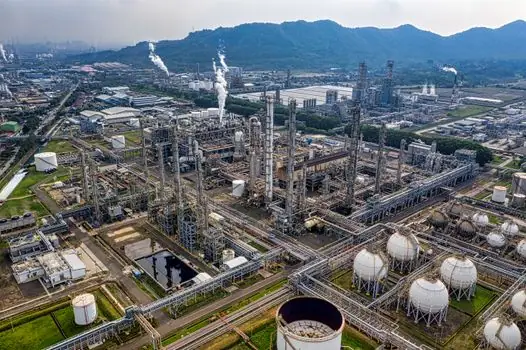
Specify the machine first by projected area, not by clamping tonnage: a 400T machine covers up to roughly 600 cm², an 800T machine up to ~1200 cm², and a 2000T machine up to ~3000 cm² in published catalog envelopes [S5][S2]. Match shot weight to the heaviest part, and require a real-time shot curve (not just a pressure setpoint) on any cell above 800T, because porosity control on energy-equipment castings is a velocity-control problem before it is a tonnage problem [S5].
Lock the supplier list on IATF 16949 + ISO 9001:2015 evidence, in-house DFM, and an audited leak-test station, then require a PPAP or equivalent initial-sample report on the first three lots [S5][S4]. Track two signals: (a) whether the OEM continues to publish IATF 16949 on its public profile after 2026-08-07, and (b) whether die-life perishable-tool KPIs (typical H13 die rated to 80,000-150,000 shots) are quoted in writing with the PO, since those two numbers control the real lifecycle cost more than the machine list price.