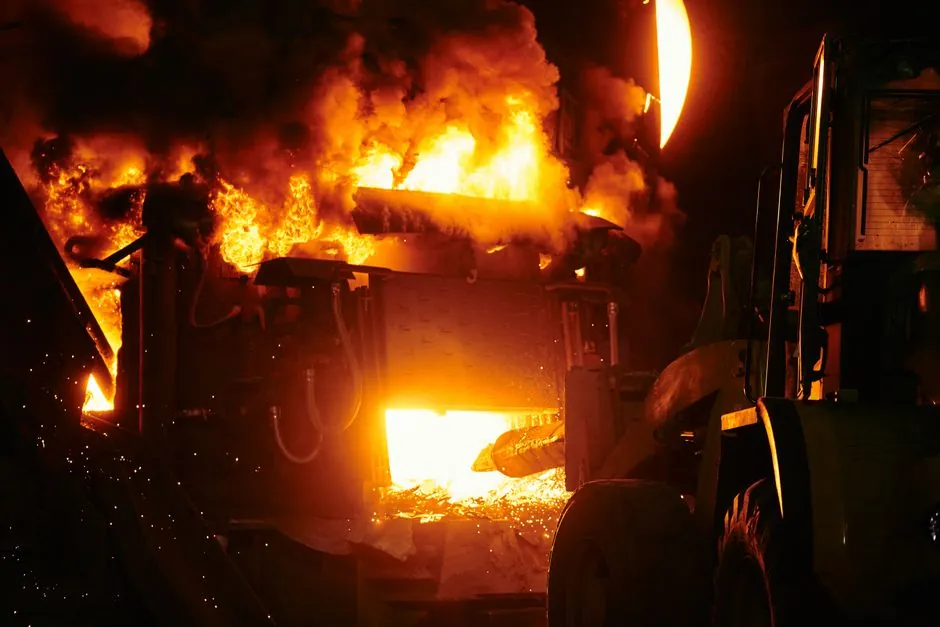
Hardware foundries and contract manufacturers specifying a melting furnace in mid-2026 are running into the same fork: induction mid-frequency for steel/iron, gas or resistance crucible for aluminum and zinc, and electric arc or electron-beam only when refractory chemistry or additive feedstock demands it [S1][S3].
Shandong-based induction furnace makers list medium-frequency melting furnaces, vacuum furnaces, and metal melting furnaces as their standard OEM/ODM catalog, with a product line that also bundles cooling towers, transformers, and diesel generators for turnkey meltshops [S1]. Weifang Jinhuaxin offers a steel-shell induction melting furnace built around a VIP power cabinet, DC smoothing reactor, filter compensation capacitor, and a furnace-tilting control console, the canonical four-block topology of any modern solid-state induction melt supply [S6].
Induction vs. Gas Crucible vs. Arc: Topology Decision Map
Induction mid-frequency furnaces are the default for ferrous hardware, with SCR parallel and series-inverter (one-power-supply-drives-two-furnaces) topologies now common in Chinese OEM catalogs [S3]. The series-inverter arrangement lets one cabinet feed two furnaces simultaneously, a configuration Chinese suppliers flag as their new energy-saving line, and it works because both furnaces share the same DC bus, so harmonic current and reactive power compensation are handled centrally rather than per furnace [S3].
A crucible furnace, either gas-fired or resistance-heated, remains the workhorse for non-ferrous hardware, especially aluminum and zinc die-casting feedstock, where melt cleanliness and low hydrogen pickup matter more than throughput. For steel hardware above roughly 1 ton per pour, gas aluminum melting furnace technology is less relevant, and the choice narrows to coreless induction versus channel induction versus electric arc. Channel induction wins on thermal efficiency at steady state, coreless on flexibility and tap-and-pour cycle time [S1][S3].
Electric arc furnaces, including submerged-arc and electro-slag variants, are reserved for steelmaking shops making ladle refining, copper-steel composite plates, conductive arms, and other metallurgical auxiliaries, not for small hardware batches [S7]. The Tianjin-area OEM cluster lists transformers, electric arc furnaces, generators, and power distribution cabinets together, signalling that arc melt is a power-engineering package, not a standalone iron pourer [S5].
Selection Criteria That Actually Move the Spec Sheet
Four criteria drive furnace choice for hardware work: alloy, melt rate, power-supply topology, and refractory/Shell interface. First, alloy: ferrous hardware (manhole covers, cast iron fittings, conveyor parts) routes to mid-frequency induction [S1][S7]; aluminum and zinc hardware (door hardware, hinges, telecom enclosures) routes to crucible or gas aluminum melting furnace configurations. Second, melt rate: the SCR parallel intermediate frequency melting furnace is sold with explicit working-status and fault display, which signals a design intent for shops that pour multiple small batches per shift and cannot afford long fault-clearing downtime [S3].
Third, power-supply topology dictates how the furnace interfaces with the plant. The new energy-saving series intermediate frequency furnace uses a series inverter circuit, which means a one-to-two (one supply, two furnaces) layout that halves cabinet cost per furnace and centralizes harmonic filtering [S3]. Fourth, the shell itself: aluminum-shell furnaces (intermediate frequency with aluminum shell) are a distinct product family in OEM catalogs, positioned for iron and steel melting where the shell acts as the magnetic screen and the operator-facing frame, lighter than a steel shell but with comparable service life in continuous-foundry service [S3].
Hardware vs. Automotive vs. Agricultural: The Foundry Differentiator
Hardware foundries differ from automotive and agricultural machinery foundries primarily in batch size and alloy spread, not in furnace topology. Automotive hardware foundries pour high-mix steel and iron at 500 kg to 3 t per cycle and need fast tap-to-tap times, so coreless mid-frequency induction dominates. Agricultural machinery foundries pour heavier, lower-mix iron castings and lean toward channel induction or cupola + induction duplexing for thermal efficiency at long soaks. [S1]
For pure hardware work, manhole cover and cast iron fitting makers in the Shandong OEM cluster bundle induction melting with on-site power equipment (transformers, generators) because rural foundries often sit on weak grids and need captive power to ride through induction inrush [S1]. Compared with the Melting Furnace Selection for Automotive Parts spec map, hardware selection is more about grid robustness and alloy breadth than about vacuum or controlled-atmosphere capability. Compared with Melting Furnace Selection for Agricultural Machinery Foundries, hardware selection shifts toward higher switching frequency and faster melt-down for shorter runs.
Refractory Metals, Titanium, and the Additive Hardware Edge Case
When the hardware spec sheet moves to titanium, refractory metals, or additive-manufactured feedstock, the furnace conversation changes entirely. Selective Laser Melting (SLM) and Electron Beam Melting (EBM) of Ti-6Al-4V produce parts with starting surface roughness Sa of about 44.14 micrometres, and laser polishing can bring that down to roughly 3.69 micrometres by re-melting a thin surface layer, but the process is still bound to AM powder-bed hardware, not bulk hardware [S2]. For pure refractory metals (tungsten, molybdenum, tantalum, niobium), SLM remains limited by high cost and complex post-treatment, which keeps electron beam and vacuum arc melting as the upstream stock-making route [S4].
The transverse (axial) gun electron beam melting furnace is a niche variant where the gun chamber is pumped separately, letting the melt chamber sit one to two orders of magnitude higher in pressure than the gun, which extends the range of alloys that can be melted, including high-gas-content materials that would otherwise outgas violently in a single-chamber EB unit. For most hardware work this is overkill, but for titanium or refractory fasteners, medical hardware, and aerospace architectural hardware where the upstream ingot quality is the gating factor, EB or vacuum arc is the only credible feedstock path [S2][S4].
Standards, Sourcing, and Sizing Pitfalls
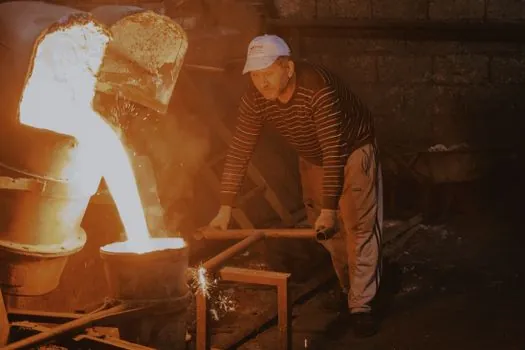
Hardware buyers sourcing from Chinese OEM/ODM manufacturers should anchor on three signals: ISO 9001:2015 certification status, OEM/ODM R&D capacity disclosure, and explicit component-list transparency on the melt supply (power cabinet, DC reactor, compensation capacitor, tilting control). Made-in-China factory pages for steel-melting-oven suppliers list management certifications and R&D capacity as filterable fields, which is the minimum evidence to demand before RFQ [S1]. Tianjin arc-furnace and transformer vendors are typically OEM/ODM and offer sample service on the transformer side, which doubles as a sanity check on the supply chain [S5].
Sizing pitfalls are concrete. First, do not size the furnace on nameplate melt rate alone; SCR parallel and series-inverter units behave differently at part-load, and the one-to-two series-inverter can show uneven power sharing if the two furnace loads are mismatched [S3]. Second, do not pair a steel-shell furnace with a high-resistivity slag-heavy iron charge without verifying the refractory and shell cooling interface; Weifang Jinhuaxin's steel-shell unit is built around a tilting console, which is a useful feature for slag-skim workflows but only if the shell-rim refractory is rated for the tilt cycle count [S6]. Third, when the building pipe hardware spec requires leaded or low-melting alloys, gas crucible and resistance crucible remain the most controllable route, and induction loses ground on account of stir losses and electromagnetic force on the melt surface.
Trackable signals for the next procurement cycle: the spread of series-inverter one-to-two induction supplies beyond the current Chinese OEM cluster into Indian and Southeast Asian hardware foundries, and the gradual displacement of single-chamber EB melting by axial-gun EB units for titanium hardware ingots. Both are worth monitoring on the same Made-in-China and OEM factory channels that surface the standard induction and arc-furnace catalogs [S1][S5][S9].