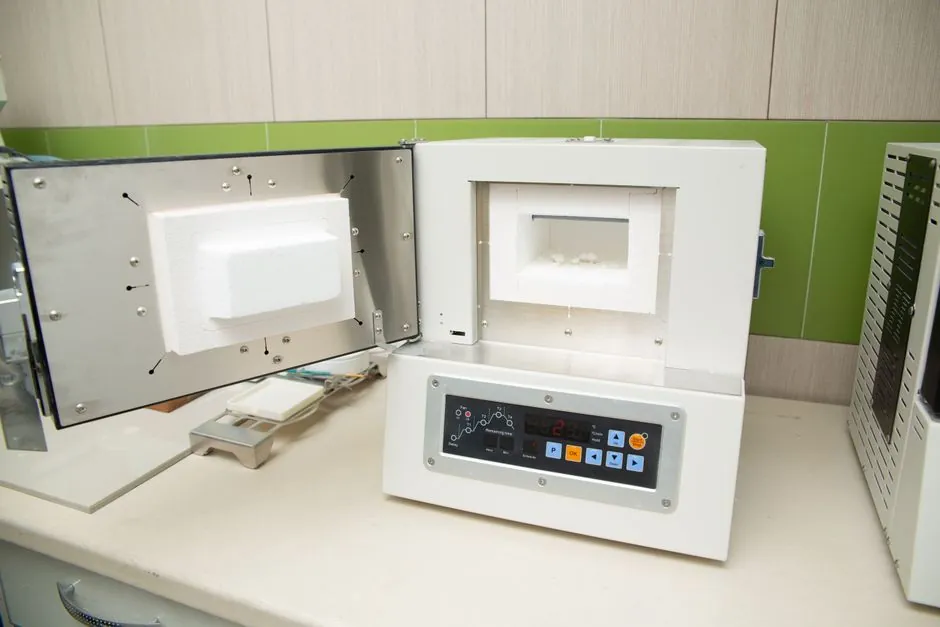
Electronics housings in 2026 are dominated by aluminum and zinc die-cast enclosures, and the induction furnace class covers roughly 80% of new foundry builds serving this segment [S2][S3].
Selection drivers are alloy purity, electromagnetic cleanliness, batch size (100–1000 kg typical), and refractory strategy; a 1000 kg medium-frequency coreless unit is the workhorse SKU for housing lines, per [S3].
Alloy-to-Furnace Class Matching
Aluminum A380, ADC12, and A383 housing alloys melt at 580–660 °C, which sits inside the standard operating window of medium-frequency (MF) coreless induction furnaces, and IGBT-stacked units are now specified where melt rate stability matters [S2].
Zamak 3, 5, and 7 zinc housings melt lower (380–420 °C) and are commonly processed in crucible furnace top-hold or push-out configurations sized 250–800 kg, matching die-casting machine shot sleeves [S4].
Magnesium and copper-brass housings push furnace selection toward higher-frequency units with vacuum or protective-atmosphere options; copper brass melts are explicitly listed by at least one major Chinese OEM as a standard induction product line [S2].
Capacity and Topology Trade-offs
For housing tonnages below 200 kg per shift, IGBT medium-frequency stacks of 50–160 kW cover the duty cycle, with melt rates of 60–150 kg/h per 100 kW of coil power on aluminum [S5].
Mid-volume lines (200–800 kg) run 250–500 kW MF coreless furnaces, and Xinxing's 1000 kg MF coreless model is a common foundry reference SKU in the Chinese supplier base [S3].
High-mix contract foundries serving NPI and EMC pre-compliance often pair a holding furnace of 300–500 kg alongside the melter, smoothing temperature for thin-wall housing walls and limiting dross generation on A380/ADC12 [S4].
Comparison: Main Furnace Options for Housing Foundries
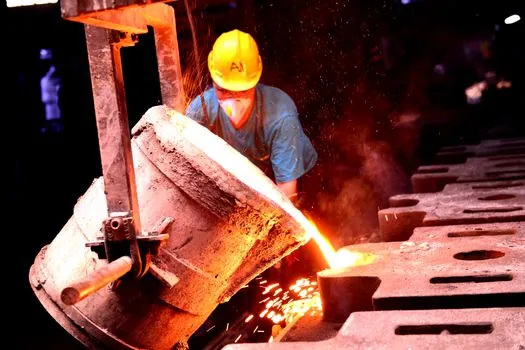
Four furnace types compete for electronics-housing work, and the decision sits on alloy, batch size, and ambient-noise constraints, not headline kW: the gas aluminum melting furnace suits large foundries with cheap gas, the melting furnace coreless induction is the default for EMC-sensitive enclosures, the cupola furnace is rarely used for aluminum housings due to iron pickup, and crucible or induction furnace IGBT builds dominate NPI and small-batch jobs [S1][S2][S3][S4][S5].
On melt rate per kW, gas reverberatory holds the lead on large aluminum batches but loses on thermal efficiency at small batches, while IGBT MF coreless holds ±1% power stability in steady state and is preferred for thin-wall housing repeatability [S2][S5].
Refractory and Lining Discipline
Acid (silica-based), neutral (alumina), and alkaline (magnesia) refractory families are all stocked by major induction-furnace OEMs and matched to alloy chemistry; aluminum housings typically use neutral or slightly acid linings, while zinc housings run acid linings with low iron content to avoid contamination [S2].
Lining life on a 500 kg MF coreless furnace serving A380 is commonly reported at 300–600 heats before re-ramming, depending on flux practice, and the spare-parts category on major OEM catalogs lists ramming mix, inductors, and coil rope as recurring consumables [S5].
Power Topology and Controls

Newer IGBT medium-frequency cabinets run 1–2 kHz switching with water-cooled copper coils, replacing older SCR parallel intermediate-frequency stacks and reducing harmonic distortion on the plant bus [S5].
Shennai's IGBT product family is explicitly framed for melting steel, stainless steel, copper, aluminum, gold, and silver in one cabinet platform, which makes the topology attractive for foundries running mixed alloy campaigns [S2].
Closed-circuit counter-flow cooling towers are sold as paired auxiliary equipment for MF and IGBT induction cabinets, sized to the kW loss budget of the coil and rectifier [S2].
Who This Spec Fits, and Who It Does Not
Job shops under 5 heats per day, or labs running Zamak 7 prototypes, are better served by a 50–100 kW crucible furnace with push-out hydraulics rather than a 500 kW coreless investment [S4].
For high-volume steel or stainless housing lines, the induction path loses to electric arc and gas-fired reverb choices, and specifying MF coreless there inflates capex without throughput gain [S2].
Limitations and Failure Modes
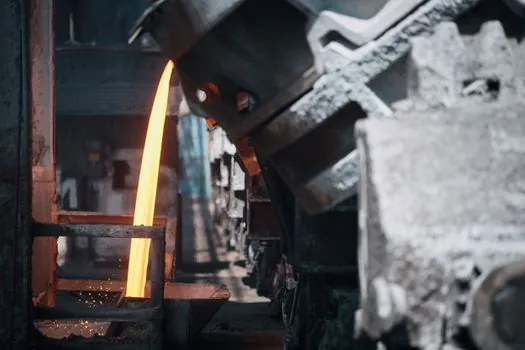
Coil grounding faults and water-leak shorts are the dominant MF coreless failure modes reported by Chinese induction OEMs, and preventive maintenance cycles on coil rope, capacitor banks, and thyristor/IGBT modules are typically scheduled at 500–1000 hours [S5].
Aluminum housings with EMC/RFI shielding requirements are sensitive to melt turbulence and inclusions; foundries serving that segment increasingly insist on filter-grade dross removal and tilt-pour transfer rather than ladle-to-ladle handling [S2].
Sourcing and Standards Notes
Verified Chinese suppliers for housing-foundry furnaces include Xinxing Casting Technology Development Department (Hubei, est. 2004, 11–50 employees), Shennai Power Equipment (Luoyang, 20+ years R&D), and Sanmenxia Henghe Electric Technology (Henan, est. December 2012, registered capital 5 million yuan) [S1][S2][S3].
For readers building out adjacent spec maps, the related Melting Furnace Selection for Automotive Parts: Specs, Alloys, and Sourcing Map covers higher-tonnage aluminum and iron-housing alloys, while Melting Furnace Selection for Hardware Manufacturing: Alloy, Capacity, and Topology extends the topology discussion to general hardware. Zinc-die-cast lines pairing these furnaces should also reference Zinc Die Casting Machine Selection for Energy Equipment: 2026 Spec Map.
Track next: IGBT cabinet price-per-kW versus SCR parallel on Q1 2027 supplier quotes, and whether Chinese OEMs publish standardized lining-life curves per alloy class, since both directly move housing-foundry capex models.