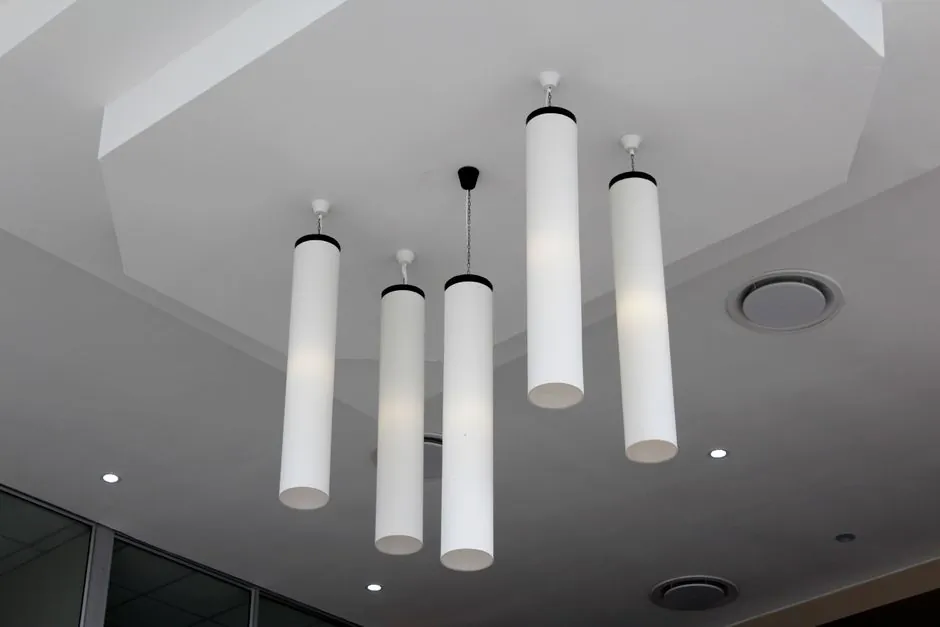
For lighting fixtures, an aluminum die casting machine in the 88–500 ton locking-force class is the default specification, with cold-chamber high-pressure die casting (HPDC) running at 7–350 MPa injection pressure and shot-sleeve metal held between 650°C and 700°C [S5][S1].
The lighting segment is a pressure-tight, thermal-management driven application: heat sink fin geometry, LED junction heat extraction, and outdoor IP-rated enclosures all favor thin-wall, complex-net-shape aluminum parts over extruded profiles or permanent-mold castings [S3][S4]. Elimold lists 88T–500T die-casting machines dedicated to indoor and outdoor lighting parts, while Kalkancı runs a high-pressure aluminum line tied to streetlight and architectural-lighting production [S1][S4].
Cold-Chamber HPDC vs Hot-Chamber vs Gravity for Lighting
Cold-chamber high-pressure die casting is the correct process for aluminum lighting parts, because the alloy melt is held in a separate furnace and ladled into the shot sleeve, avoiding the iron pickup and short die life that hot-chamber would impose on aluminum alloys above 660°C [S5].
Hot-chamber die casting reaches about 500 parts per hour and is used for zinc and magnesium alloys, not for the AlSi/AlCu families that dominate LED heat sinks, so it is the wrong machine class for lighting [S5]. A gravity die casting machine is appropriate only for simpler, thicker-walled outdoor housings where the production rate (~20–30 parts/hour per station) and the lower tooling cost outweigh the surface and tolerance benefits of HPDC [S5][S4].
Locking Force, Shot Weight, and Tonnage Sizing
Locking force on production die casting machines spans 1 tonne to 5000 tonnes, with the bulk of installed HPDC equipment worldwide in the 250–2400 tonne range, so a 500 tonne ceiling as quoted by Elimold sits in the small-to-mid envelope used for lighting-scale parts [S5][S1].
Projected area is the practical sizing rule: required locking force equals projected shot area (cm²) × specific injection pressure (MPa) ÷ machine efficiency, with lighting heat sinks typically in the 200–800 cm² projected area and 60–100 MPa effective cavity pressure after intensification losses. For a streetlight head or high-bay heat sink weighing 0.4–3.0 kg, a 160–500 ton cold-chamber machine is the normal fit, and a 88 ton press is only viable for small MR16 or downlight bodies under roughly 0.3 kg shot weight [S5][S1]. Reference data for die casting machine classes show that under-sizing the locking force is the single most common cause of flash and die deflection on thin-wall lighting parts.
Alloy Selection, Thermal Conductivity, and Heat-Sink Geometry
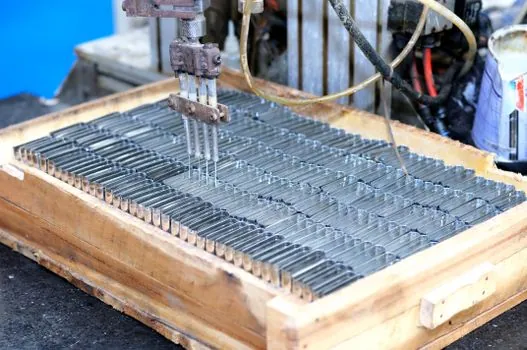
Aluminum die casting delivers the heat-spreading mass LED junctions require, because AlSi9Cu3, AlSi12, and A380-class alloys combine thermal conductivity in the 90–150 W/(m·K) range with the castability needed for finned heat-sink geometry [S3][S4][S7].
LED package datasheets tie lumen maintenance (L70/L80) to junction temperature, and a die-cast aluminum body can hold the junction 15–25 K below an equivalent plastic or steel housing at the same drive current, which is why outdoor and industrial LED luminaires have moved almost entirely to die-cast aluminum bodies [S3][S7]. For a 100 W LED high-bay, a die-cast heat sink in AlSi12 with 0.8–1.5 mm wall sections and 12–20 fins typically pulls 0.4–0.8 kg of aluminum and is shot in 8–14 seconds on a 400 ton press; the magnesium die casting machine class is occasionally substituted for weight-critical track-light heads where every 100 g matters, at the cost of corrosion and thermal conductivity trade-offs [S3][S5].
Process Comparison: HPDC vs Extrusion vs Permanent Mold for LED Bodies
HPDC, aluminum extrusion, and permanent-mold gravity casting each answer a different lighting geometry, and choosing the wrong one is the most expensive mistake in fixture sourcing [S6][S3].
Die-cast aluminum wins on three criteria: (1) integrated heat-sink features cast in one piece, (2) wall sections down to 1.0–1.5 mm at acceptable porosity, and (3) net-shape threads and lens seats that eliminate secondary machining. Extrusion is cheaper per kilo for long, straight profiles (linear pendant lights, T5/T8 housings) but cannot produce the radial fin pattern on a downlight or the sealed driver cavity on a streetlight head [S6]. Permanent-mold gravity casting, including the vacuum die casting machine variant, suits thicker outdoor enclosures above 3 mm wall where porosity and pressure-tightness matter more than cycle time, and where runs of 5,000–50,000 parts justify the higher per-part mold cost [S5][S4].
Defects, Tolerances, and Outdoor IP Rating Constraints
Lighting die castings must pass IP65/IP66 ingress tests for outdoor service, which means porosity below 1% by area on pressure-tight sections and surface roughness typically Ra 3.2–6.3 µm as-cast, dropping to Ra 1.6 µm after light shot-blasting [S1][S4].
The failure modes that disqualify a machine selection are predictable: under-sized locking force causes flash on the parting line, low intensification pressure produces cold-shut and misrun on thin fins, and excessive slow-shot velocity traps gas porosity that later leaks under IP testing [S5][S4]. Vacuum-assisted HPDC drops porosity below 0.5% and is the documented fix for streetlight driver compartments that must hold IP66 over a 10-year service life, with a typical cycle-time penalty of 10–15% versus conventional HPDC [S5].
Tooling Steel, Cycle Time, and Volume Economics
Aluminum HPDC dies are machined from hot-work tool steel (H11, H13, or DIN 1.2344 class) and are expected to reach 80,000–150,000 shots before major refurbishment on a lighting part, which sets the economic break-even for HPDC at roughly 3,000–5,000 parts versus gravity casting [S5][S4].
Cycle time on a 400 ton cold-chamber press for a typical 0.8 kg streetlight heat sink runs 30–45 seconds, giving an 8-hour-shift output of 640–960 parts per cell, and lighting foundries commonly stack 4–8 cells behind one central melting/holding furnace to amortize the 650–700°C melt logistics [S5][S1]. Elimold reports a production rate of roughly 20,000–30,000 castings per month from its lighting-dedicated cell block, a figure consistent with the cycle times above and the 88T–500T tonnage mix it lists [S1]. For low-volume architectural runs under 1,000 parts, zinc die casting machine cells or 3D-printed sand molds are sometimes substituted to dodge HPDC tooling cost, but the thermal performance and outdoor durability of the resulting fixture no longer match a die-cast aluminum body [S3][S5].
Two trackable signals for sourcing teams through Q4 2026: published cycle-time and porosity data from the 400 ton class vacuum-assisted cells now running in Turkish and Chinese lighting foundries, and any IP66 outdoor-lighting RFQ that lists vacuum HPDC as a mandatory process note, since that wording has shifted from optional to required across European streetlight tenders since 2024 [S4][S5].
Background reading: Aluminum Die Casting Machine Selection for Aerospace Components.