
Automotive buyers specify aluminum die casting machines on four hard numbers: clamping force (tonnage), shot weight, dry cycle time, and the alloy the machine must run, with cold-chamber high-pressure die casting (HPDC) handling roughly 80% of structural and powertrain aluminum volume in passenger vehicles [S4].
The selection is driven by part geometry more than by tonnage alone. A 600-ton-class HPDC cell is the workhorse for engine blocks, transmission cases, and large structural nodes; a 160-300 ton cell covers brackets, covers, and inverter housings weighing 1-5 kg; sub-160-ton machines are reserved for thin-wall trim and zinc hot-chamber work [S1].
Hot-chamber vs cold-chamber: the first fork
Hot-chamber die casting machines keep the molten metal inside an integrated furnace and inject it through a gooseneck, which is fast but limited to lower-melt alloys such as zinc and magnesium, with aluminum generally excluded because molten aluminum dissolves the cast-iron gooseneck and plunger [S4]. Cold-chamber HPDC machines use a separate furnace and ladle the melt into a shot sleeve, then inject at 1,500-25,000 psi (10-170 MPa), which suits aluminum alloys poured at 660-720 °C [S2].
For an automotive program that is mostly aluminum (engine housings, EV motor cases, battery tray struts, suspension nodes), a cold-chamber aluminum die casting machine is the default; hot-chamber cells are kept on the floor only for zinc seatbelt retractors, door lock housings, and small pulleys, which together still account for roughly 28% of automotive die cast part count despite their small mass share [S4].
Tonnage, shot weight, and projected area
Clamping tonnage is sized from the projected area of the casting at roughly 4-6 tons per square inch of projected area for HPDC, so a 600-ton machine comfortably locks a part with 100-150 in² (650-970 cm²) of projected area, which is the bracket many engine block and rear underbody programs land in [S1]. Shot weight is set by the cold-chamber sleeve volume: a 600-ton class machine typically ships with a 10-15 kg shot sleeve, while 1,600-9,000 ton mega-presses (giga-cast cells) carry sleeves above 50 kg to fill single-piece rear underbodies and front floor pans [S3].
Cycle time at the automotive high-volume tier is 60-90 seconds per shot for a 600-ton part and 15-60 seconds for sub-5 kg brackets, with the entire fill phase taking under 100 ms in HPDC to keep the metal liquid through thin walls [S2]. Wall thickness routinely drops to 1.0-1.5 mm on modern high-vacuum HPDC cells, which is what makes the part consolidation economics work; a single casting replaces a 6-12 piece stamped and welded assembly in many EV programs [S2].
Alloy selection and process compatibility
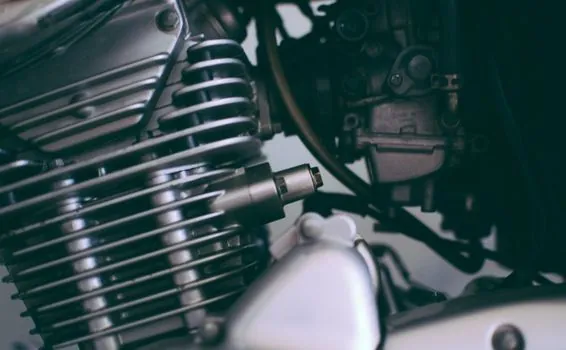
Common automotive die casting alloys are AlSi9Cu3, AlSi10Mg, and AlSi7Mg, picked for fluidity, corrosion resistance, and post-cast heat treatment response; the AlSi10Mg family is the dominant choice for structural EV nodes that go through T6 or T7 heat treatment [S2]. Vacuum-assist HPDC drops trapped gas porosity below 1% volume, which is what unlocks weldable and heat-treatable structural castings that would have failed ultrasonic inspection on a conventional cell [S5].
For programs that need the lightest possible mass and the highest ductility, a magnesium die casting machine is sometimes pulled into the mix for seat frames and steering columns, but corrosion and melt-handling cost keep magnesium at a single-digit share of total automotive die cast weight, with aluminum carrying the structural load [S4].
Decision criteria: matching the cell to the part
Three decision criteria separate the options cleanly. By tonnage: sub-300 ton for trim and small covers, 300-800 ton for typical powertrain and chassis nodes, 800-9,000 ton for gigacast structural panels [S3]. By alloy: cold-chamber HPDC for all common automotive aluminum alloys, hot-chamber only for zinc and small magnesium hardware, vacuum die casting machines reserved for safety-critical structural nodes that need heat treatment and welding [S5]. By part count and post-processing: a high-vacuum HPDC cell is justified only when downstream CNC, impregnation, and X-ray inspection are already on the line, otherwise conventional HPDC is the lower-cost default [S2].
The cost crossover is where this lands. A 600-ton conventional HPDC cell with 10-15 kg shot capacity typically supports programs in the 50,000-300,000 parts per year range; below that, a gravity die casting machine on a low-volume line is often more economical because the die cost is a fraction of an HPDC die and the cycle penalty is tolerable at low volume [S4].
Market signal: structural and EV programs pulling the install base
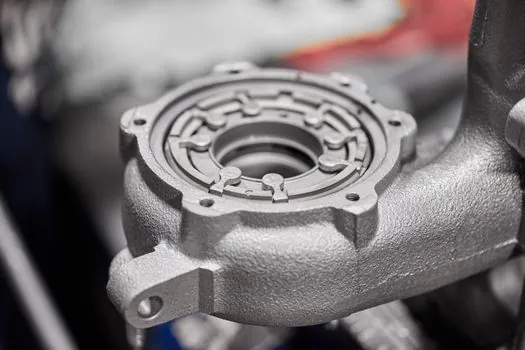
The aluminum die casting machine market is being pulled upward by automotive structural programs rather than by engine and transmission volume, which are flat to declining in internal-combustion markets. Mordor Intelligence tracks the global automotive parts die casting segment at the multi-billion-dollar scale with aluminum expanding its share of part count and mass alike [S7], and Fortune Business Insights lists automotive structural components, engine housings, and transmission cases as the three named demand drivers for HPDC machine orders [S3].
The directional signal is consistent across the source set: aluminum content per light-duty truck is forecast to reach roughly 550 lb (250 kg) by 2026, and full-EV programs such as the Model S class already use over 800 lb (360 kg) of aluminum across castings, extrusions, and body panels [S2]. That is the volume pulling the 600-9,000 ton HPDC order book forward, and it is also what makes the giga-cast machine class a distinct procurement category from conventional HPDC [S3].
Selection checklist for a new automotive cell
Five items a process engineer should pin down before issuing a purchase order: (1) projected area and required clamping tonnage at 4-6 ton/in² for HPDC; (2) shot weight and sleeve size, with a 20-30% safety margin above the heaviest part in the program; (3) dry cycle time and the realistic wet cycle after die spray, ladling, and cooling; (4) vacuum system and vacuum level target (typically below 50 mbar in the cavity) if the part is structural or heat-treated; (5) integration with downstream trimming, CNC, impregnation, and X-ray, since a die casting cell's throughput is set by the slowest station on the line [S2][S5].
Two trackable signals to watch over the next procurement cycle: giga-cast machine order announcements above 6,000 ton clamping force, which indicate further structural-part consolidation on new EV programs [S3], and vacuum-HPDC retrofit programs on existing 600-900 ton cells, which indicate suppliers are chasing weldable aluminum nodes without standing up greenfield capacity [S5]. Mold base sourcing for these cells, including plate stack-up and steel grade, is covered separately in a mold base selection spec map that pairs naturally with the machine selection work above.