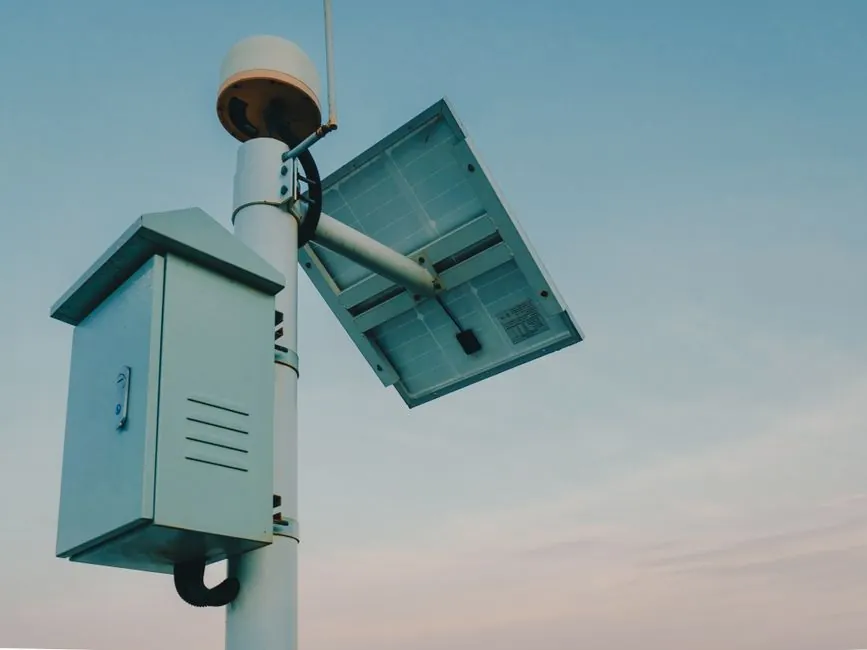
Outdoor telecom enclosures in 5G, fiber, and roadside-cabinet duty cycles are increasingly specified as aluminum gravity die castings rather than high-pressure die castings when the production batch sits in the low-to-medium range, wall sections run 3-10 mm, and the design needs to survive T6 heat treatment without blistering [S2][S5].
Engineers picking a gravity die casting machine for a remote radio unit (RRU), fiber optic junction, or pole-top power module are not buying a generic casting cell; they are buying a fill-and-solidify control system that delivers the metallurgical density a sealed outdoor enclosure demands, and the wrong choice shows up as porosity, leak paths past gaskets, or distorted parts after solution heat treat [S2][S6].
Why Gravity Casting Wins for Sealed Outdoor Telecom Housings
Gravity casting's slower, top-fed fill produces dense parts with very low internal porosity, and that density is exactly what an IP-rated outdoor enclosure needs to hold vacuum against gasket grooves and survive decades of thermal cycling on a tower [S1][S2]. The slower fill cycle, 2-10 minutes per shot versus 10-60 seconds for pressure die casting, is not a productivity penalty so much as a metallurgical decision: lower fill velocity means less entrapped gas, which means a part that can be T6 heat-treated without blistering [S2][S5].
For telecom duty the practical implication is that a properly run aluminum die casting machine set up in gravity (permanent-mold) mode can deliver a structurally sound housing where a high-pressure cell of the same tooling cost would trap gas in the wall and reject on pressure-tightness testing [S1][S2]. A356-T6 cast test bars hit 290 MPa tensile, 210 MPa yield, and 4% elongation per EN 1706, a property combination that lets the same part carry mounting loads, sink heat from internal RF modules, and resist salt-air corrosion once powder coated [S5].
Process Selection: Gravity vs. Low Pressure vs. High Pressure Die Casting
The first decision on the shop floor is which casting process sits inside the die casting machine platform. Each option trades fill energy for part quality, and the trade-off maps cleanly onto telecom-enclosure geometry [S2][S5].
High-pressure die casting injects molten aluminum at 150-1200 bar (roughly 2,175-17,400 psi) and finishes a cycle in 10-60 seconds, but the rapid fill traps gas and makes T6 heat treatment risky because trapped gas expands and blisters the wall [S2][S4]. Low-pressure die casting pushes metal up through the gate under a few bar of regulated pressure and sits in the middle of the spectrum; gravity casting relies on a head of metal in a top basin and uses no injection pressure at all [S5]. For telecom housings with wall sections in the 3-10 mm band and runs below the high-volume threshold, gravity casting is the conservative default; above that threshold, and with walls thinning below 3 mm, high-pressure wins on per-part cost despite the porosity penalty [S2][S5].
Comparison against four selection criteria for an outdoor telecom enclosure:
Fill energy / porosity risk: Gravity (lowest) beats low pressure (low-medium) which beats high pressure (high, with T6 blister risk) [S2]. Wall section range: Gravity 3-10 mm, low pressure 2-6 mm, high pressure 1-5 mm [S2]. Cycle time: Gravity 2-10 min, low pressure 1-3 min, high pressure 10-60 s [S2]. Tooling cost vs. volume breakeven: Gravity suits low-to-medium volume, high pressure demands high volume to amortize the die [S2][S5].
Machine Specs That Matter for Enclosure Production
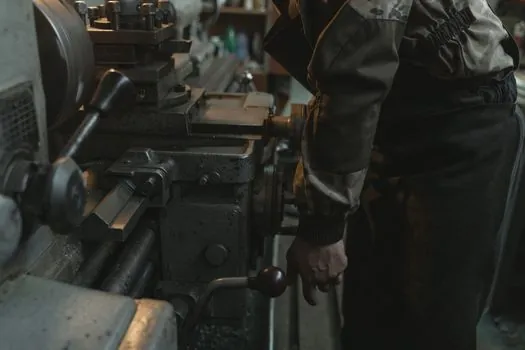
Selection pivots on four machine parameters once the process is fixed. Clamping force, permanent-mold preheat capacity, tilt-pour mechanism, and shot weight per cycle together determine whether a given cell can hold a 3-10 mm wall section and survive T6 [S5][S6].
Permanent-mold preheat to 200-300 °C is a hard requirement, not an option; below that range the molten aluminum skins over before the cavity fills and the part runs short, above it the die face erodes fast and lubricant breaks down [S5]. A tilt-pour table, rotating the die from horizontal to vertical during fill, removes operator-dependent turbulence and is the variant most engineers specify for telecom housings where radiographic or pressure-tight QC is in the inspection plan [S5]. T5 or T6 heat treatment follows trimming and shot blasting for alloys such as A356 that respond to precipitation hardening, and the cell must be paired with a heat-treat furnace capable of solution soak around 535 °C and artificial aging near 160 °C, the standard A356 T6 schedule [S5].
For zinc or zinc-aluminum telecom hardware, a zinc die casting machine running hot-chamber die casting remains an option for thin-wall, high-volume parts under 3 mm wall, though it loses to aluminum on heat dissipation and corrosion margin for outdoor use [S3]. Magnesium is light and EMI-shielding-friendly but trades corrosion resistance for weight, so a magnesium die casting machine is rarely the first pick for coastal or industrial-atmosphere tower sites [S3].
Alloy and Section Design for Telecom-Duty Enclosures
A356 is the workhorse for structural gravity castings, and in the T6 temper it delivers the strength-to-weight and ductility combination that outdoor telecom hardware needs [S5]. Cast test bars in A356-T6 reach the EN 1706 minimums of 290 MPa tensile, 210 MPa yield, and 4% elongation, numbers that bracket the static and fatigue loads an RRU housing sees at the tower top [S5].
Section design has to follow gravity-casting rules rather than high-pressure rules. Minimum wall sits at 3 mm to avoid misruns, maximum at 10 mm before shrinkage porosity starts to dominate, and the drawing review has to lock down gate and riser placement before tooling is cut so shrinkage feeds toward the riser and not the functional wall [S2][S5]. The same cast surface that survives T6 also takes a powder-coat or chromate-conversion topcoat that delivers the secondary corrosion barrier for marine and industrial atmospheres, important because aluminum's natural oxide skin alone is not enough for salt-air exposure on coastal cell sites [S1].
Thermal conductivity is the second design driver: aluminum draws heat away from 5G baseband and RF front-end modules as a passive heat sink, eliminating fan maintenance in unmanned roadside cabinets, and that thermal path only works if the casting is dense and the wall-to-fin transition is metallurgically clean [S1][S5].
Failure Modes and QC Gates Before Tooling Release
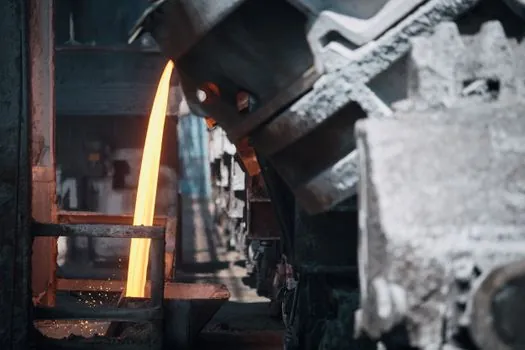
The recurring failure modes for a poorly specified gravity cell are misrun, shrinkage porosity, blistering after T6, and leak paths past machined gasket faces, and each one has a spec-level gate that has to be written into the supply agreement before the first sample is poured [S2][S5].
Pressure-tightness testing, typically a helium leak check or a water-submersion test on the as-machined housing, is the final QC gate and the one that catches fill-related porosity that visual inspection misses; the same gate is what rejects a high-pressure die casting converted to a telecom housing when trapped gas sits under a gasket groove [S1][S2]. Dimensional tolerance on a gravity cell lands around ±0.1 mm in well-controlled tooling, with surface finish in the Ra 0.8-3.2 μm band before secondary machining, which is adequate for gasket-seal faces once a light CNC skim is added at cable-entry pockets [S2].
Tooling-cost protection comes from a DFM review before steel is cut: confirm gate and riser placement, confirm the preheats station can hold 200-300 °C across a full shift, and confirm the heat-treat furnace can run a verified T6 cycle for the chosen alloy, since rework on a misrun die is the line item that kills the project budget [S5]. For shops adding enclosure work alongside an existing casting line, the mold base selection guide covers the plate-stack and steel-grade decisions that determine whether the permanent mold survives 20,000-50,000 shots without cracking.
Standards, Sourcing, and Volume Economics
No single international standard governs telecom-enclosure casting selection, but the alloy property brackets cited in EN 1706 for A356-T6 are the de facto reference for any European or APAC OEM spec, and telecom operators generally add their own environmental clauses (IP rating, salt-fog exposure hours, operating temperature window) on top of the casting spec [S5].
Volume economics divide the supplier landscape into two camps. For low-to-medium production runs in the hundreds to low thousands per month, a gravity cell on a permanent mold with moderate tooling cost is the breakeven winner; for tens of thousands per month, a high-pressure die casting machine on a multi-cavity die amortizes the higher die cost across enough parts to undercut the per-unit gravity price, and the porosity penalty is accepted in exchange for cycle time [S2][S3]. For telecom enclosures that need both T6 strength and vacuum-tight gasket faces, gravity casting is the safer process even at higher unit cost, because the cost of one field failure on a tower is several orders of magnitude above the per-part price difference [S1][S2].
Sourcing typically routes through foundries running tilt-pour permanent-mold cells, with CNC machining, powder coating, and IP-rated gasket assembly as downstream steps, and the procurement checklist should confirm mold preheat instrumentation, heat-treat furnace records per batch, and pressure-test pass rates before the first production lot is released [S5][S6].
The next trackable signals to watch are any EN 1706 or A356-T6 property-table revisions from CEN, plus OEM RFQs that bundle T6 heat treatment with pressure-tightness testing as a single acceptance gate, since that combination is the strongest indicator that gravity casting is the specified route for the next wave of outdoor 5G enclosure contracts.