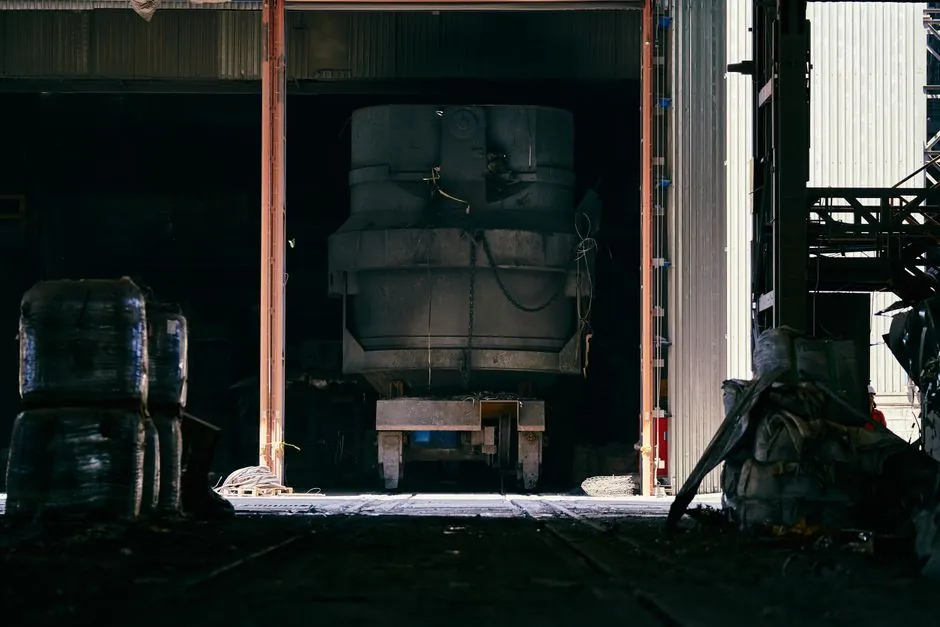
High-pressure die casting machines for EV structural castings have scaled from 6,000 t locking force in 2020 to operating 9,000 t, 12,000 t (with double injection), and 16,000 t units, with 20,000 t machines announced for full-car underbody production [S1].
Chinese OEMs including NIO, ZEEKR, HiPhi, and Xiaomi are running giga-casting lines at 13,000 t, up from the original 4,000-6,000 t generation, while Tesla's Cybertruck rear underbody reportedly uses only a 6,500 t press versus the 8,000 t first expected [S1][S2].
Locking Force Tonnage: Where the Capacity Curve Stands
Most legacy structural aluminum die castings, including shock towers, cross members, and large battery enclosures, are still produced on DCMs of up to 4,500 t locking force; giga-casting is defined operationally as >6,000 t, with 3,000-6,000 t machines handling larger body-in-white and enclosure castings, and sub-3,000 t presses reserved for single-cavity parts like shock towers or pillars [S1]. The single-shot shot weight of Tesla's 6,000-9,000 t cold-chamber Giga Press is around 80 kg of molten aluminum injected at roughly 10 m/s [S6]. A 12,000 t machine can pour a single casting large enough to replace a multi-piece front or rear underbody; the announced 20,000 t class is targeted at full-car underbody geometry, which explains why typical cycle times cluster at 80-90 seconds per shot, or 40-45 parts hourly, and a fully utilized press is reported to deliver roughly 1,000 castings per day [S1][S5]. On the aluminum die casting machine reference page, locking force bands are split into three working ranges that match this segmentation.
Throughput Economics vs Conventional Stamped-and-Welded Bodies
Tesla's Model Y replaces the Model 3's 170+ stamped sheet-metal pieces and 1,600+ welds with a single front and rear gigacasting, collapsing part count by roughly 99% for the underbody structure [S4][S6]. Research cited by industry analysts puts the rear-underbody manufacturing-cost reduction at approximately 40% for Model Y versus the prior multi-part assembly approach, an effect driven by eliminated welding, lower material scrap, and consolidated quality control [S5]. This is one of the few process changes in body-in-white that improves both CapEx per unit (one cell instead of a 6-10 robot weld line) and material utilization, because the aluminum alloy feed is filled directly into a near-net-shape die cavity rather than cut and stamped from coil.
Aluminum Content per Vehicle: Why Demand Keeps Climbing
Average aluminum content per vehicle has grown by more than 300 lb per car, roughly a 100% increase, over the past twenty years, and gigacasting is now the dominant pull on incremental tonnage for EVs and hybrids [S7]. Ducker-Carlisle and Schlegel und Partner disagree on the CAGR: Schlegel projects ~33% per year for 2024-2030, while Ducker-Carlisle sees 13-14% per year for 2023-2030 [S1]. Either forecast assumes a step-change in aluminum veneer panel-style part consolidation, and the consensus is that by 2030, ~70% of larger structural automotive castings (>3,000 t DCM class) will be giga-cast parts, with Chinese suppliers holding 44% of that volume, North America 35%, and Europe 21% [S1].
Regional Capacity Build-Out: China, North America, Europe
Chinese gigacasting capacity is expanding fastest because NIO, ZEEKR, HiPhi, and Xiaomi have all moved into ultra-large front-nacelle and rear-floor production, while outside China most giga-castings are still made in-house by OEMs with very few Tier 1s investing in the technology [S1][S2]. Tesla opened the segment in 2020 with a 6,000 t press, and recent moves reportedly include discontinuing the front gigacasting on Model Y while continuing to buy additional giga-presses for Cybertruck and other programs; Honda has announced six 6,100 t giga-presses, and several non-heat-treatable Al-Si-Mg alloy grades are under research specifically for these super-large components [S1][S2]. A 2025 industry analysis put today's HPDC clamping-force envelope at 6,000-9,000 t, roughly 25-40x larger than a typical small-parts die casting cell, and a useful benchmark when comparing a single gigacasting line to a conventional 3-5 station weld shop [S8].
Market Size: Gigacasting vs Gigacasting Presses
SkyQuest values the gigacasting market at USD 3.09 B in 2024, rising to USD 3.4 B in 2025 and USD 7.4 B by 2033 (10.2% CAGR, 2026-2033) [S3]. Market.us sizes the narrower gigacasting-presses segment at USD 1,025.5 M in 2025, growing to USD 3,330.1 M by 2035 (12.5% CAGR, 2026-2035), with rear underbody castings at 51.4% of casting-segment revenue, automotive OEMs at 69.3% of customer-segment revenue, and HPDC alloy at 81.5% of alloy-segment share [S5]. North America leads the gigacasting-presses market at 38.2% share (USD 391.7 M in 2025), and AI-based online monitoring of fill, pressure, and shot parameters is being deployed in Tesla's operations from mid-2024 onward for in-cycle defect detection and parameter adjustment [S3][S5]. For shop-floor spec work, the gas aluminum melting furnace reference covers the holding-furnace side of the throughput equation, where melt losses and dross rate cap practical shots-per-day.
Process Limits and Open Questions at the 20,000 t Class
Moving from 16,000 t to 20,000 t locking force does not automatically double the castable area, because platen size, shot weight, and tie-bar spacing all have to scale together, and the double-injection architecture used on some 12,000 t presses is a workaround for platen limits rather than a substitute for them [S1][S2]. Thin-walled HPDC Al-Si-Mg parts show good strength and ductility thanks to fine dendritic arm spacing, but the same alloys in Mg-Al form are flagged as having material uncertainty at elevated temperatures, so the alloy roadmap for full-car underbody castings is still being defined [S2]. For typical structural aluminum window door and aluminum ladder parts, 4,500 t remains the practical ceiling; the new 6,000-20,000 t class is engineered around automotive body and battery-envelope geometry, not general industrial castings.
Trackable next signals: (1) the first commercial 20,000 t press commissioning, currently announced but not in production per available reporting; (2) Ducker-Carlisle's next regional aluminum-content-per-vehicle update, which historically has set the demand baseline for the segment [S1][S7].
See also our earlier report, Aluminum Cold Chamber Injection Pressure: Ranges, Intensification, and Process Limits.