
Advanced sensor-based sorting is converting mixed Zorba and post-consumer aluminum into alloy-specific secondary feedstocks, with WBCSD's North America Aluminum Initiative reporting both evaluated XRT/LIBS configurations produced differentiated alloy streams from the same mixed input [S1].
The shift matters because roughly 71% of recovered US aluminum scrap, excluding the 3xxx series, is currently downcycled rather than returned to high-performance applications, and about 2 Mt/yr leave North America as unsorted mixed material each year [S1].
Energy and emissions math that drives the build-out
Secondary aluminum from scrap requires only 5% of the energy of primary production and emits roughly 0.6 kg CO2 per kilogram of metal, a reduction that translates into over 100 Mt of CO2 saved annually across the global aluminum cycle [S3]. The WBCSD initiative quantifies the US opportunity at about 4.5 Mt CO2 per year in emissions reduction potential if exported mixed scrap were processed domestically into grade-specific supply [S1]. Closing that loop would also retain an estimated USD 2 billion per year in domestic Zorba processing value, the value leakage now lost when baled mixed scrap crosses borders [S1].
Sorting modalities, what each one actually separates
XRT (X-Ray Transmission) sorts by atomic density, separating light alloys (1xxx, 5xxx, 6xxx) from heavier 2xxx, 3xxx, 4xxx, and 7xxx series, and it is the workhorse for distinguishing wrought from cast feedstocks [S3][S4]. Eddy current separators handle the bulk non-ferrous step that lifts aluminum out of Zorba before the sensor stages, while LIBS (Laser-Induced Breakdown Spectroscopy) reads actual alloy chemistry and is what enables a 6xxx extrusion line to be returned to a 6xxx extrusion line rather than diluted into a general foundry grade [S1][S3].
The chemical selectivity is concrete. SGM documents that on 6xxx profile scrap, XRT processing drives Zn contamination down from a typical 0.16–0.25% band to 0.03–0.05%; on taint tabor, Zn drops from roughly 0.5% to 0.10–0.15%; and on tense, from 5–6% down to 1–2%, levels that meet common wrought remelt specifications [S3]. The end stream still carries the alloy's own Cu, Mg, and Fe signature, but tramp elements (the cross-contaminants from other alloy families) are reduced by a multiple of times [S3].
Why mixed scrap loses value, and why the alloy families are not interchangeable

Automotive and packaging applications draw on 2xxx, 5xxx, 6xxx, and 7xxx series, each with different Cu, Mg, Si, and Zn envelopes that define heat-treat response, corrosion behaviour, and formability, so a 5xxx body panel melt contaminated with 2xxx copper or 7xxx zinc will fail mechanical and corrosion specs, and that is the core reason mixed Zorba currently routes to lower-grade castings [S3]. Wrought and cast families are the first cut, and within wrought, the series separation is the second cut that the new sensor stack is designed to make repeatable [S2][S4].
Recyclable aluminum in consumer products spans bicycle frames, ladders, window frames, and kitchen utensils, items that draw on different alloy series and therefore must be sorted to keep each series within its remelt specification [S5]. The same logic applies to automotive shredder output, where end-of-life vehicles mix 5xxx, 6xxx, and 7xxx body and closure parts, and 3xxx and 6xxx heat-exchanger and extrusion trim, into a single mixed stream that historically could only be used as a low-grade foundry addition [S3][S5].
Comparison: sensor modalities for alloy-specific sorting
The four modalities in use today line up against clear decision criteria, and the choice depends on whether the plant is separating density-defined families or chasing alloy chemistry. XRT (X-Ray Transmission) reads atomic density, separates light wrought (1xxx, 5xxx, 6xxx) from heavier 2xxx, 3xxx, 4xxx, 7xxx, and does not require direct surface contact, making it the standard for primary density-stage cuts. LIBS reads full alloy chemistry via laser plasma, gives the highest alloy-to-alloy discrimination, and is slower per particle, so it is best placed after XRT has narrowed the stream. XRF-T (X-Ray Fluorescence Transmission) reads elemental composition with high throughput, sits between XRT and LIBS in chemistry detail, and is well matched to mid-volume recyclers. Eddy current separators handle bulk non-ferrous recovery from Zorba at high throughput, but do not distinguish between alloy series, so they are a front-end density/conductive step rather than an alloy sorter [S3][S4].
Steinert's combined approach pairs magnetic pre-separation with sensor-based alloy detection, with the explicit goal of lifting secondary raw material to a consistently high purity that downstream remelters can accept without chemistry re-balancing [S4]. SGM offers all four modalities (ballistic, eddy current, XRT, and LIBS) on a single platform, which matters because the bottleneck at most yards is the handoff between stages rather than the sorter itself [S3].
Process flow on a modern aluminum recycling line
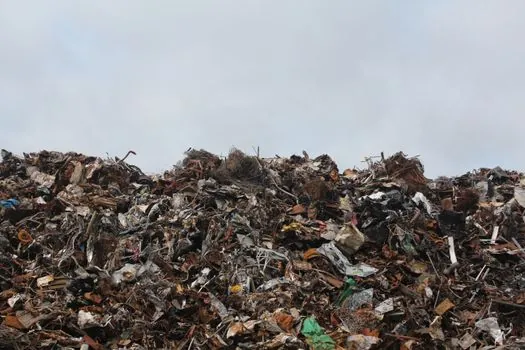
Material typically arrives as Zorba (the ISRI-grade mixed non-ferrous fraction from automotive shredders) and moves through a ballistic separator for 2D versus 3D split, then an eddy current stage to lift aluminum away from heavy non-ferrous, and then into the sensor block [S3]. The sensor block is where XRT performs the density-family cut and LIBS or XRF-T performs the alloy-chemistry cut before the stream is baled per series for remelt [S1][S3]. A properly configured line is reported to deliver a main aluminum stream with Zn, Cu, Mg, and Fe reduced by a multiple of times relative to the incoming mixed feed [S3].
For a deeper look at how this links into the upstream aluminum alloy family conventions and the way 2xxx through 7xxx designations are used in specs, the sorting chain is essentially enforcing those designations in reverse, reading the chemistry on the way back into the furnace. The downstream end, the actual remelt step, is covered in process detail in our reference on coreless induction furnace setups for aluminium scrap remelt, which is the natural handoff once the sorted fraction is in the charging bucket. And for buyers comparing 6xxx extrusion lead times against the new domestic secondary supply, the practical 2026 lead-time picture is laid out in our 6063 vs 6061 extrusion lead time reference.
Who benefits and where the limits sit
Automotive sheet and extrusion buyers, can stockists, and electronics casings all benefit when a 5xxx or 6xxx scrap stream can be returned to a 5xxx or 6xxx melt instead of being diluted into a foundry T-bar, and the 2xxx and 7xxx aerospace and high-strength structural applications are the next target for LIBS-grade chemistry sorting [S1][S3]. The model is less useful for foundries that already accept a wide chemistry window and that value low-cost mixed scrap, since the incremental sort cost is recovered only when the buyer side pays a premium for tighter chemistry [S1].
Three constraints dominate the rollout. First, plant capex: XRT and LIBS lines sit in the multi-million-EUR range and need a minimum scrap volume to amortise. Second, collection discipline: sorters can only resolve what the collection stream delivers, so mixed consumer curbside or shredder residue is a harder feed than segregated industrial cuttings. Third, the 3xxx series already recycles at materially higher rates than the average, and the WBCSD analysis explicitly excludes 3xxx from its 71% downcycled figure because the gap is narrower there [S1][S3].
Sourcing, standards, and what to verify on a quote
The WBCSD initiative's evaluations were independently aggregated by McKinsey under a clean-room protocol, and the resulting anonymised findings are the basis for the 2 Mt/yr export and USD 2 billion/yr processing-value figures cited above [S1].
On the regulatory side, the EU's recent move to scrap aluminium export curbs and the parallel US trajectory on UBC (used beverage can) bans reshape where this secondary supply physically lands, and the political and trade picture is tracked in our EU and US scrap policy update. For projects sizing conveyor and sortation infrastructure to feed these lines, the equipment reference at sorting systems and the line-level layout at conveyor sorting lines cover the mechanical side. Note that induction furnaces and eddy current separators both draw significant power, so the broader construction machinery and equipment spec envelope (utilities, duty cycle, IP rating) typically flows into the same procurement package. For lighting inside the sort cabin and at the inspection hood, lighting equipment and electric lamps selection matters more than it looks because LIBS and XRT optics are sensitive to ambient stray light.
The next data points worth tracking: published buy-side commitments to specific secondary-alloy tonnages under the WBCSD framework, any new ISRI specification revisions that codify an alloy-specific Zorba sub-grade, and capex announcements from major recyclers for XRT plus LIBS paired lines. If two of those land in the same quarter, the 2 Mt/yr export figure is on track to compress materially.