
Visible aluminum inventories on the London Metal Exchange dropped below five days of global supply in early June 2026, with total visible stock reported at roughly 1.5 million tonnes against a refined-market deficit forecast of at least 2 million tonnes by year-end [S2][S4].
By 22 September 2026, LME aluminum traded flat at 3,261.40 USD/T, +1.34% on the session and +22.67% over twelve months, with exchange inventories still hovering close to a 36-year low [S3]. The squeeze reflects Gulf smelter force majeure, the Strait of Hormuz disruption, and a U.S. Section 232 tariff that doubled to 50% ad valorem on most countries by June 2026 [S1][S2].
What "days of consumption" means in a 2026 context
Days-of-consumption (DoC) is the most operationally honest inventory metric for a metal buyer: it divides visible exchange plus bonded warehouse tonnage by average daily run-rate demand, so a five-day DoC tells a mill or extruder it can run at current draw for roughly one work-week before coils are gone [S2].
For comparison, the OECD's long-run comfort band for base metals sits in the 25–35 day range; the IAI/visible figure cited on 1 June 2026 (under five days) is the lowest cover across the six LME-traded base metals and explains why the spot-vs-three-month curve moved into a 97 USD/t backwardation, the steepest since 2007 [S2]. For process engineers buying aluminum alloy billet, this turns a 4–6 week safety stock policy into a same-week procurement problem.
Where the supply tightness is hitting, by end-use and region
USGS Mineral Commodity Summaries 2026 puts the 2025 U.S. consumption mix at transportation 36%, packaging 24%, building 13%, electrical 9%, consumer durables and machinery 8% each, and other 2%; transportation alone consumes more than the next three sectors combined [S1].
The Gulf region accounts for roughly 9–10% of global primary aluminum supply, and closure of the Strait of Hormuz has cut the physical route into the US, Europe, and Japan, with downstream auto, can-stock, and aluminum window door extrusion lines among the first to feel delivery slippage [S2]. Apparent U.S. buyer cannot pull the demand lever to fix the problem [S1].
Why the squeeze got worse, not better, between April and September 2026
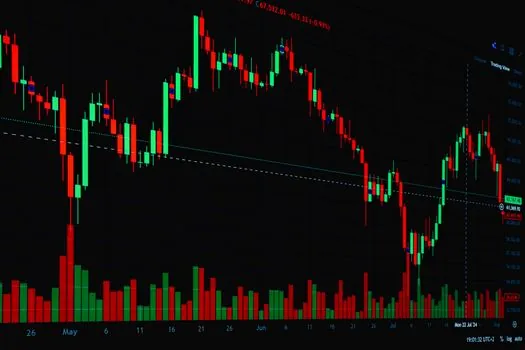
SunSirs reported on 23 July 2026 that domestic Chinese aluminum ingot prices had rebounded that month, with domestic inventories continuing to decline sharply even as export volumes climbed 15% in April to 598,000 tonnes, the highest since November 2024 [S5].
The International Aluminium Institute puts China's April 2026 primary output at 3.68 million tonnes out of 5.92 million tonnes global, more than 60% of world production, yet the U.S. Section 232 tariff structure introduced in March 2026 (25% on aluminum and derivative products, then doubled to 50% ad valorem by June for most countries) is keeping Chinese metal flowing to non-U.S. destinations rather than rebalancing the LME warehouse complex [S1][S2]. The mechanical effect is that the same global tonnage exists, but less of it is willing to clear U.S. customs at a workable landed cost, which is what shows up as the LME 36-year low [S3].
Comparison: which inventory signals to trust
Process buyers should track three numbers weekly, not just the headline "LME stocks". Visible LME plus bonded warehouse is the most reactive, the one cited at 1.5 million tonnes in April 2026; total visible-plus-non-visible is the broader cushion (roughly 3 million tonnes), still only weeks of cover, and the spot-vs-three-month backwardation of 97 USD/t is the cleanest forward-looking read on physical tightness [S2][S4].
By contrast, the USGS year-end "aluminum industry" stocks line in the U.S. is a lagged structural figure (1.80 million tons yearend 2025e versus 1.69 million in 2024), useful for trend, almost useless for the next shipment [S1]. The U.S. Geological Survey also notes that about 3.6 million tons of aluminum was recovered from purchased scrap in 2025 in the United States, of which 56% came from new scrap and 44% from old scrap, and that recovery from old scrap was equivalent to about 28% of apparent consumption, which is the only meaningful near-term supply lever a domestic aluminum die casting machine or gas aluminum melting furnace operator can pull without imported metal [S1].
What this means for fabricators and OEMs right now

Specifiers building transport, can-stock, and aluminum veneer panel lines should plan for two-firmed-up effects: spot-versus-three-month backwardation tends to persist while visible DoC stays under roughly 10 days, and physical premiums (the figure Bloomberg cited at 97 USD/t over three-month futures on 30 May 2026) will keep squeezing mid-tier extruders who do not have tolling or captive billet supply [S2].
For spec-relevant news flow, the alumina and bauxite supply risk in 2026 picture and the aluminum billet shortage for extruders map both feed the same upstream bottleneck this article describes, and a A380 vs A356 aluminum casting alloy pricing in 2026 divergence is already showing in the secondary alloy market [S2][S5]. Watch the next IAI monthly production release, the next LME warehouse tape, and any Hormuz-status update as the three leading indicators; if visible DoC fails to climb back above 10 by year-end 2026, expect the 50% Section 232 tariff and any further Gulf disruption to keep spot at or above the 3,300 USD/T Q3 forecast band [S1][S3].