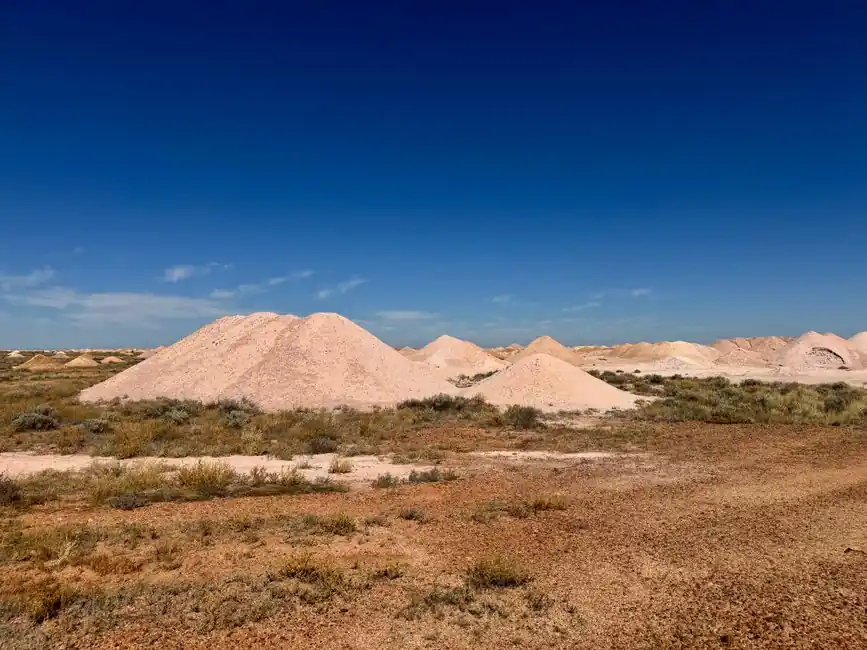
In 2025, the United States imported an average of 3.0 million dry tons of bauxite and 1.9 million tons of alumina, with net import reliance on alumina climbing to 71% of apparent consumption versus 58% as recently as 2021 [S1]. Domestic primary mine production remained withheld to protect company data, leaving the country structurally exposed to seaborne feedstock logistics [S1].
Global aluminum consumption, the demand pull on both bauxite and alumina, is forecast at 106.8 million metric tons for 2026, against a refinery and mine base still recalibrating after the 2024 Guinea export suspension and the 2026 Hormuz disruption [S2]. The convergence of policy risk in West Africa and shipping risk in the Gulf is the dominant 2026 supply-side narrative for downstream alumina ceramic and refractories buyers.
Guinea Policy: Cap or Volume Discipline?
Guinea exported roughly 125 million tonnes of bauxite in 2023 and 183 million tonnes in 2025, and without intervention exports could reach 240 to 250 million tonnes by 2027 according to Nimba Mining chief executive Patrice L'Huillier [S3]. The Fastmarkets weekly assessment for bauxite, fob Guinea stood at $33–38 per dry metric tonne on 27 March 2026, up $1–3/dmt week on week but down $8–11/dmt since the assessment launched on 19 December 2025 [S3].
At the Fastmarkets Bauxite & Alumina Conference in Miami on 24–25 March 2026, delegates heard Daouda Diakite, senior advisor to Guinea's Ministry of Mines and Geology, signal a move away from blanket export caps and toward site-specific production limits matching feasibility-study volumes [S3]. L'Huillier warned that if Guinea exports 240 million tonnes per year, the price to China will completely collapse at the $50-per-tonne level, a comment that frames the political incentive for restraint [S3]. Several market participants said the lack of detail is already weighing on investor confidence and raising the prospect of licence revocations [S3].
Hormuz Disruption and Trade-Flow Rework
The closure of the Strait of Hormuz and the escalation of conflict in the Middle East forced rapid adjustments in alumina supply chains, diverting material away from Gulf Cooperation Council smelters and toward China, per conference delegates [S3]. Jonathan Hadley, senior vice president commercial for bauxite and alumina at Hydro Aluminium International, told Fastmarkets the company had reduced output at its Qatalum joint-venture smelter in Qatar and redirected alumina volumes originally destined for the region [S3]. Hadley added that three weeks earlier, nobody imagined shipping bagged alumina outside the Strait and moving it overland, but that pattern is now visible [S3].
The 2024 Guinea precedent is instructive: a customs-driven suspension at Guinea Alumina Corporation, an Emirates Global Aluminium subsidiary, pushed LME aluminum up 2.7% to $2,655/tonne and Shanghai alumina futures up 4.2% to 4,553 yuan ($644)/tonne on 11 October 2024, the highest since contract launch in June 2023 [S5]. The episode demonstrated that single-port shocks propagate into both the physical and financial alumina market within a trading session, a risk vector buyers of power supply and smelter-grade aluminum cannot ignore.
Refinery Capacity: Australia Adds, U.S. Stays Idle
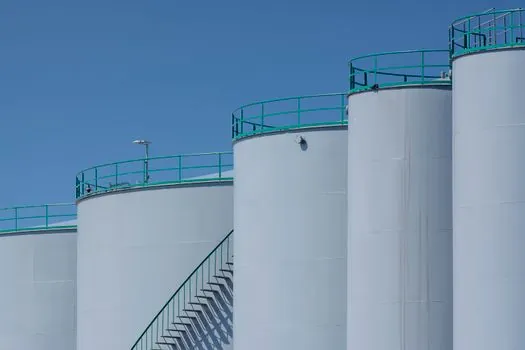
Mining began in June 2025 within expanded boundaries at a bauxite mine near Boddington, Australia, to supply a 4.7-million-ton-per-year alumina refinery, adding meaningful seaborne supply into the Pacific basin [S1]. In April 2025, a 1-million-ton-per-year alumina refinery in Mempawah, Indonesia, shipped its first alumina to an aluminum smelter in North Sumatra, further loosening Asian supply [S1].
U.S. capacity is stagnant: a 1.2-Mt/yr alumina refinery in Gramercy, Louisiana, operated through 2025, while a 500,000-ton-per-year refinery in Burnside, Louisiana, has been idle since August 2020 with no announced reopening date [S1]. S&P Global's January 2026 trade review warned that the FOB Australian alumina market faces supply-side headwinds from additional refining capacity in the first quarter of 2026, an oversupply pressure that sits in direct tension with the Hormuz-driven tightness [S4]. The result is a bifurcated 2026: long in the Pacific, short in the Atlantic, with freight and bunker fuel costs rising to provide price support even amid oversupply concerns [S3].
U.S. Import Dependence and Price Levels
Net import reliance for U.S. bauxite consumption remained above 75% across 2021–2025, with 2021–24 import sources dominated by Jamaica at 60%, Turkey at 16%, Guyana at 9%, and Australia at 8% [S1].
Average f.a.s. U.S. import prices during the first eight months of 2025 reached $31/ton for crude dry bauxite and $595/ton for metallurgical-grade alumina, gains of 4% and 9% year on year respectively [S1]. Industry year-end stocks of alumina sat at an estimated 200,000 tons in 2025, against apparent consumption of 2.5 million tons, a roughly 8% stock-to-use ratio that leaves little buffer against another logistics shock [S1]. For plants running lamps and light fittings and lighting equipment and electric lamps production lines fed by aluminum conductor, the practical procurement signal is to extend alumina offtake tenor and qualify a second-origin refiner.
Comparison: Bauxite Supply Sources on 2026 Risk Criteria
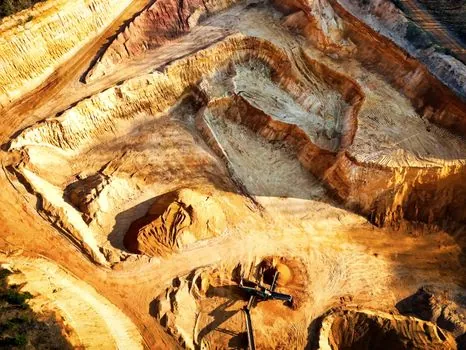
The four major seaborne origins can be lined up against 2026 risk criteria using only sourced figures. Guinea offers the largest volumetric upside, with 2025 exports of 183 million tonnes and a 240–250 million tonne 2027 trajectory, but it carries the highest single-country policy risk after the 2024 GAC customs episode [S3][S5]. Australia is the lowest-policy-risk origin, anchored by the 4.7 Mt/yr Boddington expansion feeding Pacific alumina refineries, and is also the source most exposed to oversupply pricing pressure in Q1 2026 [S1][S4].
Jamaica supplied 60% of U.S. bauxite imports over 2021–24 and benefits from proximity to Gulf Coast refineries, though it lacks the scale to offset a Guinea shock [S1]. Indonesia entered the alumina export market in April 2025 with a 1 Mt/yr first shipment from Mempawah, adding a fourth regional hub but one whose own downstream bauxite policy remains a watch item [S1]. For refractories and abrasive buyers tied to alumina ceramic feedstock, the operational decision is whether to carry dual-origin safety stock, accepting higher carrying cost in exchange for insulation from any repeat of the 2024 customs shock.
Procurement Signals to Track into Q4 2026
Two indicators will tell practitioners whether the 2026 risk picture is tightening or easing. First, any formal text from Guinea's Ministry of Mines and Geology on site-specific production limits versus feasibility-study baselines will shift the fob Guinea benchmark off the current $33–38/dmt range and reroute 2027 tonnage expectations [S3]. Second, alumina freight differentials between Australia fob and U.S. Gulf landed will reveal whether the Pacific oversupply and Atlantic tightness are arbitraging away or hardening, a spread worth watching in monthly customs releases.
A third secondary signal is the restart status of the 500,000-ton-per-year Burnside, Louisiana refinery, which has been idle since August 2020 with no announced reopening date; a 2026 restart decision would directly trim the 71% U.S. alumina import reliance figure [S1]. Until then, the structural setup remains a high-import, low-stock, two-ocean risk profile for construction machinery and equipment and DC power supply OEM buyers sourcing aluminum-intensive components.
For related coverage, see AI server liquid cooling: manifold and hose supply map.