Aluminum extrusion profile and an aluminum die casting machine solve different geometry problems and rarely substitute for one another on the same drawing. Extrusion pushes a heated 6063/6061 billet at 450–500 °C through a shaped die, producing constant cross-sections from 3 m to 13 m at tolerances around ±0.05 mm on commercial profiles, while die casting injects molten A380/ADC12 aluminum at 680–720 °C into a hardened steel mold under 30–100 MPa clamp force to make 3D near-net housings up to roughly 1.5 m [S1][S2].
The buy decision lives in three questions: cross-section uniformity, length, and annual volume. Linear sections under 600 mm with 1–2 mm wall thickness and runs above 10,000 parts belong on a die casting machine; long profiles, heat-sink fins, or structural rails with open cross-sections belong on an extrusion press [S3][S4].
Process Definitions and Operating Envelopes
Aluminum extrusion is a hot-deformation process run on a hydraulic or direct-extrusion press rated 800–5,500 tonnes, holding billet temperature at 450–500 °C and exit speed at 5–50 m/min, with the pressed profile cooled, stretched, and aged to T5/T6 temper [S4]. Profile length is bounded by press runout and handling space, with 11 m max length and ±0.041 mm die precision typical at mid-volume suppliers, and alloys 6060, 6063, 6463, 6005, 6005A, 6061, 6082, 6101, 1050 all in routine production [S1]. Die casting, by contrast, uses a cold-chamber machine for aluminum (the alloy attacks a submerged plunger) and clamps at 80–900 tonnes, with shot weights from roughly 0.5 kg on 25-tonne machines up to 30 kg-plus on 1,400-tonne units, and cycle times of 60–180 s for furniture/automotive components [S3][S10].
For long, open profiles, the aluminum die casting machine is the wrong tool: it cannot economically produce constant cross-sections longer than the platen, and cooling-induced shrinkage warps long thin walls. Conversely, extrusion cannot produce a closed internal rib structure with undercuts in one piece; that geometry is the natural territory of gravity die casting machine or pressure die casting [S1][S3].
Spec Bands Compared: Tolerance, Finish, and Material
Tolerance on extruded 6063-T5 profiles typically lands at ±0.1 mm on wall thickness and ±0.5 mm on twist over 6 m for standard tolerances, tightening to ±0.05 mm on precision machined features, and surface roughness exits the die at Ra 0.8–1.6 µm in mill finish [S1][S6]. Die cast A380/ADC12 parts hold ±0.05 mm on small dimensions and ±0.1–0.3 mm on larger features, with as-cast surface roughness of Ra 3.2–6.3 µm; CANEX publishes Ra 3.2–6.3 µm as the as-cast standard range for their castings [S1].
Alloy selection is the other axis. Extrusion is dominated by 6xxx (6060/6063 for architectural, 6005/6061/6082 for structural) because the Mg-Si system responds well to T4–T66 heat treatment and the billet is easy to cast into extrusion logs [S1][S5]. Temper ranges diverge: extrusion commonly ships T5, T6, T66; die casting ships T4 through T7 depending on the post-cast aging cycle [S1].
Machine Price Bands and Lead-Time Map (2026-07)
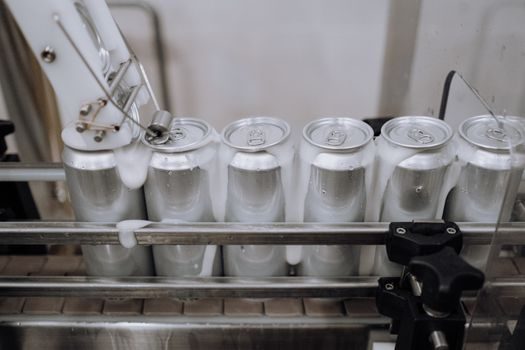
Live 2026-07 listings on Made-in-China show a 25-tonne mini aluminum die casting machine at US$10,000–11,000/set (MOQ 2 sets), 38–40-tonne hot-chamber zinc/lead machines at US$17,500–20,000/set, an 80-tonne aluminum metal injection die casting machine at US$17,000–22,000/set, a 300-tonne automotive die casting equipment at US$48,000–54,000/piece, and a 1,400-tonne cold-chamber unit for furniture accessories at US$71,143–80,036/piece [S3][S10]. A 900 kN aluminum alloy die casting parts machine from Ningbo Dongfang is listed at US$17,000–22,000 for 80-tonne clamp force [S10].
Extrusion press pricing is less transparent in the same B2B channels but follows clamp tonnage: 800-tonne presses common for architectural lines, 1,800–2,500-tonne presses for industrial profiles, and 22 MN–27 MN presses (roughly 2,200–2,750 tonnes) for long-length structural sections, with IoT-adapted units in this class offered by mid-volume integrated suppliers [S1][S4]. Lead times on standard 6063-T5 profiles at 300 kg MOQ run 15–25 days plus finish, while custom die-cast tooling adds 25–40 days for sample approval before serial production [S5][S6][S7].
Decision Matrix: Extrusion vs Die Casting by Use Case
Pick an aluminum extrusion profile when the section is constant along its length, the run length exceeds 1 m, the cross-section is open (channels, tubes, heat-sink fins, T-slot frames), and you need 6063-T5 surface quality for visible architectural or electronics applications [S1][S6][S7]. Pick a die casting machine when the part is 3D with internal ribs, bosses, and threaded inserts, the wall thickness is 2–6 mm, the part is shorter than roughly 1.5 m, and the batch justifies US$10,000–80,000 of machine-tool capital [S3][S10].
Four criteria decide most jobs: (1) geometry — linear profile or 3D part; (2) alloy — 6xxx for extrusion, Al-Si-Cu for casting; (3) tolerance/as-cast finish — ±0.1 mm Ra 1.6 µm for extrusion, ±0.3 mm Ra 6.3 µm for die casting; (4) batch — extrusion favors continuous high-volume runs of the same section, die casting favors 5,000–500,000 parts/year across multiple part numbers sharing one machine [S1][S3][S6]. For more on how these criteria line up against other forming methods, see the Additive Manufacturing Cost Breakdown 2026 comparison and the Aluminum Extrusion Profile Selection: Alloy, Temper, Tolerance, Finish reference.
Surface Finish, Machining, and Secondary Operations
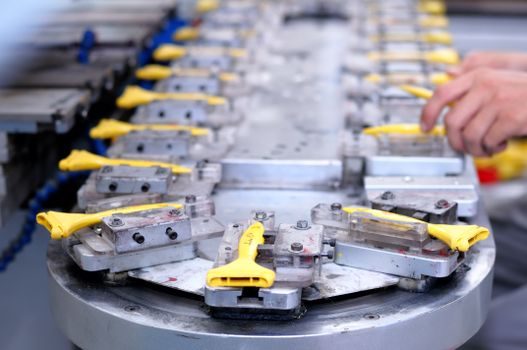
Extruded profiles almost always pass through anodizing (10–25 µm), powder coating (60–120 µm, QUALICOAT Seaside class on premium integrated lines), or wood-effect sublimation, with 9-stage powder coating lines capable of 3 durability levels per AAMA 2604-class weathering at suppliers running certified process chains [S1][S7][S8]. Die cast parts usually go through degating, shot blasting, CNC machining of critical interfaces, then the same anodize/powder-coat chain if the Si content allows it (anodize on Al-Si alloys is limited; powder coat or e-coat is the more common spec) [S1].
Machining tolerance is comparable between the two processes once parts are CNC-finished: ±0.05 mm on drilled and milled features is routine, and 0.001 mm die-feature precision is achievable on extrusion dies with advanced simulation, CNC milling, EDM, and wire cutting [S1]. The real difference is per-part cost: extrusion spreads die cost (US$3,000–15,000 typical) over very long runs, while die casting pays for hardened steel molds (US$15,000–80,000) and machine time per shot, so the breakeven batch between casting and machined extrusion sits around 1,000–5,000 parts depending on geometry [S3][S5][S10].
Limitations, Failure Modes, and Standards Watch
Extrusion is bounded by billet size and press tonnage: trying to push a 6061 section wider than the container diameter (typically 178–254 mm for mid-size presses) or with a thin web below 1 mm causes tearing and requires porthole or bridge dies, which add cost and seam lines [S1][S4]. Die casting fails when wall sections drop below 1.5 mm (cold-shuts, misruns), when draft angles are under 0.5–1°, or when the part demands post-cast weld integrity on pressure-tight features [S3][S9].
Standards alignment: extruded 6063-T5 profiles for architectural use are typically released against EN 12020-2 (dimensional tolerances) and EN 1999-1-1 (Eurocode 9 structural design) when specified for European projects, and powder-coat lines holding AAMA 2603/2604 weathering are the norm in MENA and North America [S1]. Die cast machine safety on European sites falls under the Machinery Directive (2006/42/EC) and EN 869 for die casting machines; ATEX classification is only relevant when the cell is sited in a classified zone, not a default spec [S3]. Buyers pairing an OEM/ODM line (extrusion + die cast + finishing under one PO) should pin the supplier's certifications to ISO 9001, ISO 14001, ISO 45001, with upcycled-scrap alloy programs carrying MinimAL-class documentation, as published on at least one integrated Egyptian line [S1][S2].
Two signals to track over the next quarter: 22 MN–27 MN IoT-adapted extrusion press pricing for long-length industrial profiles (currently only on integrated-supplier brochures, not in transparent catalogs) and the 2026 price trajectory of 800–1,400-tonne cold-chamber die casting machines, which moved US$48,000–80,000 across 300-tonne and 1,400-tonne classes on July 2026 listings [S3][S10]. For a wider view of how forming methods line up with other industrial equipment decisions, the Palletizer Machine Types, Payload Classes, and 2026 End-of-Line Application Map gives a comparable spec-first framework for downstream automation.