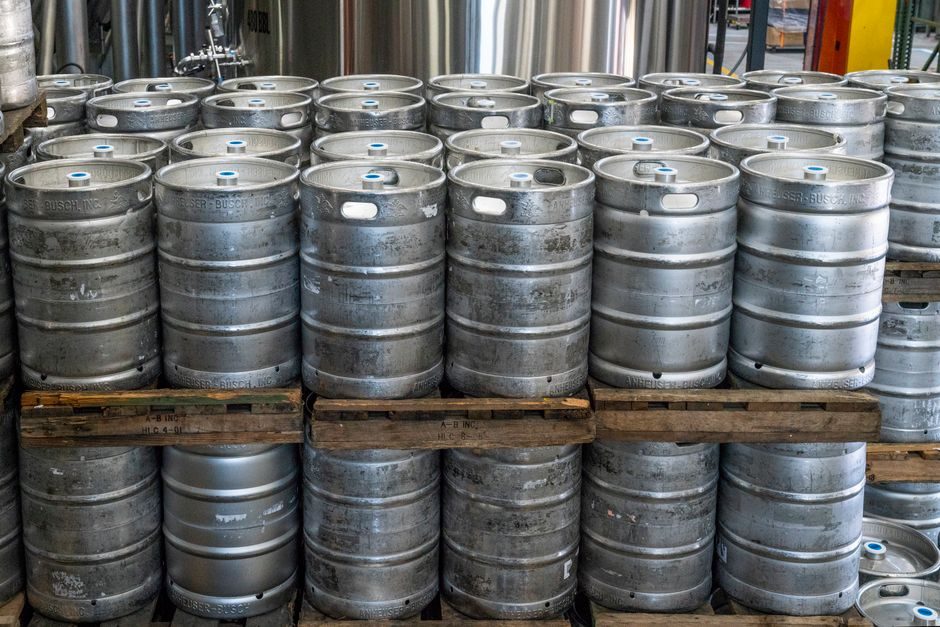
The 2026 aluminum supply chain is a three-stage primary flow — bauxite to alumina (refinery), alumina to molten aluminum (smelter), molten metal to billet/slab (casthouse) — quantified by Tan & Khoo's LCA model as the canonical refinery + smelter + casting-plant chain [S6].
On top of that primary backbone sits a closed-loop secondary stream defined by alloys 5182 (can end stock, Mg-bearing) and 3104 (can body stock, Mn-bearing) — both standard aluminum alloy grades in the 5xxx/3xxx series [S1], plus a US service-center tier (e.g. ASCO, Detroit, 75+ years, ISO-certified, women-owned) that converts mill coil into cut plate, sheet and fabricated parts for short-run industrial buyers [S3].
Primary Chain: Refinery, Smelter, Casthouse — the Three-Node LCA Baseline
Tan & Khoo's 2004 LCA study remains the cleanest published reference for the primary chain: an alumina refinery outputs smelter-grade alumina, the smelter reduces it via the Hall-Héroult electrolytic process (fed by a dedicated DC power supply bus at the cell line) to molten aluminum, and the casting plant shapes the metal into extrusion billet or rolling slab [S6]. Functional unit in that study is 1 kg of aluminum billet, with impact categories spanning energy demand, GWP, acidification and solid waste [S6].
For 2026 buyers the takeaway is structural, not date-specific: every primary kilo carries the embedded energy of the smelter step, which is why secondary (recycled) aluminum is now the marginal swing source for downstream cost and carbon models. LCA boundaries also mean scope-3 accounting on any finished aluminum good must cover at least those three nodes before it touches a service center [S6].
Closed-Loop Can Chain: Why 5182 and 3104 Define the Recyclable Fraction
Within the US can market, the JOM material-flow analysis by Subramanian & Zabala isolates alloys 5182 (Al-Mg, used for can ends) and 3104 (Al-Mn-Mg, used for can bodies) as the technical universe for the recycling model [S1]. That choice matters because closed-loop recycling only works when the recycled scrap stream stays within a tight alloy window; 5xxx and 3xxx separation by eddy-current and sink-float lines is what lets UBC (used beverage can) re-enter as the same nominal grade [S1].
The same MFA identifies four driving propositions: technical fit of the alloy, economic recovery value, supply-chain integration, and recycling rate — and argues that technical/economic/SC factors matter as much as headline recycling rate itself [S1]. For 2026 sourcing, that means a procurement team chasing "recycled content %" without auditing the 5182/3104 separation yield is buying a label, not a closed loop. For broader context on how alloy form drives spec gates across non-ferrous chains, see the nickel suppliers and manufacturers 2026-06-26 source map, which applies a similar alloy-form logic to a different base metal.
Mid-Tier Distribution: US Service Centers Set the 2026 Lead-Time Reality
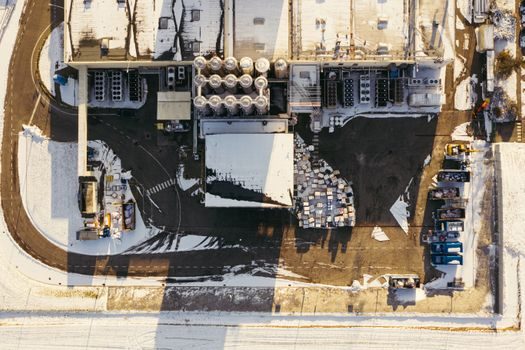
ASCO (Aluminum Supply Company, Detroit) is a useful proxy for the mid-tier US service center: family-owned since 1948, women-led, multi-metal stock plus in-house fabrication, ISO-certified, and structured around local Detroit delivery and short turnaround rather than mill-direct economics [S3]. That profile is common in the Midwest fabrication belt — a service center absorbs mill minimum-order quantities, holds 6061/5052/3003 plate and sheet on chain conveyor-fed rack lines, and resells in 1- to 50-piece quantities with cut-to-size and CNC forming [S3].
For a 2026 buyer the decision tree is binary: mill-direct (rail-car volumes, 4-12 week lead, lowest $/kg) versus service center (mixed-metal, multi-alloy, cut and sometimes machined, days-to-weeks lead, higher $/kg but zero inventory carrying cost). The service-center layer is also where traceability paperwork (mill test reports, DFARS, country-of-origin) gets re-issued for the actual buyer, which is why spec-sensitive programs (defense, rail, ASME-stamped fabrications) almost never go mill-direct. For a parallel look at how spec gates and mill sourcing are organized for a different long product, see steel strand suppliers: 2026 sourcing specs, mills and price levers.
Logistics Overlay: Amazon ASCS as a 2026 Distribution Reference
Amazon's Supply Chain Services (ASCS) packages inbound freight, inventory placement, fulfillment, and returns into a single seller-facing suite, marketed for both SMB and enterprise shippers across multiple channels [S4]. It is not an aluminum-specific service, but it is now the de facto reference benchmark for "two-day, multi-node, API-tracked" B2B distribution inside the US, and any 2026 aluminum service center competing on speed has to either match that SLA or differentiate on metal-specific kitting [S4].
The strategic question for an aluminum buyer in 2026 is whether to plug into a platform-orchestrated logistics layer (ASCS-style, software + scale) or stick with a regional metal specialist (ASCO-style, metal expertise + local delivery) — and the honest answer is "both, by lane," with platform logistics covering generic MRO/CMQ stock and regional specialists covering cut plate, sheet, and fabricated assemblies [S3][S4]. For buyers who also handle palletized finished goods, the spec gates around dock hardware are laid out in dock leveler selection criteria 2026: capacity, lip, drive and duty cycle, which sits downstream of the same inbound-outbound traffic a service center has to absorb.
Labor Layer: Supply-Chain Analyst Pay Band as a 2026 Signal
Coursera's 2026 supply-chain analyst salary guide frames the role around data analytics, data cleansing, and data storytelling as core competencies, and prices it as an entry-to-mid career path inside broader logistics and operations teams [S5]. That is consistent with the 2026 reality that the supply-chain function is no longer a paperwork desk; it is a data role sitting on top of ERP, WMS and TMS feeds, and it directly affects how aluminum buyers interpret price indices, allocation notices and mill announcements [S5].
For an aluminum buyer, the practical effect is that "supply chain" inside a 2026 vendor pitch usually means one of two things: (a) a planner tracking POs and ETAs, or (b) an analyst running scenario models on price, alloy availability and freight. Mature programs now staff both, and the analyst layer is what turns raw LME/LME-proxied signals into a defensible procurement decision.
Comparison of 2026 Aluminum Sourcing Channels
Four criteria separate the main options a 2026 industrial buyer faces. On minimum order quantity, mill-direct sits in rail-car multiples (~20-40 t per lot), service center in 1-50 piece cuts, and online/platform resellers in single-pack or small-case quantities [S3][S4]. On lead time, mill-direct is 4-12 weeks from order to delivery, service center is measured in days, and platform resellers can hit 1-3 day shipping on common 6061/5052 sheet and bar [S3][S4]. On traceability and MTR documentation, mill-direct is the strongest (heat-traceable to the cast), service center is good if ISO/DFARS-accredited, and platform resellers are inconsistent [S3]. On $/kg, mill-direct is lowest, service center carries a 15-40% conversion premium, and platform resellers carry the highest premium but the lowest ordering friction [S3][S4].
For recycled-content programs the comparison shifts: closed-loop 5182/3104 UBC scrap flows almost exclusively through specialized recyclers and can-stock mills, not through general-line service centers, so a buyer chasing "recycled aluminum" with a service-center PO will land on 6061/5052/3003 remelt stock from a secondary smelter, not on a true can-to-can loop [S1]. The same closed-loop logic, applied to a different metal and a different downstream product, is the spine of the nickel upstream and downstream map: from laterite ore to battery-grade sulphate reference.
2026 Constraints Buyers Should Plan Around

Three constraints are durable enough to plan around in 2026. First, primary supply is still bound by refinery + smelter + casthouse node economics — you cannot decarbonize the chain by changing the service center, only by changing the upstream node mix [S6]. Second, the closed-loop recyclable universe is narrower than the marketing implies: 5182 and 3104 define the can loop, and a handful of 3xxx/5xxx/6xxx grades define the automotive and building-product loops; everything else is downcycled into cast alloy [S1]. Third, mid-tier distribution is now bi-modal: regional metal specialists (ASCO profile) for cut/fabricated work, and platform logistics (Amazon ASCS profile) for generic MRO stock, with the two layers increasingly interoperating rather than competing [S3][S4].
Trackable signals for the rest of 2026: (a) whether the platform-orchestrated logistics layer (ASCS-style) starts offering metal-specific kitting, which would compress service-center lead times on common alloys, and (b) whether secondary smelter capacity expansion actually shifts the mill/service-center price spread on 6061 and 5052 plate, which is the cleanest read on whether closed-loop rhetoric is translating into tonnage.
