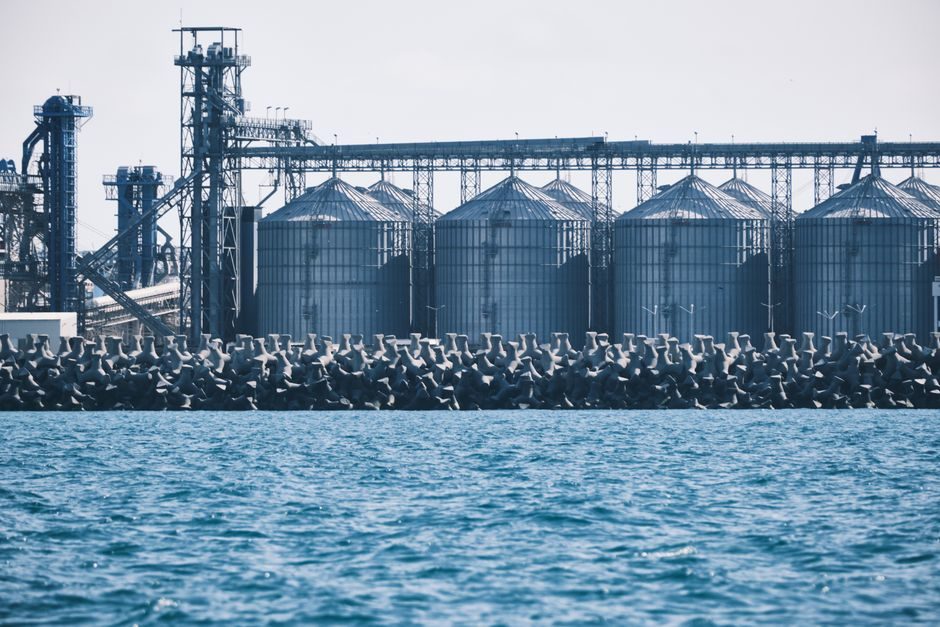
Nickel's upstream stage is dominated by laterite (limonitic and saprolitic) ore in Indonesia, the Philippines, New Caledonia and parts of Australia, with magmatic sulfide deposits supplying roughly a third of global concentrate from Russia, Canada and Australia. Mined ore feeds two parallel pyrometallurgical and hydrometallurgical routes that determine whether the downstream output is Class I (battery-grade nickel sulphate, nickel metal, briquette) or Class II (NPI, ferronickel, nickel matte) [S3].
The downstream end of the chain is increasingly bipolar: stainless steel still consumes the majority of primary nickel (Class II + scrap), while electric-vehicle cathode active material plants are pulling a fast-growing share of Class I nickel sulphate hexahydrate (NiSO4·6H2O) and nickel metal for precursor synthesis. The isotope bridge product NICKEL-64, CAS 13981-77-2, is a stable Ni isotope used as a tracer in metabolic and analytical chemistry and does not flow into the bulk metallurgical chain [S2].
Upstream: Laterite vs Sulfide — What Gets Mined and Where
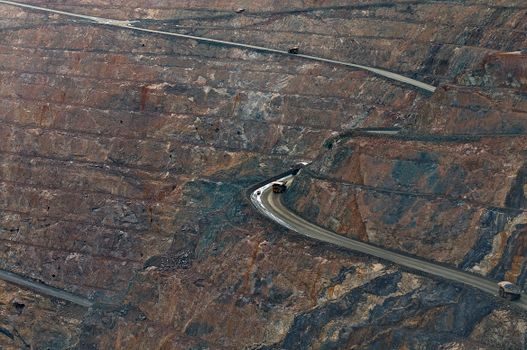
Laterite ores, which sit above weathered ultramafic rock, are split into two metallurgical feeds: limonite (low Mg, ~1% Ni, high Fe) routed through High-Pressure Acid Leaching (HPAL) to nickel sulphate, and saprolite (high MgO, 1.5–2.5% Ni) smelted in rotary kilns / electric furnaces to ferronickel or NPI. Sulfide deposits such as Norilsk (Russia), Sudbury (Canada) and deposits in Western Australia deliver pentlandite concentrates at 6–12% Ni that go to flash smelters and matte / electrolytic refineries for Class I metal [S3].
Mine-level economics diverge sharply by route. Indonesian NPI producers target a nickel cost curve that competes directly with Chinese stainless-mill NPI output, while HPAL projects in Indonesia and Papua New Guinea are now the marginal supplier of seaborne Class I units. The summit at FerroAlloyNet in 2018 catalogued the operating geography: ore and alloy counterparties from Zambia, Indonesia, Iran, South Africa, Gabon, UAE, Pakistan, India, Zimbabwe, Japan and Australia registered for cross-bidding, a footprint that has only widened by 2026 as more Indonesian and African juniors listed downstream offtake contracts [S1].
Midstream Processing: HPAL, RKEF, Matte and Refining
Three process routes compete for the Class I vs Class II split. HPAL (Murrin Murrin, Ravensthorpe, Coral Bay, Ramu, laterite plants in Halmahera) leaches limonite in autoclaves at 240–270 °C and 40 bar with sulfuric acid, yielding a mixed Ni/Co hydroxide or a clean nickel sulphate solution suitable for direct crystallisation to battery-grade NiSO4·6H2O at ≥22% Ni and ≤100 ppm Cu, ≤50 ppm Fe typical battery-grade spec gates. [S1]
Sulfide concentrates and matte from flash smelters feed the third route — nickel matte, electrolytic or carbonyl refining — that yields LME-grade Class I cathode (≥99.8% Ni) and briquette. Each route has its own process bottleneck: HPAL is capital- and acid-intensive and notoriously sensitive to Mg and Fe deportment, RKEF is power-hungry (roughly 500–700 kWh per tonne of ore at the smelter) and matte routes depend on concentrate availability. A useful side-by-side for specifiers:
HPAL: feed 1.0–1.5% Ni limonite → Class I NiSO4/Co byproduct → CAPEX-heavy, suited to battery supply. RKEF: feed 1.5–2.5% Ni saprolite → Class II ferronickel/NPI → CAPEX-light, suited to stainless. Matte/refining: feed 6–12% Ni sulfide concentrate → Class I cathode/briquette + PGMs → suited where sulfide orebodies exist [S3].
Downstream Off-Take: Stainless, Batteries, Alloys, Plating
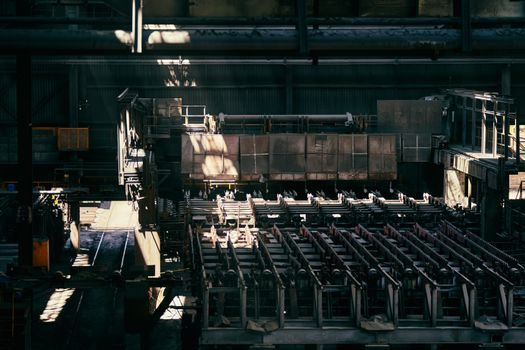
Stainless steel (austenitic 304/316 grades) remains the largest single end-use, taking ferronickel, NPI, stainless scrap and Class I cathode. Battery cathode chemistries — NCM811, NCM622, NCA and increasingly LFP with low-Ni chemistries for cost reasons — drive Class I nickel sulphate demand. The NPI/Class I ratio is the swing variable: when LME nickel is high, more NPI is converted up the curve via matte or electrolysis; when LME is low, Class II stays in stainless. Nickel Industries Limited (ASX: NIC) is positioned as a low-cost Class II producer with downstream rotary-kiln assets, trading on the ASX with a current market quote around A$0.965 as published on the company homepage [S3].
Beyond stainless and batteries, downstream uses include nickel superalloys (Inconel 718, Inconel 625, Monel 400 — covered in detail on the nickel alloy encyclopedia page) for turbine and chemical service, electrode and plating salts (NiSO4, NiCl2), and catalyst precursor materials. The ferroalloy industry still congregates at dedicated summits: the FerroAlloyNet International Mining Summit drew more than 300 registered delegates spanning chrome, nickel, manganese, titanium and zirconium supply chains, a meeting structure that has become the standard way mines, traders and stainless mills align annual offtake [S1].
Adjacent Supply Chain: Cobalt as the By-Product Bellwether
Cobalt is the structural by-product of nickel laterite HPAL and of Central African copperbelt operations, and it shares the same cathode downstream. A 2026 reference on cobalt upstream-to-cell supply chain mapping lays out the parallel mine-to-precursor route, which is useful for any specifier evaluating a Class I nickel project for its Co-credit economics. Where a nickel HPAL project targets 30–60 ktpa Ni, the cobalt by-product stream is typically 2,000–5,000 tpa Co as mixed hydroxide, and that ratio drives a meaningful share of project NPV at current Co quotes. [S2]
Selection Criteria: Which Route Fits Which Buyer
A specifier picking nickel feedstock should anchor on three decision gates. First, the form the downstream plant needs: stainless mills and NPI converters want Class II (ferronickel 10–30% Ni, NPI 1.5–12% Ni) or stainless scrap; precursor plants want battery-grade nickel sulphate with the impurity gates above; superalloy melters want Class I cathode or briquette (≥99.8% Ni). Second, the impurity envelope — Cu, Fe, Co, Zn, Mn, Mg limits differ between stainless (tolerant), NCM cathode (strict, sub-100 ppm Cu and Fe) and electroplating (strict, sub-ppm organics) [S3].
Third, the supply reliability and the carbon intensity. Sulfide-derived Class I carries lower Scope 1 emissions per tonne of nickel than laterite HPAL, which is coal- and acid-intensive; this is becoming a hard procurement gate for European cell gigafactories. As a working heuristic: choose ferronickel/NPI when the end product is 304/316 stainless and price stability matters more than units; choose Class I cathode/briquette when the end product is superalloy, plating or battery precursor; choose battery-grade nickel sulphate only when the plant has crystallisation, impurity stripping and crystalliser capacity. The wrong pairing — for example feeding NPI to a battery precursor line, or feeding battery-grade sulphate to a stainless melt — is the most common downstream specification error, and it is the first thing to check before issuing a PO.
Process Control Levers Across the Nickel Chain
On the instrumentation side, a modern nickel HPAL or RKEF plant is a dense pressure transmitter and flow meter environment: autoclave pressure control at 40 bar, acid flow, slurry density, kiln draft and off-gas temperature all carry IECEx / ATEX zone classification in the leach and acid-handling sections. Refining electrolytic cells rely on pressure sensor arrays for cell-head vacuum and diaphragm pumps, and on robust industrial valve packages — typically PTFE-lined or high-nickel alloy (Alloy 20, Hastelloy C-276) for the acid circuit. Process control upstream of the autoclave and crystalliser is typically a PLC layer driving cascade loops on temperature, acid-to-ore ratio and residence time, with a SCADA/DCS layer above for batch and shift reporting. [S3]
For metallurgical yield, the controlling variables are Mg/Fe ratio in feed, autoclave residence time (typically 60–90 min for limonite), and post-leach neutralisation pH (typically 4.5–5.0 for Fe/Al removal before Ni/Co sulfide precipitation). For RKEF, the dominant levers are reduction temperature in the kiln (typically 850–950 °C) and electrode power input at the smelter. Each lever is a measurable spec gate, and instrumenting them well is the difference between a project that runs at design tonnage and one that hemorrhages nickel into the tailings.
Limits, Failure Modes and What to Watch
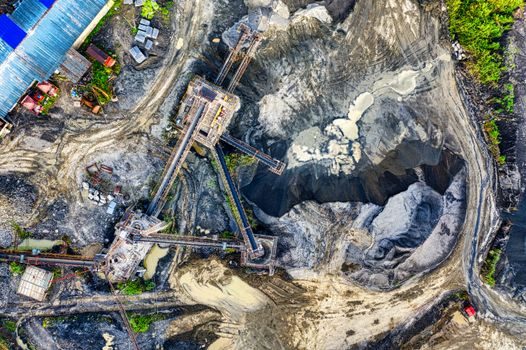
HPAL plants carry well-known failure modes: high Mg in the ore consumes acid above design (the single largest capex risk in any laterite HPAL project), Fe/Al precipitation is sensitive to pH, and mixed hydroxide filtration rates can bottleneck the train. RKEF plants fail on power supply — Indonesian and Filipino RKEF capacity is sensitive to grid stability and coal price — and on saprolite grade drift. Sulfide-route plants are constrained by concentrate availability; with Norilsk sanctions, Sudbury aging mines and Talon Metals / BHP-style new sulfide projects still in development, Class I from sulfide is structurally tight. Watch nodes for the rest of 2026: Indonesian HPAL ramp-up (Halmahera, Morowali), Chinese NPI export policy, Class I sulphate spot quotes, and the cobalt by-product credit (covered in the parallel cobalt supply-chain reference). [S1]
Trackable signals: ASX:NIC quarterly tonnage and cost guidance as the read-through on Class II margin; HPAL ramp announcements from the Indonesian Morowali / Halmahera cluster; revised battery-grade NiSO4 impurity specs published by precursor producers; and any change in LME nickel warehouse inventory as the short-term price signal. The FerroAlloyNet summit register remains a useful cross-bidding index for ore and alloy counterparties, with the 2018 edition already spanning delegates from more than a dozen countries, and the 2026 follow-on summit is the next node to monitor for offtake alignment [S1][S3].