
Aluminum extrusion buyers importing finished profiles under HTSUS chapter 76 face a 50% Section 232 duty on full customs value as of September 2026, while downstream fabrications such as window frames, ladder rails, and architectural panels containing moderate aluminum content are taxed at 25% on the same basis [S3][S5].
The duty applies on top of any MFN column-1 rate, is calculated on the entered value rather than the metal content alone, and cannot be stacked against parallel Section 232 actions on steel or copper when an article falls under multiple regimes [S3]. For extrusions, the critical variables are country of smelt and cast, country of final manufacture, and whether the part qualifies as an Annex I-A article (almost-entirely aluminum) or an Annex I-B derivative.
Rate structure: primary aluminum, derivatives, and the US-melt discount
Articles classified in HTSUS chapter 76 that are made entirely or almost entirely of aluminum sit in Annex I-A and pay 50% on full customs value under Proclamation 11021, effective for entries on or after 12:01 a.m. EDT on April 6, 2026 [S3].
Derivative articles in Annex I-B pay 25% on the same full-customs-value base; the older metal-content split methodology was eliminated in the April 2, 2026 proclamation [S3]. Both rates drop to 10% when the aluminum content was smelted and cast in the United States, regardless of where extrusion or downstream fabrication occurs [S3]. For an extrusion buyer, that 40-point spread (50% versus 10%) is now the single largest landed-cost lever on the table, and it is gated by mill attestation rather than by HTSUS class.
The June 1, 2026 proclamation: temporary 15% carve-out for equipment
Proclamation 11032, issued June 1, 2026, temporarily cuts Section 232 rates from 25% to 15% on a defined list of industrial and electrical-grid equipment containing aluminum or steel derivatives, effective for entries on or after 12:01 a.m. eastern time on June 8, 2026, and running through December 31, 2027 [S4][S5][S8].
The covered HTSUS codes include forklifts (8427.10.40, 8427.20.40), earthmoving machinery (8429.11.00 through 8431.49.90), agricultural equipment (8432.10.00, 8433.20.00, 8433.51.00), tractors and chassis (8701.10.01 through 8706.00.30), and selected auto parts (8708.29.2120, 8708.29.2130, 8708.40.30, 8708.40.60, 8708.92.10, 8708.92.60, 8708.93.15, 8708.93.30, 8708.99.23) [S5]. Extrusion buyers shipping parts into these end-items should confirm the finished good's HTSUS classification with customs counsel, because the 15% rate applies at the equipment level, not at the extrusion input level. A bare extrusion shipped separately still pays 25% or 50%.
Country-of-origin rules and the UK exception

Section 232 aluminum duties apply to imports from all countries except the United Kingdom, which continues to face a 25% rate rather than 50% under the June 2025 framework [S1]. Canadian aluminum inputs are also subject to the regime unless they fall under USMCA preferential treatment, though additional August 2026 Canadian tariffs generally exclude goods already covered by Section 232 [S2].
For Asian and European extrusions, the binding rule is smelt-and-cast origin, not extrusion origin: an Italian profile extruded from Chinese billet still pays the 50% Chapter 76 rate, while a Chinese profile extruded from US smelted and cast billet drops to 10% if the mill can document the chain of custody [S3]. Buyers running dual-source qualification should pressure mill suppliers for mill-test reports that trace the smelt step, not just the extrusion press.
Market impact: country premium, P1020, and extrusion billet
After the aluminum tariff doubled to 50% in June 2025, the U.S. Midwest country premium jumped 77% in seven weeks, reaching a then-record nominal high and pulling delivery premiums on P1020 ingot to levels that fundamentally re-priced domestic extrusion billet contracts [S6].
Secondary billet (6063, 6061, 6060 series feedstocks for aluminum extrusion presses) traded at sustained premiums to LME throughout 2026, with extruders passing through surcharges on a monthly index basis rather than fixed-price contracts [S6][S7]. For architectural and fenestration buyers sourcing 6063-T5 profiles for aluminum windows and doors, landed cost in 2026 reflects three stacked premiums: LME three-month aluminum, the U.S. Midwest premium, and the Section 232 duty on full entered value.
Derivative articles: ladders, panels, and fabricated assemblies

Finished consumer and industrial goods containing aluminum but not made almost entirely of aluminum fall under Annex I-B at 25%, including many items extruders ship as final product rather than as mill-length stock [S3].
Examples relevant to extrusion-channel buyers include aluminum ladders (HTSUS 7616.99-class articles), aluminum veneer panels for curtain-wall and cladding, and assembled fenestration shipped with hardware, glazing gaskets, and thermal breaks where the non-aluminum content is non-trivial [S3][S5]. For these categories, the 25% rate applies on full customs value, so a $200 landed ladder pays $50 of Section 232 duty plus the MFN rate, versus a $200 extrusion that pays $100 of Section 232 plus MFN. Fabricators managing the same tonnage should map each shipping SKU to its HTSUS code annually; the 50%/25% boundary has shifted multiple times since 2025.
Compliance mechanics: CSMS guidance, entry filing, and stacking
U.S. Customs and Border Protection issued CSMS # 68855869 on June 5, 2026, instructing importers, brokers, and filers to use HTSUS headings 9903.82.01 through 9903.82.26 for Section 232 aluminum entries, with separate forthcoming guidance for headings 9903.82.18 and 9903.82.19 [S5].
Headings 9903.82.07, 9903.82.08, 9903.82.10, 9903.82.11, and 9903.82.12 took effect for entries on or after 12:01 a.m. eastern time on April 6, 2026 [S5]. When a derivative article falls under more than one Section 232 action (steel, aluminum, or copper), only the single applicable duty is owed, and no stacking is permitted [S3]. This matters most for mixed-metal fabrications such as aluminum-clad steel curtain-wall brackets, where the entry filer must elect the controlling regime rather than summing the three rates.
Sourcing response options for extrusion buyers
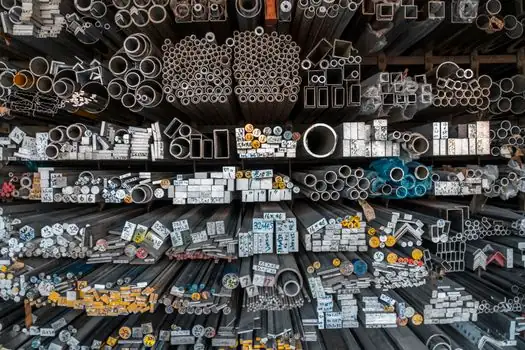
Four levers are operationally available to U.S. extrusion buyers through the end of 2026, ranked by implementation lead time: (1) qualify US-domestic extruders to capture the 10% smelt-and-cast rate, with lead times of 6 to 12 months for new die work and PPAP; (2) shift finished-goods imports into the HTSUS codes covered by the 15% temporary carve-out, valid through December 31, 2027, where applicable [S4][S8]; (3) negotiate toll-conversion arrangements where US billet is exported, extruded abroad, and re-imported under a Chapter 76 entry with documented US melt; (4) redesign parts to reduce aluminum intensity below the "almost entirely" threshold, accepting a 25% rate on full customs value in exchange for supply-chain flexibility [S3].
Lever 4 is the most underused: an extrusion redesign that drops aluminum mass below the Annex I-A threshold can move a 50% line item to 25% without changing the mill source, and the savings are computed on full entered value rather than metal content, so even small mass reductions can move large dollar amounts. Trackable signals to watch through Q4 2026: any extension or contraction of the December 31, 2027 sunset on the 15% equipment carve-out, the still-pending Supreme Court activity around Section 232 authority referenced in March 2026 commentary [S2], and the next CBP CSMS bulletin on HTSUS 9903.82.18 and 9903.82.19, which will close out the implementation guidance from the June 1, 2026 proclamation [S5]. Related reading on aluminum wire rod pricing and cable demand in 2026 and aluminium 2026 restart economics at ~$40/MWh power covers the upstream supply side feeding these extrusion decisions.