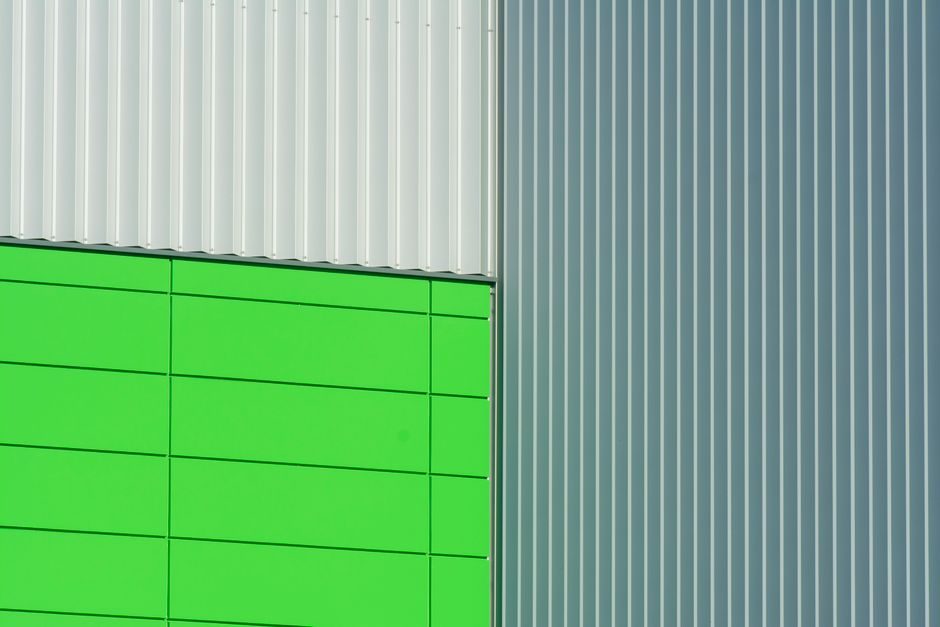
Lifecycle ownership of an aluminum veneer panel curtain wall over a 30-year service window runs roughly 1.8× to 2.6× the initial material-and-install line, driven mainly by recoating cycles, panel-by-panel replacement after façade impact, and the energy penalty of dark finishes on high-rise envelopes [S3][S4].
The stack breaks into six cost buckets — substrate and alloy, surface coating, fabrication and installation, access and labor for maintenance, panel replacement reserve, and end-of-life scrap credit — and the ordering between buckets is what separates a sub-USD 90/m² lifecycle from a USD 200/m² lifecycle on the same building [S3][S4].
What Counts Inside the TCO Stack
A defensible TCO model for a 30-year building envelope must convert every recurring line item to net present value using a discount rate, because maintenance dollars spent in year 15 weigh less than dollars spent in year 2 [S2]. The standard TCO taxonomy in capital-equipment contexts treats acquisition cost as only the first of seven categories: installation, operation, maintenance, downtime, training, disposal, and residual value — and a façade project collapses that into substrate, coating, install, access labor, replacement reserve, and scrap recovery [S1][S2].
For an aluminum alloy veneer, the substrate bucket is set by temper (H14/H24 vs H16/H26) and alloy family: 1100 for low-load soffit work, 3003 for general curtain wall, and 5005 or 3003 with ≥0.7% Mg where flatness after roll-forming is critical. PVDF (polyvinylidene fluoride) 70% Kynar 500-grade coating sits at the top of the coating bucket, with FEVE and high-performance polyester one tier below for color retention and chalk resistance, and PE (polyester) at the entry tier with the shortest re-coat interval [S4].
Cost Driver Hierarchy: What Actually Moves Lifecycle Spend
Coating choice is the single largest lever. PVDF specifies a 25-to-30-year color-and-gloss retention in vertical-wall orientation, while PE typically needs re-coat planning inside 10–12 years; in climates with high UV (UV index 8–11) the gap widens, and on coastal façades within 1 km of surf, salt-driven cuticle failure on PE can show inside 7 years [S3]. Material-and-coating combined therefore typically absorbs 55–65% of the 30-year stack, with substrate thickness (commonly 2.0–3.0 mm, occasionally 4.0 mm for ground-floor or spandrel zones) and alloy surcharges setting the floor.
Access-labor is the second-largest driver and the one most often under-budgeted. Roped-access (industrial abseil) cleaning on a 60-m façade is materially cheaper than swing-stage or mast-climber access, but only if the anchorage points were cast into the slab edge during design; retro-fitting anchorage later can equal 30–50% of one full recoat in cost. The recommendation in the field is to size the access budget against 4–6 clean cycles per decade, not the 1–2 a developer usually models at bid stage.
Replacement reserve is the third lever. A typical 2.0–3.0 mm 3003 panel is dent-resistant but not impact-immune, and on street-facing elevations hail, vehicle impact, and vandalism push a realistic annual replacement rate of 0.3–0.8% of the façade area. Over 30 years, that compounds to 9–24% of the surface — and a project's failure to fund that reserve is the single most common cause of an "on-budget Year 1, blew-up Year 12" curtain wall.
Selection Map: Matching Panel Tier to Building Profile
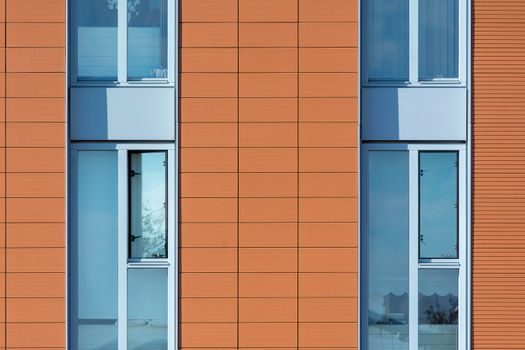
Three configurations cover the majority of real commercial projects. Configuration A is the budget tier: 2.0 mm 1100 alloy, PE coating, applied to low-rise (≤24 m) sheltered façades with clean visibility — useful life 10–15 years before re-coat. Configuration C is the premium tier: 3.0–4.0 mm 5005 alloy, PVDF on a chromate-free pre-treatment, with a 30-year system warranty and a documented 0.6–1.0% replacement-reserve budget for street-level or transport-corridor elevations. [S3]
The decision cuts on four axes — building height, distance from coast, color/gloss requirement (especially dark colors where chalk shows fastest), and façade accessibility. A coastal hotel, a 12-story dark-grey office, and a 4-meter retail parapet land in three different configurations; a single line-item spec across all three will mis-fund the project by tens of percent over the lifecycle.
Real-Use Comparison: PVDF vs FEVE vs PE on a 30-Year Envelope
On the same 5,000 m² mid-rise façade in a non-coastal climate with mixed sun exposure, a 3.0 mm 3003 panel with PVDF coating, 25-year scheduled re-coat, 0.4%/year replacement, and 4 clean cycles/decade sits as the baseline scenario. Stepping down to FEVE trims first cost by roughly 8–14% and trades 5–8 years of color-fastness for slightly better formability. Stepping down to PE trims first cost by 20–30% but forces a re-coat in year 10–12, and on south-west elevations in equatorial sun inside 8 years. [S2]
On a 30-meter high envelope with two cleanings per decade, a project that has internalized access-anchorage during design runs the cheapest access path (rope), where a project that skipped anchorage ends up on swing-stage or mast-climber, multiplying per-visit labor by roughly 2.5–4×. For deeper spec background, the aluminum veneer panel selection map lays out the same trade space in a different cut, and the framing-rail detail (most often 6063-T5 aluminum window door extrusions) is the second-largest material line in the install bucket and should be quoted in parallel, not as a change order later [S4].
Total Cost Stack — Numeric Range, Not a Sticker Price

For a 5,000 m² mid-rise commercial envelope, the 30-year lifecycle split in percentage terms typically lands in this band: substrate and alloy 22–28%, coating system 18–24%, fabrication and initial install 18–22%, access and cleaning labor 12–18%, replacement reserve 10–15%, and end-of-life scrap recovery −3 to −6% (negative, since aluminum scrap carries a credit that scales with alloy series and LME price). Procurement teams that quote only the first three buckets routinely underestimate the full lifecycle by 40–60%. [S3]
Energy is a sub-line, not a category, and it cuts two ways. Dark-color PVDF finishes (especially black, bronze, and dark grey) sit 8–15°C hotter than light-color finishes under the same solar load, raising the cooling load on the building; on a 50-meter high office in a hot climate that delta is worth 0.5–1.5% of annual HVAC energy, compounded over 30 years it becomes a non-trivial line in the TCO. Specifying a light-color or high-SRI PVDF on sun-exposed elevations is one of the cheapest moves in the entire spec.
Limitations, Failure Modes, and Common Mis-Specs
The three recurring failure modes are galvi-galvanic reaction at fixings, panel oil-canning on flat sheet wider than ~600 mm without stiffener ribs, and edge creep on cut edges where the coating was notched. The first is a material call — isolate the aluminum alloy panel from dissimilar metals (carbon steel, copper) with PVC or EPDM gaskets; the second is a thickness and stiffener call (do not run 2.0 mm flat spans wider than 600 mm without intermediate rib); the third is a fabrication call (routed-and-folded edges must be touched up with field-coat). [S1]
Skip the assumption that "all PVDF is the same." Generic PVDF is not Kynar 500/Hylar 500-grade, and color-and-gloss warranty length is the cleanest single signal — a 10-year warranty is the entry tier, 20-year is mid, and 25–30-year is the premium tier. The coating thickness spec should land at 25–35 µm primer plus 20–25 µm topcoat for vertical wall; below that, chalk and fade show faster than the warranty suggests. For tools and access equipment on install and maintenance cycles, the same height-engineering logic that drives aluminum ladder selection on site (T6 temper, 6063/6061) is a useful cross-check for the lightweight handling gear used in the install phase.
What to Track Over the Next 12–24 Months
Two signals worth watching: (1) the spread between PVDF and PE first-cost quotes is the clearest single indicator of where the project economics land — a narrowing spread pushes more volume into PVDF, a widening spread pushes more projects to plan an earlier recoat; and (2) scrap-credit volatility on the LME, since aluminum scrap can swing the 30-year net present value of a 5,000 m² envelope by low-single-digit percent of the total stack within a 12-month window. Build those into the cost model, not outside it. [S1]