Aluminum window and door products are classified along three independent axes — opening mechanism, frame construction, and base aluminum alloy/temper — and the spec sheet must carry all three to be comparable across suppliers [S1][S2].
Industrial buyers see opening style named first (casement, sliding, top-hung, folding, awning, tilt-turn, fixed) and frame construction second (solid aluminum, thermally broken system, aluminum-clad wood); the alloy grade 6063-T5 vs 6063-T6 then governs profile strength and surface-anodising response [S2].
Opening-Style Classification: Casement, Sliding, Top-Hung, and Tilt-Turn
Casement windows side-hung on friction stays remain the dominant opening type for residential and light-commercial projects because they seal against a full perimeter gasket under compression when the handle engages a multi-point lock [S1]. Guangzhou Sumraise lists casement, sliding, three-push-pull, and double-hung as separate factory product lines, confirming each is treated as a distinct assembly with its own tooling [S7].
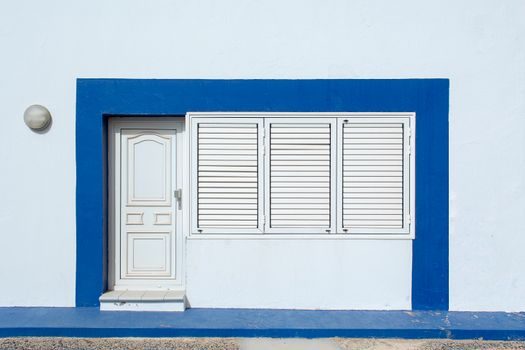
Sliding windows run on roller tracks and sacrifice perimeter gasket compression for footprint economy; the trade-off is higher air-infiltration rates, which is why coastal and high-rise specifiers push casement over sliding [S1]. Top-hung (awning) and tilt-turn variants hinge on the bottom or on a multi-link corner drive, giving outward-opening rain defence with the option of safe night ventilation; both are part of the system window-door family in Chinese and European catalogues [S1].
A less common sub-type, the "invisible" frameless-balcony window, uses tempered glass panels butt-joined through a plastic interlayer film rather than mullions; the panes can stack on one side for full glass cleaning, but the format is restricted to balconies because structural silicone joints cannot replicate an aluminium frame's wind-load capacity [S1].
Frame Construction: Solid Aluminum, Thermally Broken, and Aluminum-Clad Wood
Solid-aluminium frames extrude a single alloy profile with a hollow cavity; they are the lowest-cost option but act as a thermal bridge, so U-values sit well above passive-house thresholds in cold climates [S2]. Thermally broken, or "system," profiles insert a polyamide (PA66 GF25) strip between the inner and outer aluminium chambers, which can drop frame U-value into the 1.4–2.0 W/m²K range used in European passive-house construction; these products are catalogued as aluminum window-door "system" series in the export trade [S2][S9].
Aluminum-clad wood laminates a powder-coated or anodised aluminium shell to the exterior of a timber frame, combining the low-maintenance weather side of aluminium with the warm interior finish of wood; performance claims include low U-values, low maintenance, and no external rusting, with the wood species and aluminium cladding thickness driving cost [S5]. Boyd Aluminum has been making made-to-order commercial aluminium windows, doors, storefront, and historic-replica systems since 1961, illustrating the long product life commercial aluminium framing carries [S6].
Curtain-wall framing is a separate structural class where the aluminium mullions carry dead and wind load for the entire façade. A glass curtain wall at the same area weighs about 1/10 of a painted-brick wall, 1/15 of marble or granite, and 1/5 of a concrete hanging plate, so the framing member sizes — and the aluminum alloy grade used to extrude them — are selected by the building's structural engineer, not the window supplier [S9].
Alloy and Temper: Why 6063-T5 vs 6063-T6 Matters on the Cut List
Aluminium window and door profiles in the export catalogue are extruded from alloys 6063, 6061, 6082, and 6005 in tempers T5 (air-cooled from extrusion temperature and artificially aged) and T6 (solution heat-treated and artificially aged) [S2]. 6063 is the dominant alloy because its chemistry — magnesium and silicon as the principal alloying elements — gives a clean, defect-free surface after anodising, which is the surface treatment most architects specify for visible façade members [S2].
6061 and 6082 carry higher tensile and yield strength, so they show up in structural mullions, wind-load-bearing transoms, and high-traffic door stiles where the profile is doing structural work rather than holding glass [S2]. 6005 is the compromise grade, used where 6063 lacks the strength and 6061 is over-specified; its extrudability sits between the two.
Section-shape choice is driven by the function: I, U, T, C, Z, L, H, square, round, flat, hollow, and t-slot profiles are all listed in the standard Chinese export catalogue for window/door frames and wardrobe cabinet sliding doors [S2]. The same extrusion press, with a different die, produces each shape, so die cost — not the alloy — is often the gate on a custom profile order.
Surface Treatment Comparison: Mill, Anodising, Powder Coat, Electrophoresis, Wood-Grain
Standard surface-treatment options on aluminium window and door profiles are mill finish, anodising (oxidation), sand blast, powder coating, electrophoresis, and wood-grain transfer — each with a different cost, lead-time, and exterior-durability profile [S2]. Anodising grows an aluminium-oxide layer integral to the base metal, so it cannot chip or peel; powder coat lays a polymer film on top, giving broader colour choice but requiring careful pretreatment to avoid filiform corrosion in marine atmospheres [S2].
Wood-grain transfer is the surface-finish option that pairs most often with aluminium-clad-wood construction, where the interior wood species and exterior printed pattern must visually agree [S2][S5]. The high-quality powder-coated aluminium shell on a clad-wood window is specifically advertised as never rusting in the manufacturer's technical literature [S5].
Hardware and Accessories: Handles, Friction Stays, and Multi-Point Locks

Casement-window hardware is built around the friction stay (a four-bar arm that holds the sash open at any angle) and the multi-point lock, with the lever handle driving a spindle that engages espagnolettes at top and bottom [S3]. Model CW-450 in the standard Chinese export catalogue is a casement-window lever handle in aluminium alloy with a cream-coloured or customisable finish [S3].
Friction-stay model KWA-22FAM and the matching roller/track sets for sliding windows are spec'd separately from the profile, so the hardware vendor and the profile extruder are typically different suppliers even on a single project [S3]. Floor-hinge model V-25, used for aluminium-framed glass doors, is rated for door sizes up to 950 × 2200 mm and weights up to 100 kg, with a maximum opening angle under 105° and 90° hold-open positioning — values that dictate door leaf size more than the frame cross-section [S3].
Packaging, Lead-Time, and Sourcing Signals
Aluminium windows ship on iron pallets wrapped with protective tape on the frames, PE film over the units, plastic-strap bundling, and air-bag spacers between pallet layers to absorb container-handling shock and protect against sea-water exposure on ocean routes [S4]. Standard export minimum-order quantity is 100 sets with a 1,000-set-per-month supply capability in the typical Chinese factory listing [S2].
Two trackable signals from the May–July 2026 catalogue activity: Guangzhou Sumraise is registered from 2009 and lists casement, sliding, three-push-pull, double-hung, screen doors, and window screens as discrete product lines, indicating a multi-product factory rather than a single-line workshop [S7]; Boyd Aluminum's 1961-vintage commercial line shows the long product life and code-compliance iteration a US specifier can expect from a North American supplier [S6]. For buyers comparing a fire door order alongside the window package, the relevant separate reference is the fire-rated door classification standard, which is governed by a different test regime than the window U-value/air-leakage test.
Background reading: Dump Truck Trade-Offs: Payload, Cycle Time, and Site Fit.