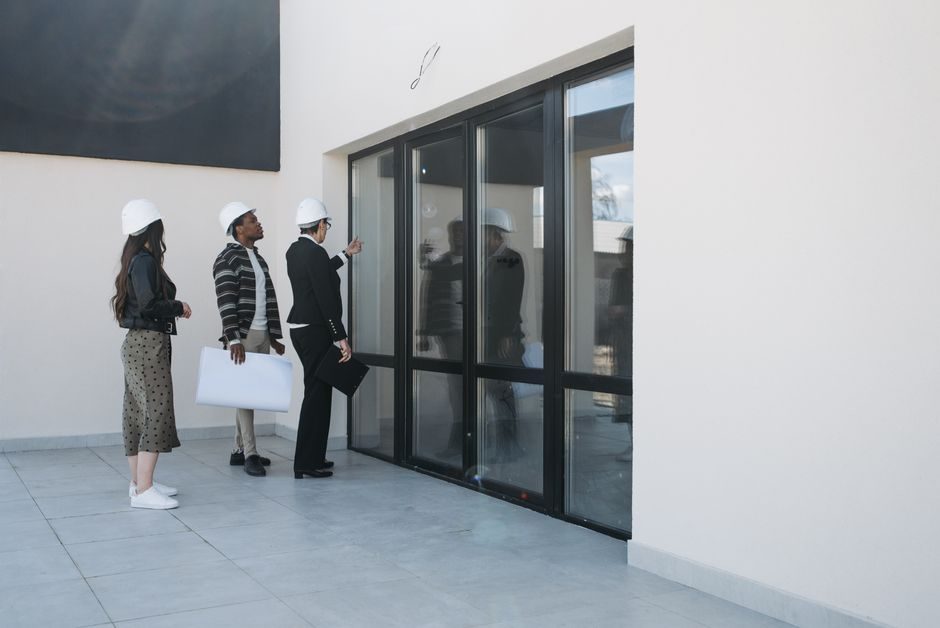
Buying an aluminum window or door in mid-2026 is no longer a price-per-square-metre decision: it is a four-axis specification problem covering profile alloy and thermal-break geometry, glazing build-up, hardware cycle rating, and project-level certification such as AAMA/ASTM, AS 2047 or hurricane-impact listing [S2][S3].
Across the sourcing landscape the unit spread is wide — Chinese mill-direct bifold sets at roughly US$ 133/set FOB Guangdong with 15-20 year color warranty, hardware fittings (handles, hinges, rollers) at US$ 0.63-1.25 per piece in 2,000-5,000 piece MOQ [S6], and full turnkey envelope packages from US fabricators/installers such as AWDI delivered nationwide with AAMA/ASTM and hurricane-impact rating baked in [S2]. Pinning the right number to the right spec line is what separates a working PO from a warranty claim.
Profile System and Thermal Break: The First Spec Gate
Profile selection is governed by alloy temper, wall thickness and whether the system is thermally broken or non-thermally broken, and the rule of thumb for 2026 mid-rise commercial work is a polyamide-strut thermal break on 6063-T5 or T6 extrusions, with frame depth commonly landing between 60 mm and 80 mm for casement systems and 90-120 mm for lift-and-slide [S1][S4].
For residential projects in mild climates, a non-thermally broken 1.2-1.4 mm wall system still ships at the bottom of the market and shows up in Asia-origin FOB quotes at roughly US$ 133/set for bifold configurations. For projects specifying U-value targets under 1.8 W/m²K, demand the polyamide-bar geometry, glass-fiber-reinforced strang thickness data, and a sample corner cleat — the visible cleat is the cheapest place to catch a low-grade extrusion before the line ships [S4].
Buyers searching by the term aluminum window and door should treat the encyclopedia entry as a terminology map, then map the named profile series (e.g. 50-series casement, 80-series sliding) onto a specific AAMA or CW-PG performance class before request for quotation.
Glazing Build-Up: IGU, Low-E, Gas Fill and Spacer
A residential aluminum window in 2026 almost always ships as a double-glazed insulated glass unit (IGU) with a warm-edge spacer, a soft-coat low-E coating on the inner lite, and argon fill; the jump to triple-glazed or krypton-filled units is a climate-driven decision, not a default [S1][S4].
For commercial envelopes, AWDI's spec sheet lists AAMA, ASTM and hurricane-impact-rated systems as a standard option, and hurricane impact demands laminated glass (typically 6.38-11.52 mm SGP or PVB interlayer) plus a reinforced frame anchoring schedule that the supplier must hand over with the shop drawing [S2]. The IGU spec also drives acoustic performance — asymmetric 6/12/8 mm or 8/12/10 mm builds hit STC 35-40, which is the band most hotel and office specifiers anchor on.
The encyclopedia reference for system window door is the better starting point when the project is a unitized curtain wall or a unitized balcony door, because the system is a structural frame, not a stand-alone sash.
Hardware: Cycle Rating and Material Before Brand
Hardware is the most common warranty failure point on aluminum openings, and the 2026 sourcing map from Made-in-China and Jiansheng shows rollers, hinges, mortise locks and tilt-and-turn kits shipping as commodity fittings at US$ 0.63-1.25 per piece, with full kits (hinge, handle, lock, roller) at US$ 50-100 per 10 m² of opening [S6].
The engineering question is not price — it is cycle life. Residential casement hardware should hit 20,000-25,000 open/close cycles minimum; commercial or hotel-grade hardware is specced to 100,000+ cycles on the hinge and at least 50,000 cycles on the locking mechanism. Marine-grade or coastal projects must request 316 stainless or powder-coated 304 fasteners to keep the salt-spray warranty alive past year three [S2].
For a deeper read on opener/closer/ironmongery spec lines beyond the window itself, the related article Architectural Hardware 2026: Spec-First Buying Guide for Openers, Closers and Ironmongery lays out the cycle-rating and material logic that also governs window hardware.
Certification and Standards Map: AAMA, ASTM, AS 2047, Hurricane Impact
Certifications are the line items that survive a project handover, and 2026 buyers should not accept a quote without named test reports. AWDI publishes AAMA, ASTM and hurricane-impact rating as standard across its commercial and residential lines, and that combination is the cleanest way to get CW-PG performance class, water-penetration and structural-load data into a US submission [S2]. Australian projects anchor on AS 2047, and one Shanghai export line on go4worldbusiness lists AS 2047 plus a 6-year warranty as its primary compliance pitch [S3].
European projects commonly reference EN 14351-1 as the CE-marking basis for windows and doors, while Gulf and Middle East projects often default to AAMA 101 / CW-PG analogues because the design wind loads exceed what EN 14351-1 typically covers in stock profiles. Buyers should treat the standard number as part of the line item, not a footnote.
Where Aluminum Fits — and Where It Doesn't
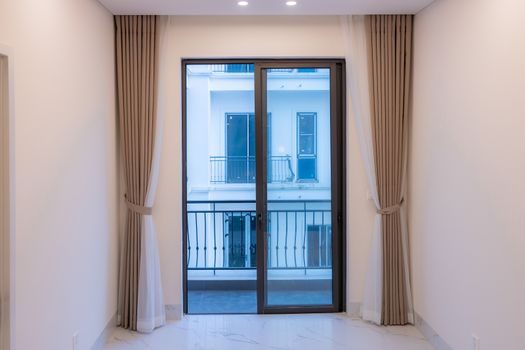
Aluminum wins on span, slenderness, weather resistance, and finish variety (powder-coat RAL, anodized, PVDF, wood-look sublimation) at 15-20 year color warranty on premium lines. It is the right pick for floor-to-ceiling sliding doors, bifold systems, coastal and hurricane zones, and any opening wider than 2.4 m where uPVC or timber would structurally struggle. [S1]
Aluminum is the wrong pick when the priority is the lowest possible U-value per dollar — well-designed uPVC and timber/aluminum composite systems hit better U-values at the same glazing package — and when the project is on a tight residential budget under roughly US$ 80/m² of opening, including install. For fire-rated openings (apartments, hotels, plant rooms), aluminum is also not the default; the Fire-Rated Door Price & Cost Guide: Rating, Material and Hardware Levers article maps the spec bands that beat aluminum on cost and certification for that sub-set. Pair the aluminum spec to a fire door or fire-rated door only when the rating and the frame material both fit the local code, not because aluminum is the cheapest metal on the BOM.
Cost Levers and Sourcing Reality in 2026
The 2026 price stack has four independent dials: mill-grade aluminum (which itself tracks the LME 6063 billet plus extrusion premium), profile complexity (curtain-wall unitized vs simple casement), glazing build-up (single → double → triple, low-E count, gas fill), and hardware cycle rating. A baseline bifold FOB Guangdong at US$ 133/set with 5-year warranty and 15-20 year color warranty is the floor for the consumer-tier residential line; adding hurricane impact, triple glazing and 100,000-cycle hardware moves the same opening into the US$ 350-600/m² range delivered. [S2]
For the broader aluminum feedstock context that drives billet cost, the article Aluminum 2026 Price Bands: Scrap, Mid-Stream and Finished Goods Compared is the right reference. Tooling for profile lines and welding/cornecting equipment sits in a different cost band — laser welders at US$ 3,000-6,500 per piece and full PVC/aluminum jointing machine sets at US$ 24,000-26,500 [S5] — and these capex numbers are a useful sanity check on a fabricator's true capacity, because the cheapest quote often comes from a workshop that does not own the welder on its data sheet.
Track the next 60-90 days for: (a) revised AAMA 101 / CW-PG updates that tend to land Q3-Q4; (b) US 2026 hurricane-season post-mortems that will tighten impact-rating demand in the Gulf and Southeast; and (c) the next LME 6063 billet print, because a 5-8% billet move typically flows through to FOB quotes within one shipping cycle.