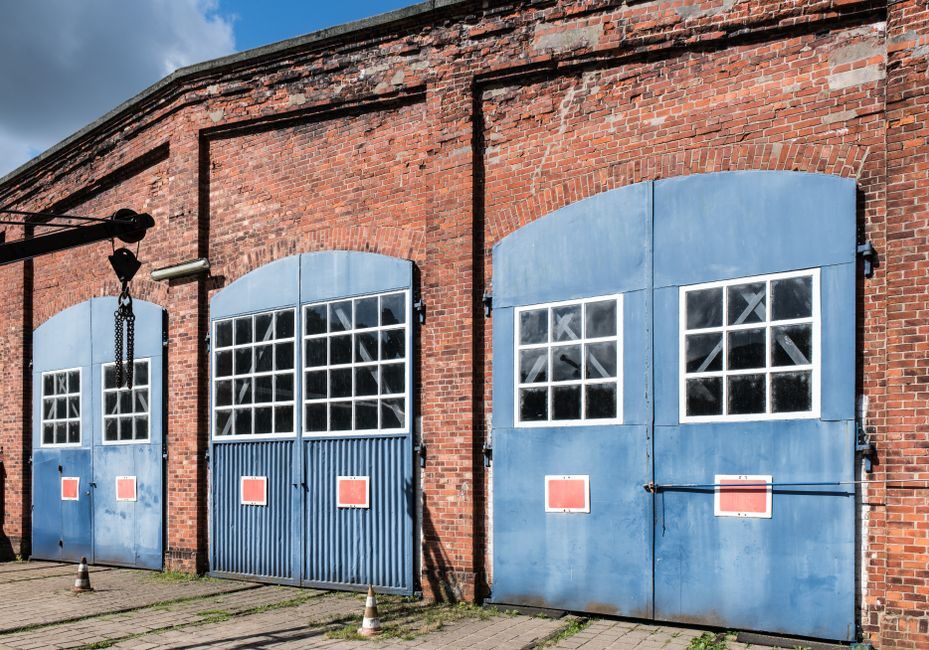
UL 3.0-hour fire doors on Made-in-China list at a 10-set MOQ with L/C or T/T terms, FOB Shanghai, and a stated 10,000 sets/year production capacity, anchoring the export-cost floor for heavy commercial steel assemblies [S1].
At the consumer end of the same product class, fiber-cement, MgO-board and steel fire doors on the same platform post US$2.88-$16.88 per piece at a 100-piece MOQ, defining the entry-tier spread for light commercial and residential cores [S4]. For a useful spec cross-reference, see the fire-rated door encyclopedia entry and the broader fire door reference before reading further.
Rating Bands Drive the Price Step-Function
Fire-door cost is not linear with size or material; it jumps at the rating threshold because the test furnace time, the intumescent seal package, and the hardware listing all change. The 20-minute (FD20 / Class B / ½-hour) door is the commodity tier and is the band where most interior hotel and apartment corridor doors sit; these typically list on Chinese export portals in the US$50-$150 factory range, with a US$2.88-$16.88 fiber-cement/MgO core piece representing the absolute floor for unrated or low-rated residential cores [S4].
The 60-minute (FD60 / 1-hour) band is the workhorse for commercial corridors, stairwells, and mechanical-room penetrations; in this band, the fire door assembly gains a heavier steel skin, mineral-stone core, and listed self-closing hardware. The 90-minute (FD90 / 1½-hour) and 3.0-hour bands shown on the export catalog are the heavy-commercial / industrial tier and are where UL-listed steel assemblies with welded frames, listed closers, and panic-grade hardware sit [S1]. The 3.0-hour rating is the top of the common UL listing ladder and the band that moves a door from "wall assembly" to "fire-wall assembly" in IBC terms.
Material and Core: Steel, Wood, MgO and Fiber-Cement
Four material families compete, and each carries a different cost vector. Galvannealed or cold-rolled steel skins over a mineral-stone or honeycomb core dominate the 60-180 minute bands; the fire-rated door of this class is what 90% of NYC commercial inspections cite [S2]. Solid-core wood (particleboard or stave core with intumescent edges) is the FD20-FD60 standard for healthcare patient rooms and hotel guest rooms, where the Kingsway Group SEN01 patient-room swinging wooden door is representative of the breed [S3]. Magnesium-Oxide board and fiber-cement boards are sold both as cores for higher-rated doors and as standalone fireproof sheets, and they list at the US$2.88-$16.88 / piece band on the export catalogs with 100-piece MOQs [S4].
Stainless or galvanized steel faces add roughly 20-40% over standard cold-rolled skins for the same rating. Vision lite cut-outs with listed fire-rated glass (typically 100 sq in.
Hardware, Certification and Listing Cost Stack

A door leaf is rarely the line item that blows the budget; the listed hardware set is. For a 90-minute assembly, expect a self-closing device (UL 10C-listed, $80-$250), listed ball-bearing hinges (3-4 per leaf at $15-$60 each in commercial grade), a fire-rated latch or mortise lock ($60-$300), intumescent seals and smoke gasketing ($20-$60 per set), and a listed kickplate where abuse is expected ($30-$80). For stairwell and assembly use, listed panic hardware runs $300-$900 per device, which is why two-leaf stairwell doors routinely come in at $1,200-$2,500 per opening before installation [S2].
Certification marks carry real cost. A UL or WHI label on a steel fire door typically commands a 10-25% price premium over an unmarked export assembly, and that premium buys the furnace-test paper trail that US code officials and NYC DOB inspectors will ask for at sign-off. The Made-in-China UL 3.0-hour listing is the explicit example: the listing is the product, not a marketing badge [S1].
SKU Tiers and the 2026 Sourcing Reality
Tier the catalog the way contractors do. Tier 1 (commodity, 20-min residential cores, fiber-cement or MgO sheets): US$2.88-$16.88 / piece at 100-piece MOQ from export catalogs, with corresponding retail markups of 3-5x in the US [S4]. Tier 2 (FD60 solid-core wood for healthcare and hospitality): typically $200-$600 per leaf factory-direct, $400-$900 installed in commercial interiors, with Kingsway-type patient-room doors as the type specimen [S3]. Tier 3 (UL-listed 90-min-3.0 hr steel assemblies): the export 10-set MOQ tier is the entry point, and installed commercial pricing in NYC runs $1,500-$5,000 per opening for a single, $4,000-$8,000 per pair, with 3-5 day lead times on the in-house manufactured-and-installed programs [S1][S2].
Lead time is itself a cost vector. The Made-in-China supplier states a 10,000 sets/year production capacity, which translates to roughly 830 sets/month, or a 4-6 week build slot for a 100-set order; the NYC in-house manufacturer advertises 3-5 days from order to installed opening, a lead time only achievable because they control the leaf, the frame, and the install crew under one roof [S1][S2].
Who Should Buy What: Use-Case Routing
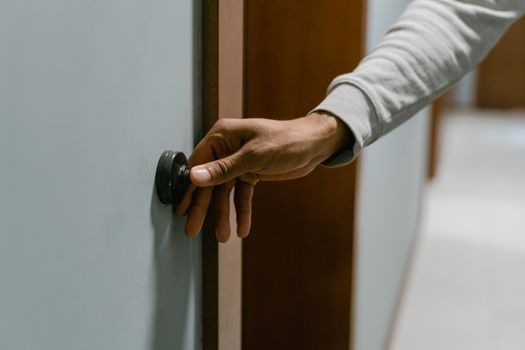
Specifier, developer, and end-user should each land on a different SKU. A healthcare fit-out specifying patient-room swinging wooden doors should land on a Kingsway-class solid-core wood leaf with listed kickplate and continuous hinge; this is the fire door you will see in 80% of hospital renovations [S3]. A general contractor bidding a 30-story commercial tower with 200+ stairwell and mechanical-room openings should land on a UL-listed 90-min-3 hr steel assembly, sourceable from the Made-in-China export tier at 10-set MOQ, but with the UL label specified as non-negotiable [S1]. A property manager patching a single failed NYC apartment door should land on a 60-min solid-core wood or 90-min steel replacement on the 3-5 day in-house install program [S2]. A code-driven budget buyer looking for a cheap fireproof sheeting product for non-door partitions should look at the MgO / fiber-cement band at the $2.88-$16.88 / piece entry tier, but should not confuse that product with a labeled fire door [S4].
Limits, Failure Modes and What the Catalog Will Not Tell You
The single largest failure mode in this category is the unlisted-assembly trap: a door leaf with a fire-rated-looking intumescent edge, sold with no third-party certification mark, will not pass a US inspection and will be ordered removed. The export catalogs are full of such products at attractive prices; the inspection will not accept them [S1][S2]. The second failure mode is field modification: trimming a labeled fire door in the field beyond the listed machining tolerance (typically 1/8 in. per edge on wood, 1/16 in. per edge on steel) voids the label and is one of the top reasons DOB and AHJ inspectors write up a stop-work order.
Third, frame and hardware must share the same listing hour as the leaf. A 90-min leaf on an unrated frame, or with a non-listed closer, is a 0-min assembly in the inspector's eyes. Fourth, the export FOB Shanghai price [S1] is not a delivered US price: budget $80-$250 per leaf for ocean freight on a 40-foot HC container, plus US duty (HTS 7308.30 on steel assemblies has been duty-variable under recent Section 301 actions), plus a US-based label-holding importer who carries the furnace-test paper. The cheaper export price is the floor, not the total.
Standards, Sourcing Channels and a Verifiable Next Step
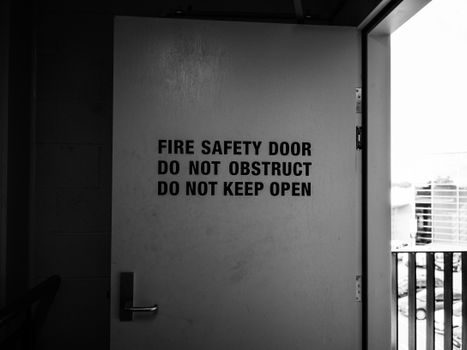
The governing standards for this product class in the US are NFPA 80 (Standard for Fire Doors and Other Opening Protectives), NFPA 252 (the furnace test method), and UL 10C / UL 10B (the positive-pressure and neutral-pressure fire tests). NYC additionally enforces the NYC Building Code Chapter 7 and the NYC DOB TR-1 retroactive door program for existing buildings, which is what the 3-5 day install programs are explicitly built to clear [S2]. For the wider spec logic on a related building-product category, the architectural hardware selection guide is a useful cross-reference for ironmongery-driven spec flows.
Trackable next signals: (1) UL 10C revision cycles and any expansion of the 3-hour listing band beyond the current steel and mineral-core constructions; (2) NYC DOB enforcement intensity on the TR-1 retroactive door program, which directly drives order flow to the 3-5 day in-house install tier [S2]; (3) export-side Section 301 duty movement on HTS 7308.30, which moves the delivered price of a Made-in-China UL 3.0-hour set by tens to low-hundreds of dollars per leaf [S1].
For component-level specifications, see linear guide.