Ammonia prices climbed broadly in September 2026, with six regional benchmarks all posting month-on-month gains between 5.6% and 28.3%, led by Africa at USD 0.77/kg, Europe at USD 0.92/kg, and North America at USD 0.81/kg [S1].
The cost spike is structurally tied to upstream natural gas, the dominant Haber-Bosch feedstock, with European producers most exposed to LNG price swings, and the conflict-related closure of the Strait of Hormuz continuing to squeeze seaborne supply through Q2 and into Q3 [S1][S4]. For buyers mapping procurement risk across gas analyzer and gas cabinet instrument lines, ammonia sits in the same supply-cost basket as the natural gas that fires reformer burners.
September 2026 regional price snapshot
The September 2026 IMARC index shows Africa at USD 0.77/kg (+28.3%), Europe at USD 0.92/kg (+22.7%), North America at USD 0.81/kg (+24.6%), Northeast Asia at USD 0.44/kg (+18.9%), Middle East at USD 0.64/kg (+18.5%), and South America at USD 0.76/kg (+5.6%) [S1]. These are list benchmarks, not delivered CIFs for every contract, and each tracks a different incoterm basis: Africa and South America are largely CFR import hubs, while Middle East and Northeast Asia FOB points sit lower on the cost stack.
Q3 contract prints from Procurement Resource show the spread between FOB and CIF delivery clearly: China FOB at USD 324.12/MT, India CIF at USD 430.93/MT, USA CIF at USD 511.61/MT, Brazil CIF at USD 495.73/MT, and Canada CIF at USD 526.61/MT, all as of July 2026 [S3]. The USD 187/MT gap between China FOB and Canada CIF in the same month is a clean freight, insurance, and inland-delivery premium, not a commodity spread.
Natural gas linkage: why Europe pays more
Conventional ammonia is produced via Haber-Bosch synthesis at roughly 450°C and 200 bar over an iron catalyst, consuming about 33-38 GJ of natural gas per tonne of product, which is why gas-cost pass-through is near-mechanical for steam-reforming plants [S5]. European ammonia producers are more exposed to seaborne LNG feedstock costs while North American producers benefit from ample domestic gas supply, historically keeping North American ammonia prices softer than Northwest European prices during periods of tight gas.
ICIS analysts flagged on 2026-04-28 that European gas supply could tighten again if Qatari LNG facilities remain shut, because Europe's summer gas-injection season competes with air-conditioning LNG demand in parts of Europe and northeast Asia [S4]. The same note projected a Henry Hub rise in December 2026 and January 2027 from seasonal heating demand and new US LNG export capacity, partially offsetting the downward pressure on US ammonia prices once new LNG trains start up [S4].
Supply-side shocks layered on top of gas
Three supply-side events are amplifying the gas-cost base. First, Russian ammonium nitrate output fell sharply in the first five months of 2026 following Ukrainian drone attacks on Russian chemical plants, removing prompt tonnage from the European market [S2]. Second, the Strait of Hormuz remains effectively closed to most vessels while the US-Iran conflict runs, blocking Qatari ammonia flows and forcing buyers to re-route via the Cape of Good Hope at higher VLGC freight, listed at USD 80-120/MT by Ammonia Observatory [S4][S5].
Third, structural capacity is still expanding: Yara International completed a USD 1.3 billion acquisition of a Gulf Coast ammonia plant in Texas in 2026, adding US supply that is helping to damp, but not break, the US Gulf Coast NBP price (USD 608/MT CFR, Q1 2026) [S2][S5]. For comparison, Northwest Europe (Rotterdam) CFR sits at USD 679/MT, roughly an 11.7% premium to the US Gulf, a ratio that has held through 2025 and 2026 [S5].
Cost-driver ranking for procurement
Ranked by impact on the delivered ammonia price, the drivers are: (1) natural gas feedstock cost, 60-75% of variable cost for steam-reforming plants; (2) regional supply-demand balance, with seasonal fertilizer restocking adding 5-15% during planting windows; (3) freight and insurance, USD 80-120/MT for VLGC, plus canal/transit surcharges when Hormuz is closed; (4) plant reliability, where a multi-week turnaround in a single 1,000 MT/day unit moves regional prices by single-digit percent; and (5) trade policy, including Chinese export quotas on urea issued in late May 2026 that eased derivative pressure on the nitrogen chain [S2][S3][S5].
For green ammonia, the driver stack is fundamentally different: electrolyser LCOH replaces natural gas as the dominant variable cost, putting green CFR prices in Germany, Canada, the US, and Australia at USD 807-875/MT (Q1 2026) versus grey benchmarks of USD 460-679/MT, a green premium of roughly USD 380-560/MT [S5]. This is why 23 offtake agreements totalling 7.6 MTPA have been publicly disclosed, with only 9 binding contracts and first deliveries from 2025 onward, including the Air Products / NEOM 1.2 MTPA deal and the CF / JERA / Mitsui JV at 1.1 MTPA [S5].
Demand pull: 70% fertilizer, plus industrial niches
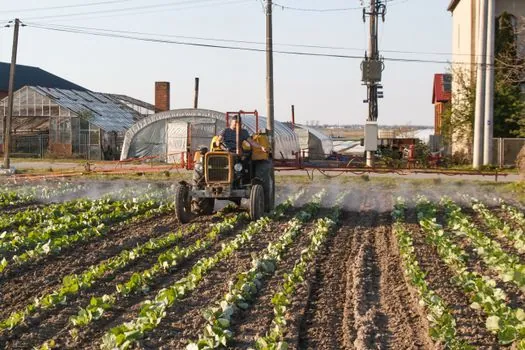
About 70% of global ammonia flows to fertilizer (urea, ammonium nitrate, ammonium sulfate), with the remaining 30% split across chemicals, nitric acid, caprolactam, steel, cleaning, and synthetic fibers [S2][S5]. Global production sits near 198 MT/yr (2025 estimate) on a USD 92 billion market value base, and India's Kharif season alone is expected to absorb 390.54 lakh tonnes of fertilizer, with stocks already covering over 51% of requirement as of mid-2026 [S2][S3][S5].
Industrial gas users running lighting equipment and electric lamps and lamps and light fittings in fertilizer or steel plants should note that ammonia and its derivatives touch NOx abatement, selective catalytic reduction, and ammonium-nitrate neutralization lines; a price move on ammonia flows through to reagent-grade ammonium nitrate within one procurement cycle, and to AdBlue / DEF within two.
Forecast curve: elevated through 2026, correction in 2027
ICIS's base case from 2026-04-28 calls for global ammonia to remain elevated through H2 2026, with a six-month supply-chain recovery before prices realign with fundamentals from January 2027, led by a steep US correction when new LNG capacity starts up [S4]. The same outlook expects Asia to track Europe (the highest-cost producer) and for Asia to remain backwardated from June 2026 to October 2026 on tight prompt supply during India's Kharif application season [S4].
Two verifiable signals to watch: the restart status of Qatari LNG facilities, which would ease European gas pressure and drag ammonia back toward USD 600/MT CFR, and the commissioning of new US LNG export capacity, which would widen the US-Europe arbitrage and accelerate the projected January 2027 US price correction [S4]. The 2022 analogue is worth keeping on file: ammonia reached above USD 1,500/tonne CFR NW Europe in April 2022 during the Russia-Ukraine gas shock, a level the current cycle is not expected to revisit under the base case [S4].
See also our earlier report, 6063 vs 6061 Extrusion Lead Time in 2026: What Buyers Should Quote.