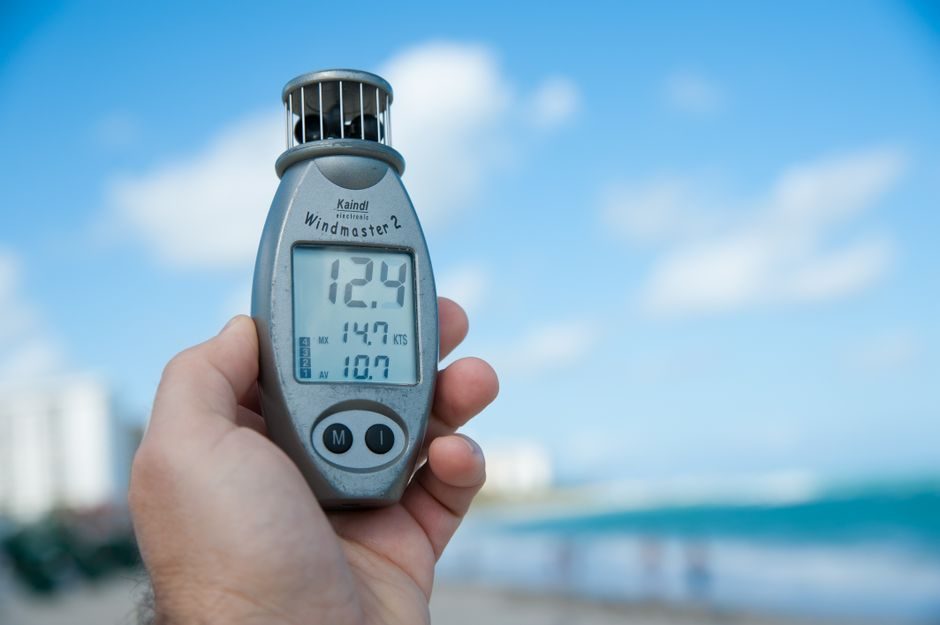
An industrial anemometer's purchase price correlates directly with four spec tiers: handheld cup/vane ($40–$250), thermal hot-wire for cleanrooms and HVAC balance ($200–$900), industrial ultrasonic flow-head pairs for wind farm power performance ($1,500–$8,500), and Ex-certified ultrasonic units for offshore/zone-1 process plants ($6,000–$15,000+).
Total cost of ownership, however, is dominated by recalibration intervals, mounting hardware, signal-conditioning cabling, and traceability documentation rather than the sensor alone. Buyers who focus only on unit price routinely underestimate the installed cost by a factor of 2–4 across a 10-year service life.
Anemometer Type, Sensing Principle, and Price Bands
The three commercially dominant anemometer principles are mechanical cup/vane, thermal hot-wire, and ultrasonic transit-time. Cup and vane anemometers use rotating assemblies and a magnetic or optical pickup; hot-wire units measure convective heat loss from a heated sensing element; ultrasonic units time the propagation of an acoustic pulse between paired transducers to derive flow velocity.
Across the 2026 industrial supply chain, the price bands cluster as follows: cup/vane handheld $40–$250, weather-station grade cup $300–$1,200, hot-wire HVAC/laboratory $200–$900, industrial ultrasonic with 4–20 mA + HART output $1,500–$8,500, and IEC 61400-12-1 / IEC 61400-50-2 power-curve ultrasonic $5,000–$15,000. Ultrasonic models eliminate moving parts, which removes bearing wear and frost-induced mechanical seizure, the two dominant failure modes on cup anemometers in cold-climate wind farm service.
For a complete sensor taxonomy and operating-principle background, the anemometer encyclopedia entry walks through cup, vane, hot-wire, and ultrasonic variants side-by-side, including their response time and threshold-of-detection envelopes.
What Drives the Price Up: Sensor Stack, Materials, and Output Protocol
The first price driver is the transducer and housing material. Marine-grade 316L stainless heads with titanium mounting hardware add roughly 40–80% to the body cost versus powder-coated aluminium, but they are mandatory in offshore IEC 61400-25-5 nacelle retrofits where chloride pitting is the limiting failure mode. [S2]
The second driver is signal output. A bare 0–10 V or 4–20 mA analog head is the cheapest configuration. Adding HART 7 protocol enables multidrop digital calibration and remote diagnostics but typically adds $250–$600 per unit. Foundation Fieldbus or PROFIBUS PA outputs add another $400–$900 because the transducer must integrate an IS-barrier-compatible stack and a bus-powered signal conditioner. For plant engineers already running Foundation Fieldbus on the turbine controller, selecting an ultrasonic head with that native protocol removes the gateway cost and the failure point that gateway represents.
The third driver is the calibration certificate. A factory-traceable wind-tunnel calibration against a primary standard adds $300–$1,200 per unit depending on the speed range swept (typically 0–60 m/s). A UKAS or A2LA-accredited certificate with measured uncertainty at each set point adds another 20–40% on top of the standard certificate. Procurement teams that skip the accredited certificate to save cost discover the gap during a contractual power-curve verification audit, where measurement uncertainty propagates directly into lost revenue.
Where Cost Hides: Installation, Cabling, and Mounting Hardware
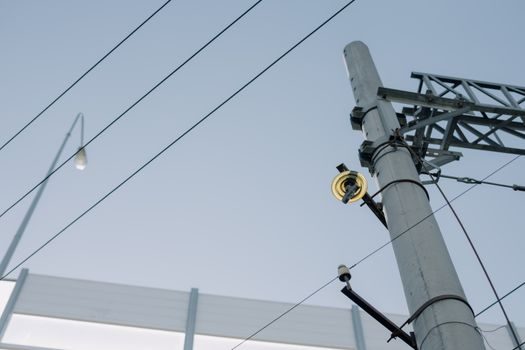
Installed cost routinely exceeds purchase price in the field. A $3,500 industrial ultrasonic head can require an additional $1,500–$3,000 in installation line items: lightning surge arrestors rated to IEC 62305, shielded twisted-pair instrumentation cable (typically 4-core, 1.5 mm², armoured), cable glands rated to IP66 or IP67, heated mast sections for anti-icing, and a calibrated boom-and-nacelle-mounting fixture for power-curve met masts. [S2]
For reference-class met masts, the IEC 61400-12-1 standard requires redundant anemometers at hub height, redundancy in power supply, and a documented boom orientation to within ±0.5°. Each of these adds discrete cost lines that engineering specs need to enumerate rather than assume the sensor vendor will bundle them. A common spec failure is specifying a sensor without a heated transducer head; ice accretion on ultrasonic membranes degrades the acoustic coupling and biases the speed reading high by 3–8%, which is large enough to fail a power-curve acceptance test.
Mounting location also matters. Tower shadow effects on a lattice met mast can introduce 2–5% speed bias if the boom is not long enough relative to the tower face. The corrective cost is a longer boom or a top-mounted sonic instead of a side-mounted cup, both of which move the price band upward.
Application Map: Who Each Tier Is For
Handheld cup/vane anemometers ($40–$250) are correct for HVAC commissioning, indoor air-quality audits, scaffold safety checks, and crane wind-speed lockouts. They are not appropriate for any revenue-grade or power-curve measurement.
Hot-wire anemometers ($200–$900) suit fume-hood face-velocity verification, cleanroom certification to ISO 14644-3, and laboratory bench work where low velocity (0.05–5 m/s) and fast response are critical. They are not suited to outdoor long-term service because contamination on the wire element drifts the calibration within weeks.
Industrial ultrasonic with HART or 4–20 mA ($1,500–$8,500) is the default for process-plant HVAC, ventilation on demand in underground mining, and any hazardous-area zone where no moving parts and no ignition source are required. Note that hazardous-area certification (ATEX category 2 or IECEx zone 1) adds roughly $2,000–$4,000 over the equivalent safe-area unit, but it is non-negotiable for offshore platforms and refineries.
Reference-class ultrasonic for power performance ($5,000–$15,000) is mandatory for any wind farm where the contractual energy yield is being measured for revenue settlement, bankable power-curve verification, or OEM warranty acceptance. Here, the instrument price is small compared to the per-percentage-point uncertainty cost on a 100 MW+ project.
Comparison of Anemometer Types on Four Decision Criteria
Stacking the four types against four buying criteria: price, accuracy class, maintenance burden, and hazardous-area availability, the picture is clear. Cup/vane scores lowest on price and highest on maintenance; hot-wire scores well on accuracy at low speed but loses on outdoor service life; industrial ultrasonic wins on maintenance burden and Ex availability at moderate cost; reference ultrasonic wins on every criterion except price. [S2]
For wind-resource assessment campaigns with 12-month deployment horizons, a common compromise is to deploy industrial-grade ultrasonic ($2,500–$5,000 per head) and accept slightly higher instrument cost in exchange for a 1–2% reduction in measured uncertainty, which directly improves the project finance case. The cost differential against a cup anemometer met pack pays back inside the first 6 months of measured operation for any project above 50 MW nameplate capacity.
Total Cost of Ownership Over a 10-Year Service Life
[S2]
A TCO comparison across anemometer types is detailed in the optical-glass TCO 10-year buy-math analysis, which uses the same 10-year cost-driver framework for a different but methodologically comparable instrument class. The same cost-stack logic applies to anemometer procurement.
For buyers specifying on capex only, the cup anemometer looks 3–6x cheaper than ultrasonic; the TCO calculation usually flips that within 3–5 years once recalibration, bearing replacement, and ice-related data-loss outages are priced in.
Standards, Calibration, and Traceability Buyers Must Anchor On

Two standards dominate the spec sheet. IEC 61400-12-1 governs nacelle-anemometer power-performance measurement for horizontal-axis wind turbines, defining installation, data reduction, and uncertainty propagation. IEC 61400-12-2 covers cup-and-sonic transfer-function calibration of anemometers. For cleanroom and HVAC work, ISO 14644-3 governs cleanroom test methods, including face-velocity measurement at filters and fume hoods.
Buyers should require traceability to a national metrology institute (NPL, NIST, PTB, or equivalent) and refuse any certificate that does not state measured uncertainty at each calibration point. For Ex-rated units, ATEX 2014/34/EU or IECEx certification must accompany the serial-number-specific documentation; group certificates are not acceptable for installation in zone 1 or zone 2 areas.
For purchasing teams sourcing through industrial distributor channels, the procurement workflow mirrors the price-protection integration logic described in the Oracle Price Protection User Guide [S1], where supplier price changes propagate to active inbound price lists and open purchase orders on the price protection effective date. The same effective-date discipline is what determines whether your 2026 budget captures the new lower anemometer list price or gets locked in at last year's rate.
Procurement Signals to Track in 2026
Three signals are worth watching through 2026 H2: a) any vendor move to bundle HART 7 + Foundation Fieldbus firmware on the same transducer head, which compresses the $400–$900 protocol-premium and simplifies spares; b) Chinese ultrasonic head makers continuing to push into the $1,500–$2,500 band, which historically forced European and Japanese incumbents to sharpen their mid-tier pricing; c) a pending review of IEC 61400-12-1 calibration uncertainty budgets, where the new draft (still under review in 2026) is widely expected to tighten the maximum allowable measurement uncertainty on a Type-A anemometer below 1.5% at hub height.
Buyers writing 2026 RFQs should require three things in the response: the factory calibration certificate with stated uncertainty, the Ex certificate number cross-referenced to the serial-number range, and a 5-year TCO line-item quote including recalibration and spare-parts. Anything less leaves the project exposed to cost surprises during the operational phase.
Spec-level background on the components involved: linear guide, and crossed roller guide.