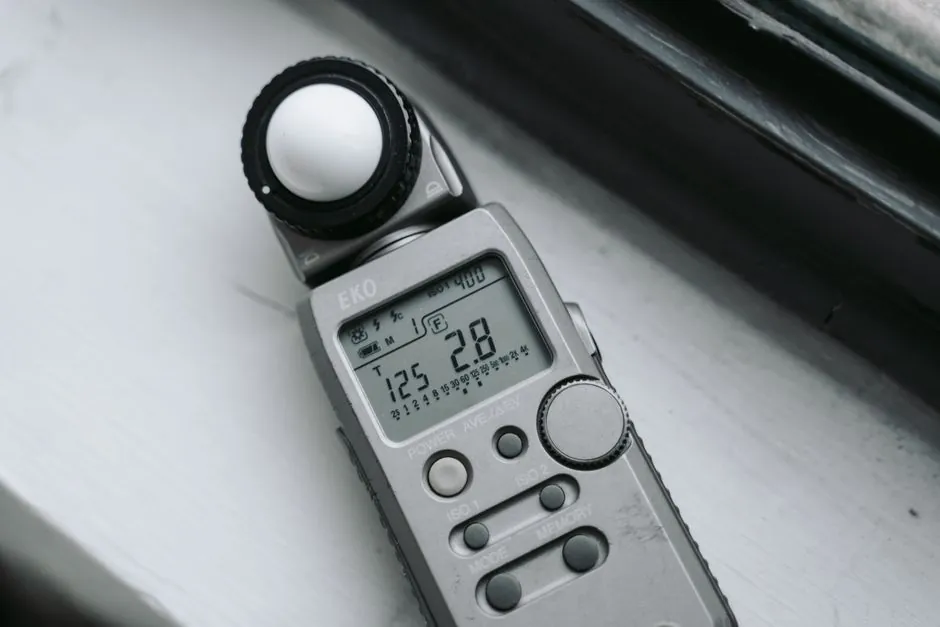
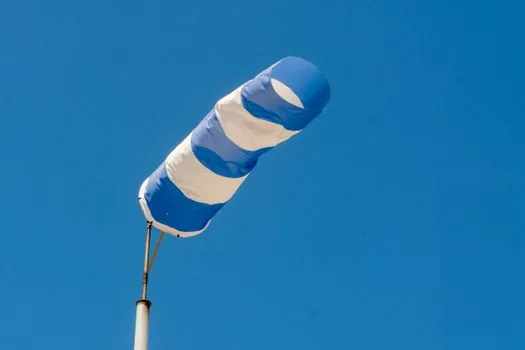
An anemometer measures air velocity (and, in most industrial models, also direction) using a rotating cup, vane, or thermal sensor head, while a temperature humidity recorder is a data-logging instrument that stores time-stamped climate samples to internal memory [S1][S2].
The two instruments share the same air stream but answer different engineering questions: an anemometer tells you what the air is doing right now (m/s, km/h, knots, or Beaufort), while a temperature and humidity data logger tells you how the climate envelope changed over hours, days, or weeks, with memory capacities that range from a few hundred samples to more than 65,000 samples per channel [S1].
What each instrument actually measures
An anemometer outputs a wind or airflow value derived from the rotation rate of a cup/vane assembly, the cooling effect on a heated thermistor, or the differential pressure across a known orifice; the standard meteorological output set is instantaneous wind speed, average wind speed, maximum gust, and extreme gust, typically reported in m/s, km/h, or knots [S5]. Industrial airflow audits in HVAC, cleanroom, and tunnel work use the same physical principles but the range is compressed, often 0.1–20 m/s for indoor or 0–45 m/s for exposed-site units, with a cup/vane threshold around 0.3 m/s below which readings become unreliable [S5].
Industrial loggers such as the Rotronic BL-1D and HYGROLOG HL-1D both quote 32,000 sample memory, the OMEGA OM-90 series quotes 65,520 samples, and the compact testo 164 H1 quotes 300 samples for a fixed-interval, online-monitoring deployment [S1].
Sensor physics and accuracy profile
Anemometer accuracy is dominated by the head geometry and the bearing/thermal drift inside the transducer: cup and vane heads typically quote ±3% of reading or ±0.3 m/s, whichever is greater, while hot-wire probes reach ±0.1 m/s but only over a narrow 0–5 m/s band and require frequent re-zeroing; differential-pressure-based flow probes (Pitot, orifice plate) tie accuracy back to ISO 5167 stack tolerance, generally ±1% of full scale when installed with the recommended straight run [S5].
Temperature and humidity recorder accuracy is split between two channels: a typical capacitive polymer RH sensor quotes ±2.0% RH in the 5–95% RH range with ±0.3 °C dry-bulb at 25 °C, while a PT100 or PT1000 RTD can hit ±0.1 °C across 0–50 °C [S1][S2]. DIY-grade DHT11-class devices, by contrast, can drift 5 °C inside a closed plastic enclosure when the on-board regulator heats the air around the sensor, which is why industrial recorders use a separated probe head on a 1–5 m cable and a Gore-Tex vented cap to keep the element in free air [S3].
Memory, logging interval, and deployment pattern
Industrial recorders differentiate themselves on three numbers: maximum sample count, minimum logging interval, and how the data gets off the device. The Rotronic HL-20D sits at 20,000 samples, the BL-1D/HL-1D at 32,000, the OM-90 series at 65,520, and the testo 164 H1 at 300, while 4G-connected supply-chain units such as the SpotBot 4G Plus add tri-axial impact and GPS location to the standard temperature and humidity channel and stream data over the cellular network rather than waiting for a USB download [S1].
Anemometers, by contrast, do not usually store a long history. Cup/vane and thermal anemometers are handheld spot instruments or fixed mounting heads that report the current vector; only the more expensive weather stations or building-management gateways log the trace, and the data is usually pushed to a SCADA or cloud endpoint over 4-20 mA, RS-485 Modbus, or LoRaWAN, not stored on the head itself [S5]. The THRMP open-source platform on Gitee is a typical back-end for the recorder side: a Flask-based service that ingests readings from multiple logger nodes and exposes the time series to operators, which would have no direct anemometer source unless a separate wind channel is wired in [S4].
Selection criteria: air-flow task vs climate-logging task
Choose by the question you need to answer, not by the form factor. If the audit is about whether a ventilation grille actually delivers the design m³/h, or whether a tunnel jet fan is moving the required mass flow, you need an anemometer or a complementary differential-pressure transmitter, and the temperature humidity recorder is at most a peripheral for density correction [S5]. If the audit is about whether a cleanroom stayed inside ISO 14644-1 limits, whether a pharmaceutical cold chain held 2–8 °C through transit, or whether a curing room stayed inside its humidity window over a weekend, you need a recorder, and an anemometer contributes almost nothing on its own [S1].
A direct comparison on four decision criteria makes the split concrete: (1) Primary output, where an anemometer gives m/s or m³/h and a recorder gives °C and % RH time-stamped samples; (2) Memory depth, where an anemometer is typically zero-buffer and a recorder is 300 to 65,520 samples per channel; (3) Power and mounting, where an anemometer can be a 9 V battery handheld and a recorder is normally line- or USB-powered with a wall bracket; (4) Calibration interval, where an anemometer head bearing should be checked every 12 months and a capacitive RH sensor typically needs a 12-month re-cal against a reference salt or humidity generator [S1][S2][S5].
Use cases that demand only one of the two
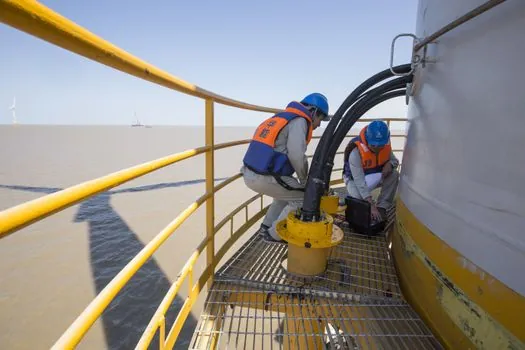
Anemometer-only use cases include HVAC commissioning on air-handling units (verify supply and return grille velocity to within ±10% of design), cleanroom smoke-pass and recovery testing under ISO 14644-3, bridge and tower structural wind monitoring for the WMO standard 10 m mast height, and wind-resource assessment for new wind farms, where instantaneous, average, maximum, and extreme gust values feed directly into IEC 61400-1 design load calculations [S5].
Recorder-only use cases include pharmaceutical stability chambers (continuous 2–8 °C proof for MHRA and FDA audits), museum and archive climate monitoring (typically 20 °C ± 2 °C and 50% ± 5% RH), DATAPAQ Food Tracker oven profile runs with thermal barriers and thermocouple chains, and the testo 164 H1-style online monitoring of laboratory and warehouse spaces where a small 300-sample buffer is acceptable because the unit pushes new readings to a cloud over its own radio link [S1].
When both instruments are needed together
Some audits genuinely need both, but rarely in one box. A building pressurisation test for an isolation ward uses a temperature and humidity data logger to confirm the room envelope and a separate vane anemometer on each supply grille to confirm the pressure cascade that the humidity reading implies. A cleanroom energy audit layers a hot-wire anemometer sweep at every return grille onto a 24-hour RH and temperature trace from a wall-mounted recorder, so the volumetric flow can be density-corrected against the actual logged temperature [S1][S5].
The wiring pattern is usually two separate data paths: the recorder pushes CSV or REST data to a historian (or, for open stacks, to a Flask-style platform such as THRMP on Gitee [S4]), and the anemometer head talks 4-20 mA, pulse, or Modbus to the same SCADA but on a different tag, because the engineering units, update rate, and calibration log are completely different and a single combined instrument would force one side to compromise.
Common failure modes and limits
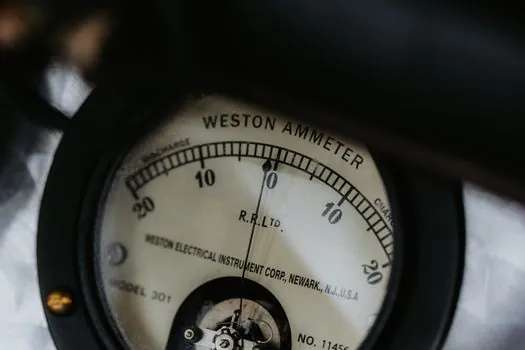
Anemometer failure modes are mechanical and aerodynamic: cup bearings wear and start to under-read at low wind, ice loads on outdoor cups stall the rotor, and thermal heads foul with dust and oil mist in factory air, each of which can push the error past ±5% within 6–12 months without a documented bearing service [S5].
Recorder failure modes are sensor and storage related: capacitive RH elements drift after prolonged exposure to >90% RH or to chemical vapours (chlorine, ammonia, isopropanol), the on-board lithium coin cell that buffers the real-time clock dies after 3–7 years, and a sealed enclosure with a poorly vented cap will read 3–5 °C high in still air, exactly the offset seen in the DIY DHT11 build where the regulator's own heat raised the inside temperature by about 5 °C until the mesh was redesigned [S3]. Industrial mitigations are a separate probe on a 1–5 m cable, a Gore-Tex vented cap, and a documented annual RH calibration against a chilled-mirror reference [S1][S2].
Specifiers looking for adjacent process-side context on how sensor classes line up against physical flow can compare this against broader flow spec work such as Electromagnetic vs Turbine Flowmeter: Conductivity and Cleanliness Decide and Ultrasonic Flowmeter vs General Flow Meter: Spec-Level Selection Guide, since the same density-correction logic that links a humidity reading to a cleanroom flow reading also links temperature compensation to volumetric flow in those flow paths.
Detailed specification references: temperature recorder.