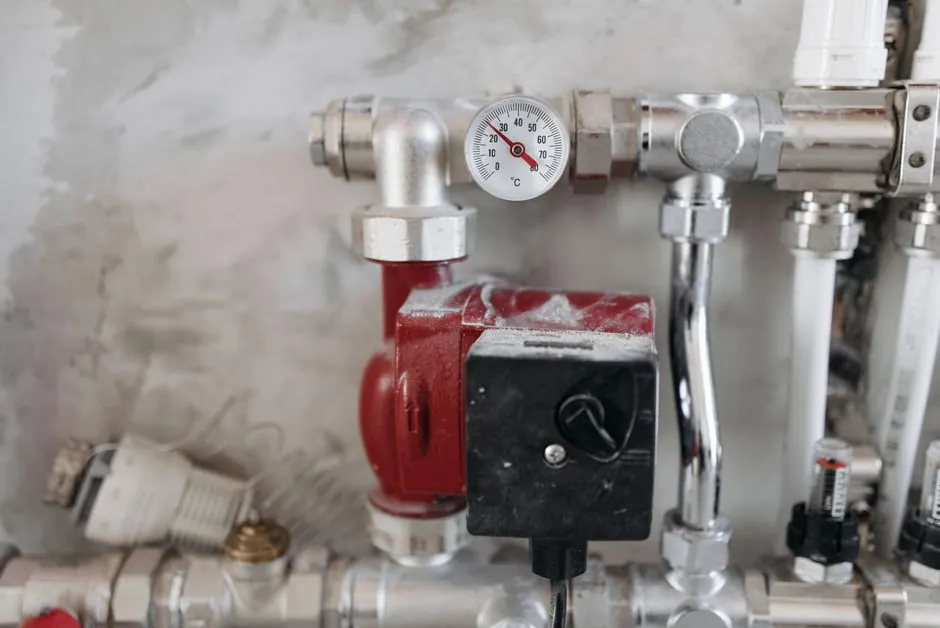
ANSI B73.1 and API 610 centrifugal pumps cover overlapping but distinct service envelopes, and choosing the wrong one costs either capex overshoot or chronic reliability problems. The decision turns on three numbers from the research: ANSI B73.1 pumps rate out at roughly 300 psig at 300°F, while API 610 (ISO 13709) units are built for approximately 750 psig at 500°F [S4]. The standardisation philosophy differs just as sharply: ANSI B73.1 fixes envelope dimensions across 27 sizes so any make is interchangeable, while API 610 governs construction, materials, and emission containment for refinery duty [S2][S4].
For a working centrifugal pump selection, the most useful framing is service severity. ANSI B73.1 covers the bulk of light-to-medium chemical, paper-stock, and water-treatment services; API 610 covers hydrocarbon services where high temperature, high pressure, or hazardous fluids force a heavier mechanical design [S1][S8]. Within the broader process-pump family, the same ANSI dimensional logic also drives the magnetic-drive variant covered under ANSI B73.3, which is one of the alternatives when sealing becomes the limiting factor on a B73.1 build.
Pressure and temperature envelope: the headline numbers
The single most cited spec difference is the casing pressure/temperature rating, and the research gives two slightly different values that engineers should treat as order-of-magnitude rather than precise. Pumpworks quotes API pumps at "around 600 psig at 600°C" and ANSI pumps at "300 psig at 300°C" [S1]. CBE Uptime instead states ANSI at 300 psig at 300°F and API at 750 psig at 500°F [S4]. The 600°C figure in [S1] is almost certainly a transcription error, since no standard ANSI/API process pump runs that hot; the 750 psig at 500°F figure from [S4] lines up with how API 610 is used in refinery hydrocracker and hot-feed services.
For chemical services that stay below 300 psig and below 300°F, an ANSI B73.1 process pump is the cost-effective workhorse. The same source points out that ANSI B73.1 sets the key dimensions for 27 centrifugal pump sizes, with flow from 10 to 5,000 GPM, total head 50 to 750 ft (roughly 22 to 325 psi), and brake horsepower from 1.0 to 250 hp [S4]. Above those limits, or whenever a hot hydrocarbon stream forces sustained high casing temperature, the spec must move to API 610 to keep thermal-expansion growth, bearing life, and emissions containment inside design margins.
Mechanical construction: mounting, bearings, and impellers
The mechanical-design gap between the two standards is wider than the pressure/temperature table suggests, and it shows up first in the mounting. API 610 pumps are centerline-mounted to keep alignment stable as the casings grow under thermal load, while ANSI B73.1 pumps are foot-mounted, which is cheaper but lets the casing walk as temperatures climb and shortens seal and bearing life in hot service [S1]. API bearing housings are correspondingly heavier, often with steel bearing units and cooling jackets, again sized for sustained heat soak rather than the lighter general-service duty an ANSI housing is built for [S1].
Impeller choice is the second tell. API 610 calls for closed impellers running with replaceable case wear rings, which restores hydraulic efficiency after wear and contains recirculation, while many ANSI B73.1 impellers are open or semi-open and tolerate solids better but lose efficiency faster on clean fluids [S1][S5]. For services with entrained particulates (paper stock, light slurries, some waste streams), the open-impeller ANSI build is the right answer; for clean hot hydrocarbons, the closed-impeller API build is the only defensible spec. The same back-pull-out envelope lets either pump come apart for maintenance without disturbing the piping, which is one of the reasons both standards have survived the shift toward mechanical-seal cartridges and sealless magnetic-drive derivatives.
Selection criteria matrix: ANSI B73.1 vs API 610
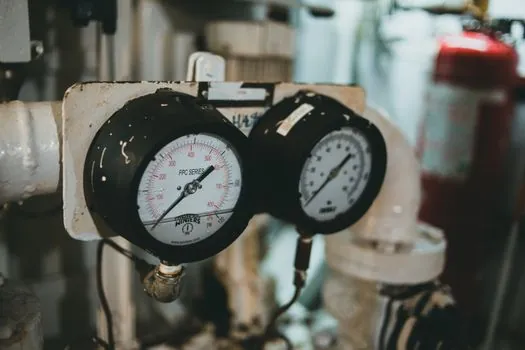
Lining the two standards against decision criteria from the research gives a usable comparison. On pressure/temperature rating, ANSI B73.1 is bounded near 300 psig at 300°F, while API 610 reaches roughly 750 psig at 500°F [S4]. On interchangeability, ANSI B73.1 wins because it standardises dimensions across 27 sizes so any manufacturer's pump drops into the same baseplate, coupling, and piping envelope, while API 610 governs construction so interchange is partial at best [S2][S4]. On solids handling, ANSI B73.1 with an open or semi-open impeller tolerates particulates, while API 610 closed-impeller builds prefer clean fluids and add wear rings for efficiency recovery [S1][S5].
On cost and lead time, ANSI B73.1 is consistently cheaper, more available, and easier to swap with a spare from a different brand; API 610 carries a price premium driven by heavier casings, heavier bearing housings, and the engineering work needed to meet the standard's mechanical and emissions requirements [S1][S2][S4]. On emissions and hazardous-fluid containment, API 610 is the explicit answer: its casings, bearing housings, mounting feet, and back-cover arrangement are designed to control emissions and handle environmentally damaging process fluids, which is why refineries default to it for hydrocarbon services [S2][S7]. When the spec is borderline, the cheaper-but-wrong pick is to install an ANSI pump on hot hydrocarbon service and lose seal life to thermal growth; the expensive-but-wrong pick is to specify API 610 for a benign water-transfer duty and pay for capacity the service never uses.
Where each pump is the right answer, and where it is not
ANSI B73.1 is the right call for thin fluids, light chemicals, alcohols, water, food-grade and pharmaceutical fluids, paper stock, and most general process-plant services that stay inside the 300 psig / 300°F envelope and do not require emissions certification to refinery rules [S1][S2][S4][S6]. It is also the right call whenever end users want spare-pump interchangeability across multiple OEMs, since the dimensional standard makes a drop-in replacement possible without re-engineering the baseplate or piping [S4]. The same logic extends to sealless and magnetic-drive variants, including the ANSI B73.3 magnetic-drive pump footprint family, which inherits the B73.1 envelope and lets plants eliminate mechanical seal leakage on aggressive chemistries.
API 610 is the right call for refinery, petrochemical, and natural-gas services that combine high temperature, high pressure, and hazardous or environmentally damaging fluids, where emissions control and sustained reliability override first cost [S1][S2][S4][S7]. It is the wrong call for light chemical services that an ANSI pump can handle, because the user pays for capacity and weight that the service never needs [S2][S4]. A common borderline case is using an ANSI pump as a utility pump in a refinery, which is acceptable when the service is genuinely light, but the spec should not let an ANSI build creep into a hot hydrocarbon circuit where the foot-mount and lighter bearing housing cannot survive the thermal and emissions duty. For broader rotating-equipment decisions, including how the driver side ties into plant process control and process calibration loops, the same severity logic applies: a higher-tier actuator and instrument package is justified only when the underlying service demands it, which parallels the ANSI-vs-API choice on the pump itself.
Standards map and sourcing

Both pump families sit on identifiable, named standards rather than informal industry practice. ANSI B73.1 is the dimensional standard for horizontal end-suction centrifugal pumps and is maintained jointly with ASME; the B73 family also covers B73.2 (vertical) and B73.3 (sealless magnetic-drive) configurations, all of which share the same interchangeability logic [S2][S4][S9]. API 610 is the American Petroleum Institute's standard for centrifugal pumps in petroleum, petrochemical, and natural-gas service, and is also published internationally as ISO 13709, so a pump built to one is typically buildable to the other with documentation in place [S5][S8]. The Hydraulic Institute and NFPA standards fill adjacent niches for fire pumps and other special services, but the ANSI-vs-API split is the dominant decision on general process and refinery pumps [S8].
For sourcing, the research lists multiple OEM-side explainers (Pumpworks, Rotech, Carver/Empowering Pumps, CBE Uptime, Crane Engineering, TDS Fluid, BBP Mfg) that all converge on the same comparison points, which is a useful cross-check: the 300 psig / 300°F ANSI ceiling, the 750 psig / 500°F API ceiling, the closed-vs-open impeller pattern, the centerline-vs-foot mounting, and the dimensional-vs-construction split between the two standards are repeated consistently across [S1] through [S9]. For broader machinery-buying context, the same severity-rating logic shows up in CE Marking vs UL Listing: 2026 Decision Matrix for Industrial Machinery Buyers, where the decision is again which certification envelope the service actually needs. Two verifiable next signals to track: any update to API 610 / ISO 13709 that tightens emissions or mechanical-seal requirements (which would push more borderline services from ANSI to API), and any expansion of B73.1 into higher-temperature envelopes, which would keep light-refinery services on the cheaper dimensional standard. Until either moves, the spec-by-spec comparison above is the working answer.