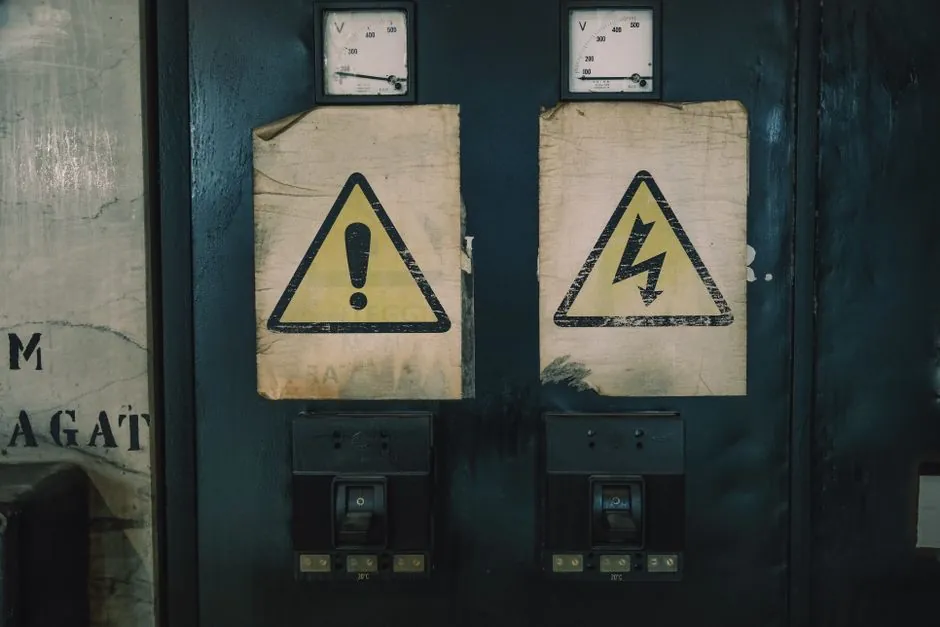
For industrial machinery crossing the Atlantic, the two conformity marks are not equivalent, and 2026 procurement guides reinforce that CE is a manufacturer self-declaration against EU directives (2014/35/EU, 2014/30/EU, 2014/34/EU), while UL is third-party testing by an OSHA-recognized NRTL under the NEC framework enforced by AHJ inspectors [S1][S3][S5].
Scope diverges sharply: CE unlocks the European Economic Area (30 countries) and the United Kingdom accepts CE for most machinery under the post-Brexit UKCA transition, whereas a bare UL mark gives no legal standing in the EU and a bare CE mark cannot legally receive power connections in most U.S. and Canadian facilities, since AHJ inspectors routinely reject equipment lacking an NRTL mark [S1][S5]. Engineers who plan to ship the same control panel to both markets must budget for both regimes, including witnessed testing, UL File registration, and quarterly factory surveillance audits that typically extend timelines by 4-8 months versus a self-declared CE Technical File [S5].
Legal Basis and Geographic Scope: Where Each Mark Actually Has Standing
CE marking derives from EU law and covers 30 EEA countries, addressing safety, health, and environmental protection requirements as defined by the European Commission, and the letters stand for "Conformité Européenne" [S5]. The UKCA mark replaced CE for the United Kingdom after Brexit, though UKCA-ready machines that are CE-marked remain accepted in Great Britain for most industrial equipment categories, and the UK continues to recognise CE on machinery covered by the Machinery Directive [S4][S5].
UL certification is voluntary in name only for North American sites: the National Electrical Code (NEC) and Authority Having Jurisdiction inspectors across the U.S. and Canada require an NRTL mark before power can be legally connected to most industrial equipment, and insurance underwriters frequently offer preferred pricing for facilities using UL-listed gear, while AHJ inspectors reject unlisted equipment outright [S1][S5]. Industrial buyers in the Middle East, Southeast Asia, and Latin America often write UL listing or an equivalent NRTL mark into procurement specs as a proxy for third-party safety verification, which makes UL useful well beyond its U.S. legal footprint [S5].
Process: Self-Declaration vs Third-Party Testing and Factory Surveillance
CE marking is, for the majority of industrial products, a self-certification system in which the manufacturer evaluates its own product against applicable harmonized EN standards, compiles a Technical File, and signs the Declaration of Conformity; an independent notified body only steps in for high-risk categories such as medical devices, ATEX-rated equipment for explosive atmospheres, or certain machinery under the Machinery Directive [S3][S5]. A CE-marked flow meter or industrial camera can therefore be placed on the EEA market on the strength of the manufacturer's own internal test data and signed Declaration of Conformity.
UL certification runs a fundamentally different model: Underwriters Laboratories tests product samples in accredited labs, reviews design documentation, issues a UL File Number, and then conducts factory inspections on a quarterly or annual basis, with the NRTL granted access to the factory with no advance notice and required change-control documentation for any product modification [S1][S5]. For a CE-only product line going to North America, the 4-8 month delta covers witnessed testing, UL File registration, and the first surveillance audit, and any subsequent design change triggers a follow-up review that CE would handle in-house [S5].
Standards Framework: IEC/EN vs NFPA/UL Prescriptive Construction

CE compliance is rooted in International Electrotechnical Commission (IEC) standards adopted as European Harmonized Standards (EN), and for industrial control equipment the relevant directives are the Low Voltage Directive (2014/35/EU), the EMC Directive (2014/30/EU), and the ATEX Directive (2014/34/EU) for explosive atmospheres; these are performance-oriented and let manufacturers reach the safety objective through varied design approaches [S3][S5]. The harmonized EN list is updated periodically, and the manufacturer's Declaration of Conformity must reference the specific EN standards applied at the time of placement on the market.
UL 508A, the standard for industrial control panels, is a prescriptive construction standard that specifies exact requirements for wire sizing, protective device coordination, enclosure ratings, and component spacing, so a panel bearing a UL 508A label has been verified against construction-level rules rather than performance goals [S5]. This prescriptive versus performance split is the practical reason a CE-compliant panel cannot simply be relabeled for the U.S. without physical changes to wire gauges, breaker selection, and enclosure NEMA ratings, which is why retrofit costs for a control panel can run into five figures and a week of downtime per cabinet [S4][S5].
Who Needs Each Mark: Decision Matrix by Use Case
For an OEM shipping exclusively to EEA customers from an EU plant, CE self-declaration is the minimum and sufficient legal requirement, and adding UL is optional unless the OEM has U.S. or Canadian customers on the order book [S3][S5]. For an OEM shipping exclusively to U.S. or Canadian customers, UL listing (or another NRTL mark) is effectively mandatory because the AHJ will not authorize energisation without it, and CE adds no value in that market [S1][S5].
For a global OEM shipping the same industrial buzzer and signaling stack to both markets, the only practical path is dual certification: build to the stricter of the two requirements, run the UL witnessed test in parallel with the EN self-declaration, and accept the 4-8 month NRTL cycle for the U.S. leg; this pattern also applies to industrial ceramic insulators and industrial adhesive systems used in motor and panel assemblies [S5]. For used/refurbished machinery, the compliance picture is murkier: CE marks do not transfer to a rebuilt machine unless the rebuilder issues a fresh Declaration of Conformity, and a UL mark similarly does not follow a major modification without a new File assessment, so buyers should require updated electrical panels, guard retrofits, and emergency-stop compliance documentation before accepting a used line [S3][S4].
Failure Modes and Procurement Pitfalls
The most common cross-border failure is treating CE as a substitute for UL on a U.S. project: a European-built machine arrives with a valid CE plate, the AHJ demands an NRTL mark, and the owner is forced into a field retrofit that costs more than the original UL certification would have, and on at least one recorded case this has delayed a certificate of occupancy and pushed a project over its schedule and budget [S1][S3]. A second common failure is assuming UKCA and CE are interchangeable post-2024: UKCA replaced CE for most products placed on the Great Britain market after the Brexit transition, and although transitional easings have been extended, machinery destined for U.K. sites should carry UKCA or have a documented path to obtain it [S4].
A third pitfall is ignoring the change-control obligation: once a machine holds a UL File, any design or component change must go through the NRTL change process, including unannounced factory access and a documented change-control system; if the manufacturer treats CE's looser change regime as the default, the UL File can be invalidated and the NRTL may suspend the listing [S1][S5]. A fourth pitfall is specifying UL on a CE-only European build and paying the full NRTL cycle to find out the panel was built to a non-prescriptive rule that UL 508A will not accept, which is why industrial borescope and inspection-equipment OEMs increasingly pre-engineer UL 508A-compliant cabinets rather than retrofit them [S3][S5].
How the Two Marks Interact with Adjacent Schemes (CSA, ETL, UKCA, ATEX, FCC)
UL and CSA marks are mutually recognised under the U.S.-Canada MRA, so a UL-listed industrial control panel generally satisfies the Canadian AHJ without a separate CSA file, and the ETL mark from Intertek is an equivalent NRTL mark that OSHA accepts on the same basis as UL [S1][S2][S5]. The UKCA mark covers the same scope as CE for the Great Britain market, and many CE-marked machines remain accepted in the UK under the current transitional regime, but new production runs destined for the UK after the transition window closes should carry UKCA or a recognised equivalent [S4].
For equipment intended for explosive atmospheres, the ATEX 2014/34/EU directive governs EU placement, while North American hazardous-area installations typically rely on a Class/Division or Zone system under the NEC, with the relevant equipment certifications coming from UL or another NRTL rather than from ATEX directly; the related comparison of ATEX and IECEx for process equipment walks through how those two hazardous-area schemes differ for specifiers. FCC is a separate electromagnetic compatibility regime that applies to electronic equipment in the U.S. and is not a substitute for UL safety listing, so a procurement spec that lists FCC alongside CE is not addressing the AHJ's safety-mark requirement [S3][S5].
2026 Sourcing Recommendation for Cross-Border Industrial Machinery
For a U.S. buyer sourcing from an EU OEM, write UL or another NRTL mark into the purchase order at the RFQ stage, accept a 4-8 month NRTL timeline, and confirm that the OEM's change-control system is documented before signing, since unannounced factory access is a contractual UL requirement [S1][S5]. For an EU buyer sourcing from a U.S. OEM, require a CE Declaration of Conformity referencing the specific EN standards, and confirm the Technical File is available for inspection, with a notified body involved for ATEX-rated or high-risk machinery [S3][S5].
Trackable signals to watch over the next two quarters: the published list of harmonised EN standards under 2014/35/EU and 2014/30/EU (revised periodically by the European Commission), OSHA's NRTL recognition list, and any extension of the UK government's CE acceptance window for machinery. A practical next node for any specifier is to map each machine on the bill of materials to one of four lanes, CE-only, UL-only, dual CE+UL, or CE+UKCA+UL, and to gate the purchase order on the correct lane rather than on a generic "international compliance" clause [S3][S4][S5].