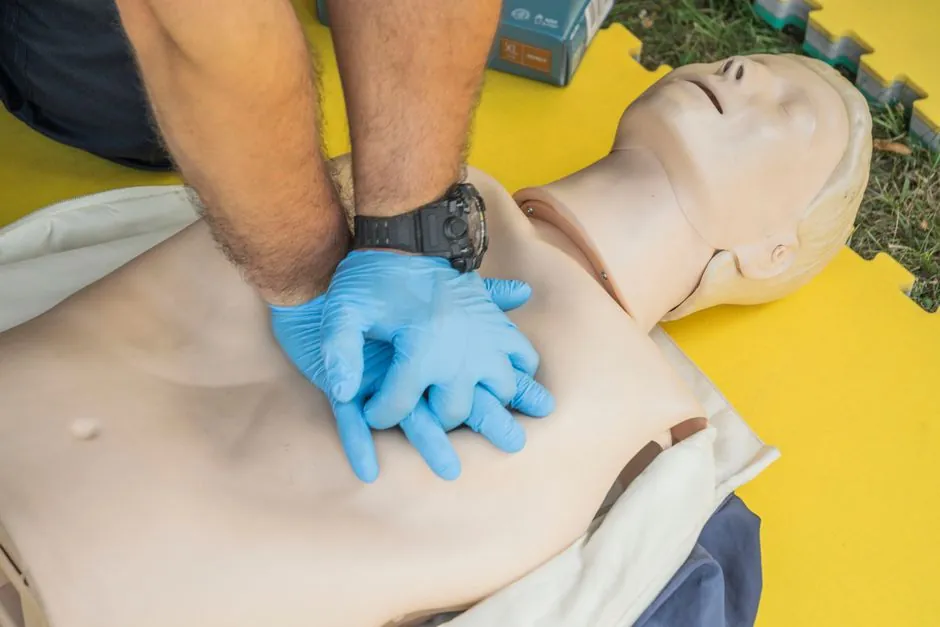
ANSI/ISEA Z308.1-2021 divides workplace first aid kits into Class A and Class B, and the tourniquet and splint are the two defining additions that push a kit from Class A to Class B compliance [S1][S5].
Class B kits are aimed at environments with elevated risk of serious injury, where the delay between incident and EMS arrival justifies carrying hemorrhage-control and limb-immobilization hardware in the minimum-fill list [S1][S3][S5].
What the Standard Mandates: Splint and Tourniquet in the Minimum Fill
ANSI/ISEA Z308.1-2021 lists, for Class B kits, all items required in Class A kits in greater quantities, plus two additional items: a tourniquet and a splint [S5]. The standard does not call out a particular brand or material, it sets the minimum performance and presence requirement, and it is treated as the consensus baseline for workplace kit contents across U.S. industry [S1][S5].
Vendors translate that minimum into product lines: a typical ANSI 2021 Class B refill ships with 208 pieces for a 50-person kit, including the splint and the tourniquet as discrete line items alongside dressings, eye wash, and a 4-inch roller bandage [S4]. The splint is listed separately from the triangular bandages that already appear in Class A minimums, confirming the standard treats limb immobilization as a distinct capability rather than a sub-category of bandaging [S3][S5].
Class A vs. Class B: A Side-by-Side of Decision Criteria
Four criteria separate Class A from Class B kits, and the tourniquet and splint sit at the top of that list. Class A kits serve offices, retail, and schools where the injury profile is dominated by minor cuts, sprains, and burns; Class B kits target construction, manufacturing, warehousing, and any site where heavy machinery, sharp tooling, or elevated work is routine [S1][S3][S5][S8].
The table below summarizes the minimum-fill difference, with the two extra Class B items bolded in description:
Criterion 1, scope: Class A covers common workplace injuries in low-hazard settings, Class B covers the same injuries plus trauma scenarios in higher-hazard settings [S3][S5][S8].
Criterion 2, extra items versus Class A: Class B adds a 4-inch roller bandage, a splint, and a tourniquet, none of which appear in the Class A minimum fill [S3].
Criterion 3, quantities: Class B kits carry larger quantities of every Class A item, on top of the two trauma additions [S5].
Criterion 4, typical size: 50-person Class B refill kits ship at around 208 pieces, sized for larger crews on regulated sites [S4].
Where the Standard Applies and Where It Does Not
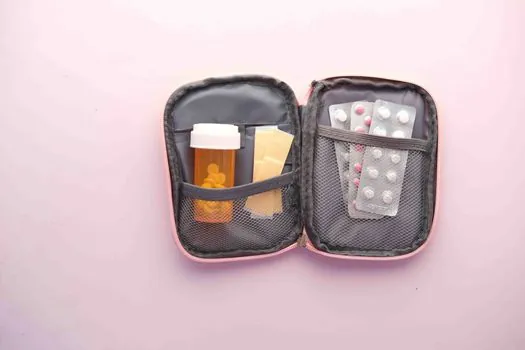
ANSI/ISEA Z308.1-2021 is the U.S. consensus standard for minimum fill, container types, and unit packaging of workplace first aid kits, and it pairs with OSHA 1910.151 on kit availability and 1910.266 Appendix A on the equipment list for logging operations, where a splint is explicitly listed as a required component alongside latex gloves, resuscitation equipment, and two elastic wraps [S2].
OSHA enforces the regulation but does not set the kit contents list, so the ANSI standard functions as the de facto fill reference, and any Class B kit on a U.S. site is expected to be able to demonstrate presence of a splint and a tourniquet during inspection [S1][S2][S5].
Class B is also the recommended kit class for university EHS programs in higher-risk shop, lab, and maintenance environments, while Class A is treated as the default for office and classroom settings, reinforcing the hazard-tiered logic that drives the splint and tourniquet requirement [S8].
Sourcing and Standards Reference
The governing consensus standard is ANSI/ISEA Z308.1-2021, and the federal reference that calls out a splint for the logging sector is OSHA 29 CFR 1910.266 Appendix A [S1][S2]. The kit classifications (Class A, Class B) and container types (Type I, II, III, IV) are all defined in the ANSI/ISEA Z308.1-2021 standard [S1][S5].
OSHA 1910.266 App A is mandatory for logging operations and lists the splint alongside two elastic wraps, latex gloves, resuscitation equipment, and a written request-for-emergency-aid procedure, with the tourniquet not appearing in that 1910.266 list, which is why the ANSI 2021 update matters for high-hazard general industry sites [S2].
For buyers, the practical sourcing signal is straightforward: any product labeled "ANSI 2021 Class B" must visibly include a splint and a tourniquet in its parts list, and the typical commercial 50-person refill ships with 208 pieces at the published refill tier [S4].
Limitations and Practical Failure Modes
The standard is a minimum-fill specification, not a clinical guideline, and it does not dictate tourniquet windlass type, splint material, training cadence, or kit inspection frequency, leaving those to the employer's hazard assessment and to OSHA 1910.151 on adequacy of medical services [S1][S5].
A common compliance failure is buying a "Class B" labeled refill where the splint and tourniquet are optional SKUs that must be added at order time, rather than being part of the sealed 208-piece pack, so the kit passes an internal audit on quantity but fails the ANSI minimum on the two named items [S4][S5].
For sites remote from EMS, the standard does not require escalation beyond Class B, so procurement teams sometimes stack specialty trauma modules (hemostatic gauze, chest seals) on top of the Class B base, treating the ANSI list as a floor rather than a ceiling [S1][S9].
ANSI also recommends monthly inspection cycles and a documented log of restocking dates, but the standard does not make a tourniquet a single-use consumable, so inventory practice typically treats the windless, strap, and time-marking strip as serviceable until visibly damaged [S5].
Use Cases: Who Actually Needs a Class B Kit
Construction, manufacturing, warehousing, forestry, and any site with power tools, mobile equipment, or elevated work fits the Class B profile, and these are the environments where a splint immobilizes a suspected fracture during transport and a tourniquet controls life-threatening extremity bleeding before EMS arrival [S1][S3][S5][S6].
Vendors such as North American Rescue market Class B trauma and first aid resupply kits as exceeding the ANSI/ISEA Z308.1-2021 minimum, with the splint and tourniquet positioned as the line-of-demarcation items between a basic office kit and a workplace trauma kit [S9].
For dental and clinical offices, Class B configurations are common, since sharps exposure, slips, and procedure-related trauma are routine enough that practices prefer a kit with the tourniquet and splint already in the case, even though most patient-side incidents would not require them [S7].
Site logistics matter: a single floor office with under 25 people can be served by one Class A kit, but a multi-floor facility, a 100-plus employee site, or any area near heavy machinery is typically specified with multiple Class B kits or a Class A baseline plus targeted Class B modules in the high-risk zones [S5].
Track the 2026 commercial refill SKUs to confirm the splint and tourniquet are still bundled (not add-on) in 208-piece Class B packs, and check whether your state's OSHA-approved State Plan has issued any 2026 letter of interpretation modifying the 1910.151 and 1910.266 App A interplay for kit contents on logging, construction, and agricultural sites [S1][S2][S4].
Spec-level background on the components involved: first aid kit, construction machinery and equipment, and lamps and light fittings.
See also our earlier report, Lorry Crane Load Holding Valve: Function, Failure Modes, and Sizing.
