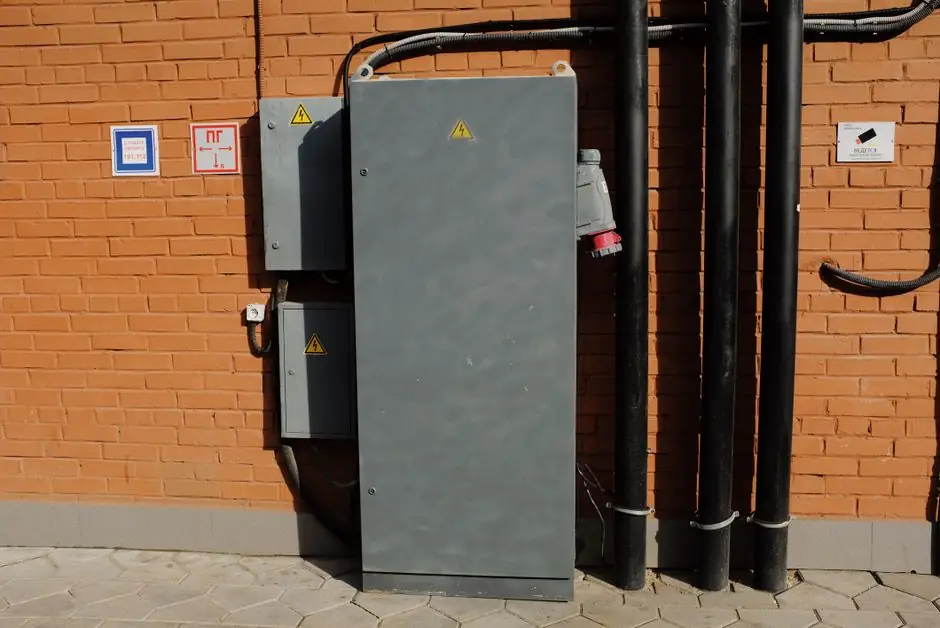
A standard safety light curtain inside a third-party UL Classified Ex d enclosure and a natively ATEX/IECEx-certified Ex d light curtain solve the same hazard but split the engineering effort very differently: the retrofitted approach costs less in unit price but pushes assembly, wiring and recertification liability onto the buyer, while the native Ex d design (ATEX II 2 G Ex d IIB T6 Gb, II 2 D Ex tb IIIC T56°C Db) ships as a single, fully tested assembly with Type 4 / PL e / SILCL3 ratings already on the nameplate [S3].
For Zone 1 gas and Zone 21 dust sites handling flammable vapours, combustible dust or paint overspray, the decision turns on three numbers: certification scope (single unit vs system), field height envelope (600–1500 mm for the enclosure approach; native Ex d units from ReeR target Zone 2/22) and the OSSD wiring topology you can land at the control cabinet [S1][S3][S4].
How the two architectures differ in certification scope
An Ex d enclosure around a standard light curtain is certified as a complete assembly only when the housing maker and the curtain maker have jointly tested the pair. SICK's deTec4 Core Ex, C4000 Select Ex and C4000 Advanced Ex are sold as UL Listed enclosure-plus-curtain combinations, meaning the inspector sees one listing mark covering both the housing and the optics, with protective field heights of 600 mm, 900 mm, 1200 mm and 1500 mm (1500 mm only on deTec4 Core) and a 30 mm resolution that supports 8–16 m scanning range [S1][S3].
A UL Classified enclosure, by contrast, is approved empty, and the installer is responsible for mounting any curtain of their choice inside; the inspector can flag the mismatch and require re-testing, which is the single most common compliance failure in retrofit Ex d light curtain projects [S1]. Natively Ex d light curtains such as the Schmersal EX-SLC/SLG440 series are built around ignition protection type Ex d, carry ATEX certification alongside IECEx, INMETRO and other regional marks, and remove the empty-envelope question entirely because the optics, windows and cable entries are type-tested as one product [S2]. For more on what the ATEX framework demands of an installer, see the explosion-proof light reference page.
Decision matrix: enclosure retrofit vs native Ex d
Five criteria separate the two options on a real bid sheet: certification scope, gas group coverage, fieldbus integration, scan range and per-unit cost. On gas group, SICK's enclosure approach is approved for NEC Class I Div. 1 groups C and D (plus Class II Div. 1 groups E, F, G and Class III Div. 1), while the Schmersal EX-SLC/SLG440 native unit targets Ex d IIB atmospheres, so hydrogen (IIC) and acetylene service still need a separate evaluation regardless of which path you take [S1][S2][S3].
On fieldbus integration, the SICK deTec4 Core Ex / C4000 Select Ex / C4000 Advanced Ex family lists CANopen, DeviceNet, EtherNet/IP, PROFIBUS and PROFINET compatibility in the same hazardous-area enclosure, which is rare among pre-engineered Ex d solutions and removes a common gate to retrofit projects where the safety bus is already PROFIsafe or CIP Safety [S3]. On zone coverage, ReeR's EOS4 ATEX is explicitly rated for Zone 2 (gas) and Zone 22 (dust), which is the lower-tier hazardous area and does not require Ex d flameproof enclosures at all, so a native Ex d unit is overkill for those locations [S4]. A short verbatim note from SICK's product specialist: "Customers who purchase a UL Classified enclosure are responsible for installing a light curtain of their choice into the enclosure," which captures the residual liability cleanly [S1]. For the broader safety-curtain taxonomy behind the Type 4 / SIL 3 claim, see the safety light curtain encyclopedia entry.
Use cases where each option wins
Pick the enclosure-plus-standard-curtain path when you need 1500 mm protective field height on a Zone 1 divider, when the safety bus is already PROFIsafe or CIP Safety and the cabinet is PROFIBUS/PROFINET-fed, and when the plant has a UL/NFPA 70 NEC 500 inspection regime rather than an ATEX-only jurisdiction: the deTec4 Core Ex, C4000 Select Ex and C4000 Advanced Ex drop into NFPA Class I Div. 1 groups C and D with zero on-site Ex d assembly [S1][S3].
Pick a native Ex d light curtain such as the Schmersal EX-SLG440 or the ReeR EOS4 ATEX when the certification chain has to read a single ATEX/IECEx/INMETRO mark on the optics themselves, when the gas group is IIB (most hydrocarbon solvents) and when Zone 2/22 is the actual classification, because the EOS4 ATEX is designed for exactly that lower-risk footprint and avoids the cost of a flameproof enclosure altogether [S2][S4]. In paint booths, farinaceous processing and oil-derivative handling, the EOS4 ATEX is the more proportionate spec; in pharmaceutical, chemical and gas-plant ATEX Zone 1 lines, the EX-SLC/SLG440 or SICK pre-assembled enclosure route is the safer call [S2][S3][S4].
Spec checklist an engineer should run before signing the PO
Confirm the exact hazardous-area classification on the nameplate: ATEX II 2 G Ex d IIB T6 Gb plus II 2 D Ex tb IIIC T56°C Db covers gas Zone 1 and dust Zone 21, while a Zone 2/22-only rating rules out the most expensive flameproof path and lets you specify a lighter native unit [S3][S4]. Verify that the safety rating line reads Type 4, Performance Level PLe, SIL 3 / SILCL3 and Category 4 in the same document, because mixing Type 2 (SILCL1) and Type 4 (SILCL3) on adjacent guards is one of the most cited Type 2 vs Type 4 decision errors [S3][S7].
Check the OSSD test pulse behaviour against your safety relay, since a 30 mm resolution, 8–16 m scanning range curtain must still meet the response-time budget for the safeguarded machine stop category [S3][S5]. Finally, ask the vendor for the integrated assembly certificate, not just the empty-envelope UL Classified mark, and confirm fieldbus profile coverage (CANopen, DeviceNet, EtherNet/IP, PROFIBUS, PROFINET) is on the same hazardous-area certificate rather than a separate industrial-curtain datasheet [S1][S3]. The reference baseline for SIL 1 vs SIL 3 selection is IEC 62061 (functional safety of safety-related control systems), while the U.S. hazardous-area baseline is NFPA 70 / NEC 500 [S3][S7]. For Zone 21 dust applications in particular, engineers should also confirm the IP66 rating on the enclosure datasheet, which both the SICK Ex d enclosure and equivalent ReeR units publish [S3][S4].
Common failure modes in the field
Three patterns show up repeatedly in non-conforming Ex d light curtain installations: the wrong gas group on the certificate (Ex d IIB equipment installed in an IIC hydrogen atmosphere, which is unsafe regardless of the enclosure), a UL Classified enclosure retrofitted with a curtain model that was not on the type-test list, and a Type 2 curtain substituted for a Type 4 requirement when the risk assessment demanded SILCL3 [S1][S2][S7]. A fourth pattern is dust ingress: even at IP66, cable gland torque and the dust code (IIIC T56°C Db for combustible flyings, metal dust and coal dust) must match the actual process dust, not just the gas zone [S3]. On a related decision axis, our shot sleeve fill ratio guidance for aluminum die casting walks through the same kind of envelope-vs-process-fit reasoning applied to a different process envelope.
Sourcing, standards and what to track next
Two standards frame the entire decision: ATEX 2014/34/EU for the European Union and NFPA 70 (NEC) Class I/II/III Div. 1 group letters for North America, with IEC 62061 governing the SIL claim on the safety function [S1][S3][S7]. The SICK enclosure is dual-marked for both regimes, while native Ex d light curtains from Schmersal carry ATEX, IECEx and INMETRO together on the same nameplate [S2][S3].
Two signals worth tracking: any 2026 expansion of integrated EtherNet/IP or PROFINET safety profiles on natively Ex d units, which would close the fieldbus gap with the enclosure approach, and any new EN ISO 13849-1 PL e clarifications affecting how the Type 4 / Category 4 / SILCL3 stack is documented across the same certificate. Engineers specifying today should request the integrated certificate, the gas-group letter (IIB vs IIC), the dust code (IIIC T56°C Db or equivalent) and the fieldbus profile list in a single document, and reject any bid that splits those across the enclosure and the curtain datasheets [S1][S2][S3]. For a related decision-matrix article on a different industrial spec, see our Type 2 vs Type 4 safety light curtain decision guide and the structural epoxy vs mechanical fastening comparison for adjacent spec trade-off methodology.
Component reference pages worth checking: glass curtain wall.