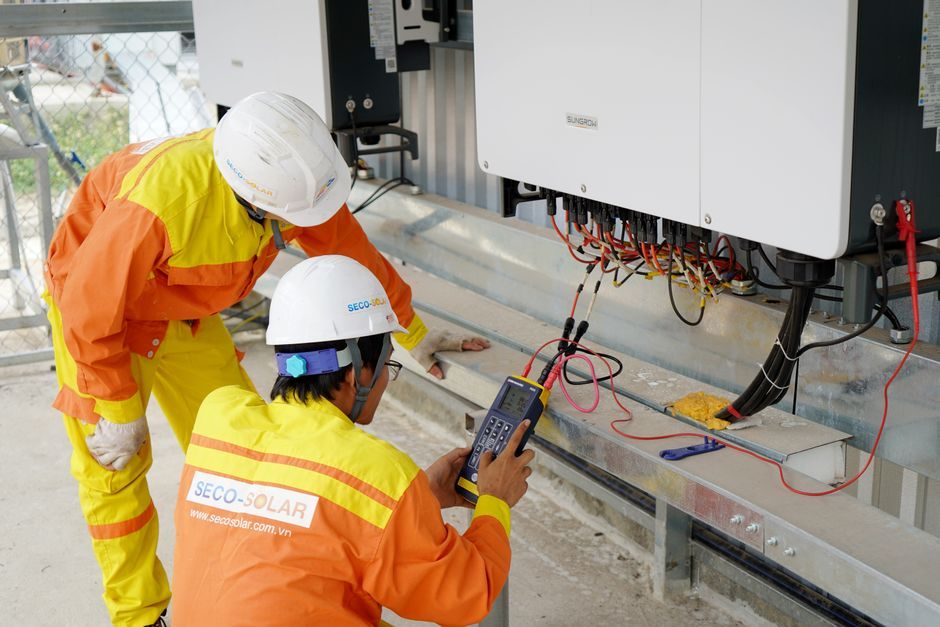
Anti-static equipment installation is governed by three hard constraints: a continuous bonding path from every conductive component to a single ground point, a surface resistance band matched to the zone classification, and verification with a calibrated megohmmeter before energizing any process [S3]. Skipping any of the three produces latent failures that do not show on a visual punch-list but surface as surface-charge accumulation, intermittent sensor drift, or ignited dust clouds during commissioning.
This article covers the anti-static equipment family as it actually ships — raised access floor systems with conductive core, anti-static valves with stem-to-ball-to-body bonding springs, and ESD-protective workstation gear for data-center and server-room builds. Two commercial reference points anchor the spec ranges: the DirectIndustry anti-static valve index (42 manufacturers, ~150 SKUs, listing ball valves from DN 8 to DN 250 and pressures from 10 to 420 bar) [S1] and the Changzhou SanJing product line (anti-static PVC floor, anti-static steel access floor, calcium-sulphate access floor, ISO 9001/14001 certified, 2 million m² annual capacity, exports to 30+ countries) [S2].
Anti-Static Valves: Spec Windows and Bonding Architecture
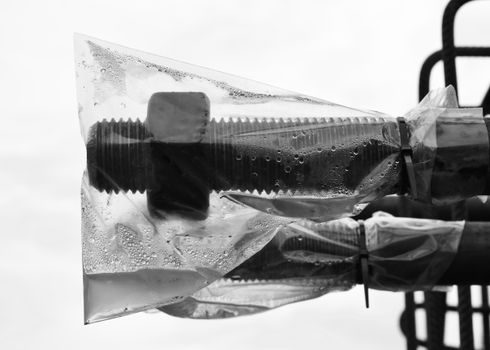
Anti-static ball valves are specified by three numbers simultaneously: nominal diameter, pressure class, and temperature window, and the bonding device is non-optional in flammable service. Typical catalog windows on the DirectIndustry index run DN 8 to DN 250 (8 in), PN 10 to PN 420 (Class 150 to 2500), and -196 °C to +350 °C depending on body and seat material [S1]. The anti-static device is a conduction spring set between stem, ball, and body, with two Belleville washers commonly used to self-adjust packing while maintaining the path [S1].
For flammable or dust service, anti-static must be paired with fire-safe and blow-out-proof stem design; the index shows API 607 4th Edition, API 6FA, BS 5351, and ISO 17292 / ANSI B16.34 as the dominant reference set, with ISO 5211 mounting platforms for direct actuator fit [S1]. Iris-type H valves appear as a separate class, certified for ATEX Zone 22D when fitted with an anti-static diaphragm, used to choke Big-Bag necks on extrusion cooling baths [S1]. For broader equipment context, the anti-static equipment encyclopedia entry consolidates the bonding and resistance principles cited here.
Anti-Static Floors: Resistance Bands, Standards, and Substrate Choice
Anti-static access floors are specified by surface-to-ground resistance, system resistance, and substrate chemistry, not by color or panel thickness. Changzhou SanJing's product line covers four substrate families — anti-static PVC vinyl, anti-static steel-core access floor, anti-static calcium-sulphate, and encapsulated calcium-sulphate — produced in a 65,000 m² facility under ISO 9001 and ISO 14001, with products tested to the American CISCA standard, the UK MOB standard, and the China Ministry of Information Industry Static Control Products Quality Supervision and Inspection Center [S2]. Annual capacity is over 2 million m², with the product set specified for office buildings, computer rooms, clean rooms, data centers, shopping centers, hospitals, and university facilities [S2].
Selection on substrate matters: steel-core panels deliver lower resistance and higher point-load capacity, calcium-sulphate panels deliver better acoustic and fire performance, and vinyl/PVC overlays are the conductive top layer in many clean-room builds. The typical performance windows in this segment are 1×10⁶ to 1×10⁹ Ω surface-to-ground for static-dissipative floors, with conductive variants at 2.5×10⁴ to 1×10⁶ Ω — concrete these to the project's data-center or clean-room spec, not to a generic catalog default.
ESD Precautions for Equipment Installation: Sequence and Acceptance

ESD-safe install sequence is: ground the installer, ground the work surface, ground the equipment chassis, then mate signal and power cabling. The Oracle X8-2/X8-2L installation guide states electronic equipment is susceptible to damage by static electricity and that ESD precautions must be in place when installing or servicing, treating the wrist-strap / work-surface / chassis bonding chain as a single system rather than three independent items [S3]. The Oracle chapter also requires this bonding before rackmounting, before cabling, and before any hot-plug service, which aligns with the broader IEC 61340 ESD-coordination practice even though that standard is not cited by Oracle directly.
Acceptance test before powering up: measure chassis-to-ground bond with a four-wire ohmmeter, target ≤ 1 Ω; measure work-surface point-to-point resistance, target within the dissipative band; verify the wrist-strap loop with the operator fitted, target ≤ 35 MΩ. Acceptance numbers vary by facility class, so plant engineers should pin them in the installation procedure before mobilization.
Selection Criteria: Who Needs What, and When Not to Bond
Anti-static measures split into four working groups, and the wrong one is a wasted spend. Group 1 — flammable-gas/liquid pipelines: anti-static ball valves with stem-to-ball-to-body bonding spring, paired with fire-safe API 607 and blow-out-proof stem [S1]. Group 2 — combustible-dust service: anti-static Iris valves with ATEX Zone 22D diaphragm certification [S1]. Group 3 — data-center and server-room raised floor: conductive or static-dissipative access floor with verified resistance band and copper strip grid, CISCA / MOB tested [S2]. Group 4 — electronics service and install: bonded wrist-strap, dissipative work surface, grounded chassis [S3].
Who it is NOT for: Group 1 is over-spec for clean water and air service — the bonding spring is unnecessary friction; Group 3 is over-spec for offices without sensitive electronics; Group 4 is under-spec for hazardous-area service where Group 1 or Group 2 applies. The typical capex mistake is buying a dissipative floor where a conductive floor is required (or vice versa) and then chasing ground-loop noise for the next decade.
Comparison: Four Anti-Static Options Against Four Decision Criteria
Comparing the four main option families on cost, environment, lead time, and verification cost gives a single decision map. Anti-static ball valves: mid cost, hazardous gas/liquid and dust, 4–10 week lead, verification by megohmmeter and continuity test. Anti-static Iris valves: higher cost than ball valves due to diaphragm cert, dust and bulk-solids, 6–12 week lead, ATEX documentation and visual diaphragm inspection. Anti-static access floor: highest absolute cost, electronics and data center, 8–16 week lead incl. sub-floor prep, verification by surface-resistance mapping per CISCA/MOB. ESD workstation kit: lowest cost, electronics assembly and service, stocked lead, verification by wrist-strap loop tester and work-surface point-to-point check. [S2]
Limitations, Failure Modes, and When to Replace, Not Repair
Anti-static measures fail in three predictable patterns: a broken bonding path from a missing star washer, a surface whose dissipative coating has worn through to an insulating substrate, and an Iris diaphragm that has lost its conductive coating after chemical exposure. On the valve side, the most common field finding is a missing or compressed Belleville washer, which breaks the stem-to-ball-to-body path even when the spring is intact; the field test is a continuity check from the handle to the pipeline flange. On the floor side, the most common finding is a damaged panel-to-panel stringer interface, which breaks the floor-grid equipotential bond and produces isolated hot spots. Replacement, not repair, is the correct action when the floor panel coating has worn through to substrate — the conductive layer cannot be patched to original spec. For a sanity check against adjacent process gear, the linear guide and crossed-roller guide encyclopedia pages cover bonding requirements for motion equipment that often shares the same cabinet as the anti-static control gear. [S2]
Trackable Signals for the Next Procurement Window
Three signals will tell you when to revisit this spec. First, watch the DirectIndustry anti-static valve index for new ATEX Zone 1 (gas) entries — the current index is heavy on Zone 22D dust and lighter on Zone 1 gas, which is the gap a 2026 build is most likely to hit. Second, watch the CISCA and MOB resistance-band updates — these are the load-bearing test methods on the floor side and any tightening of the band changes the substrate choice [S2]. Third, watch for a clean-room revision to ISO 14644 bonding clauses, which historically re-cite the IEC 61340 series and re-anchor the wrist-strap and work-surface acceptance numbers used in ESD kit verification [S3]. Two reference articles map closely onto adjacent install decisions: Stretch Film Installation Guide: Gauge, Stretch Ratio, and Process Gates covers the packaging-line static side, and Suspended Ceiling Pros and Cons: Spec Trade-Off Map for Engineers covers ceiling-grid bonding for clean-room and data-center builds where the floor and ceiling grids must share a ground reference.