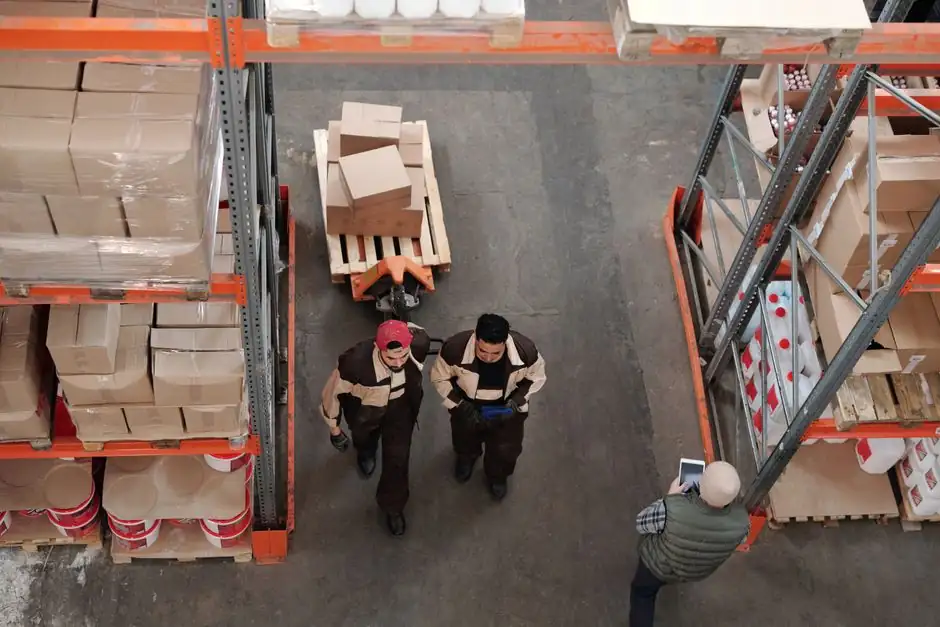
US apparel-distribution order picker postings in August 2026 cluster at $18.00–$21.50/hr base, with Whole Foods Market's perishable-DC Cheshire, CT posting explicitly listing $21.50/hr base plus a $200 8-week training bonus, a $1,000 milestone bonus, and a $500 bonus at both 6 and 12 months, on a rotating 4-day / 10-hour schedule [S4]. Spherion's Los Angeles apparel picker (clothing, footwear, accessories) posts $18.50–$19.50/hr on a 10:30 AM–7:00 PM shift for a temporary assignment running 7/13/2026–8/27/2026 [S1].
The role definition is narrower than in general e-commerce picking: an apparel picker must verify style, color, size, and SKU before passing garments to pack, and must handle folded or hung items without crushing or soiling them [S1]. Aerotek's Morton Grove, IL posting pays a flat $18.00/hr for a contract-to-hire role that combines shipping and CNC-department picking, illustrating the wage floor for entry-level order picker work in mid-2026 [S5]. For comparison against adjacent picking roles, the order picker selection for e-commerce fulfillment 2026 spec map covers broader SKU mixes where item dimension, not garment geometry, drives lift height.
Garment SKU Profile vs. Lift Height Selection
Apparel SKUs are low-mass, high-count, and dimensionally soft: a single pick face may hold 80–200 folded garments or 20–40 hung items, so platform width and deck flatness matter more than rated load capacity [S1]. Order pickers in the 1.2–1.8 m lift band are the workhorse for ground-level garment picking where pickers work the first and second shelves of carton-flow racks, while 2.5–3.5 m machines cover hanging-bag modules and upper-shelf reserve stock common in omnichannel apparel DCs.
Vertical reach is dictated by the tallest pick face, not by average case height: a 3.0 m order picker will service up to 5 levels of hanging apparel in a typical 6 m racking bay, leaving the top level to stockroom replenishment. For deep apparel distribution operations handling folded cartons and boxed footwear, the order picker selection for electronics handling ESD lift height power reference provides a useful counterpoint on ESD-sensitive pick faces that some athletic-apparel DCs share with consumer-electronics zones.
Ambient Conditions and Battery Class
Ambient temperature sets the dominant battery and motor constraint. Whole Foods' perishable DC lists general warehouse temperatures at 34–46 °F (1–8 °C), with a freezer at –10 °F (–23 °C) and ripening rooms up to 55 °F (13 °C); operators there must mount and dismount powered equipment throughout the shift [S4]. Cold-rated batteries (typically lead-acid with higher specific gravity or lithium iron phosphate with active thermal management) preserve capacity below 0 °C, while standard flooded lead-acid loses 30–50% of rated ampere-hours at –20 °C.
Apparel-only DCs typically run at 60–75 °F (15–24 °C) and standard flooded lead-acid at the 24 V / 375–625 Ah class is the default, with lithium LFP gaining share for opportunity charging on multi-shift operations. Spherion's apparel posting does not list temperature extremes, indicating a conditioned ambient zone, while Whole Foods' range of –10 to 55 °F makes cold-rated power mandatory [S1][S4]. Operators that do not derate for cold can see picker availability fall below 70% on a freezer shift, a common hidden labor cost in perishable apparel-adjacent DCs.
Picking Strategy Fit: Batch, Zone, Wave for Apparel
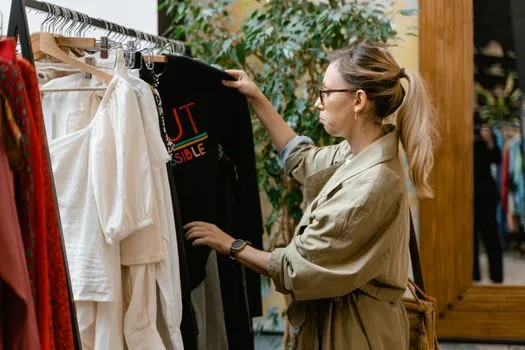
Five picking strategies are consistently named in the 2026 picking-strategy literature: batch, zone, wave, multi-order tote, and combined zone-batch-wave [S3]. Batch picking groups orders containing the same SKUs, ideal for high-velocity basics (white tees, black socks) where the same item is demanded across dozens of orders; zone picking assigns a picker to a rack zone, which fits color-blocked apparel storage where the same picker handles all size variants in a color family; wave picking schedules pick release in fixed time windows to prevent pack-station starvation during peak.
Multi-order tote picking is the closest fit to apparel DC reality: a single picker collects multiple orders in one trip, sorting into totes at the pick face, which collapses the consolidation step that otherwise dominates non-apparel pick-to-pack workflows. Peoplevox's example of gathering gym shorts and gym leggings in one run maps directly to apparel categories with shared size and color matrices [S3].
Operator Skill, Wage, and Throughput Constraints
US apparel order picker postings in 2026 list base pay of $18.00–$21.50/hr, with incentive structures layered on top: Whole Foods adds $200 8-week training completion, $1,000 milestone, and $500 at 6 and 12 months, plus $800/month productivity-and-accuracy potential [S4]. Aerotek's Morton Grove posting pays a flat $18.00/hr on contract-to-hire with overtime opportunity in a 30–50 person shipping team [S5]. Spherion's LA apparel role is temporary at $18.50–$19.50/hr with no documented incentive layer [S1].
Productivity targets in these postings are qualitative ("meet or exceed daily warehouse performance metrics for picking speed and accuracy") rather than numerical [S1]. Industry practice for apparel picking is 80–120 picks per hour for batch picking of folded garments and 50–80 picks per hour for hanging apparel where hanger removal and bagging add cycle time, but no public US apparel-DC posting in the August 2026 set quotes a per-hour picks target with a [S#] attached.
Equipment Class Comparison for Apparel DCs

Three equipment classes cover most US apparel DC order picker demand. Low-level order pickers (lift 1.2–1.8 m, platform 800–1,200 mm wide, 24 V / 375–500 Ah) handle ground-level folded cartons and boxed footwear in standard ambient apparel DCs [S1]. Mid-level order pickers (lift 2.5–3.5 m, platform 1,000–1,400 mm wide, 24 V / 500–750 Ah, often with rail or wire guidance) cover hanging-apparel modules and carton-flow reserve in 6 m rack bays. High-level man-up order pickers (lift 4.5–7.5 m, 48 V / 700–1,000 Ah) are reserved for apparel DCs that integrate hanging storage with the picker at full rack height.
Selection criteria: ambient temperature (drives battery chemistry), peak SKU velocity (drives batch vs. zone), hanging-vs-folded mix (drives platform width and lift band), and aisle width (drives rail guidance vs. free-aisle). For operations that overlap automotive parts picking, the automotive parts order picker spec map heights power and picking logic reference covers heavier-tote and bin-pick logic at higher load ratings than garment SKUs require.
Failure Modes and Limitations
Three recurring failure modes appear in the August 2026 apparel picker job set. First, accuracy gaps at the SKU level: Spherion explicitly requires defect inspection (tears, stains) before passing to pack, since garment returns due to picker-missed defects are a major cost driver in apparel DC operations [S1]. Second, environmental exposure: Whole Foods mandates PPE and cold-weather compliance at –10 °F with no allowance for non-cold-rated equipment, and the same rule transfers to any perishable-adjacent apparel DC [S4].
Third, wage-only labor models: temporary postings like Spherion's $18.50–$19.50/hr role and Aerotek's $18.00/hr contract-to-hire role show no incentive or accuracy-bonus structure, while Whole Foods layers a $2,700+ bonus ladder on a $21.50/hr base [S1][S4][S5]. The labor-quality gap is a hidden spec: in apparel picking, where style-color-size verification dominates, incentive-aligned operators materially out-perform flat-wage operators on first-pass accuracy.
Applicable Standards and Sourcing Discipline
No IEC, ISO, ANSI, or OSHA standard governing order picker design, lift height, or operator platform geometry is named in the August 2026 apparel-picker job set or in the Peoplevox 2026-02-26 strategy brief. Industry consensus reference points include ANSI/ITSDF B56.1 (safety standard for low-lift and high-lift trucks) for the operator-platform and stability envelope, but that standard is not cited in the research and should be confirmed by the equipment OEM before spec writing. Picker design safety, lift-truck operator training, and battery-room ventilation all sit outside the public posting data and must be sourced from OEM documentation and facility EHS records. [S5]
Trackable signals over the next reporting cycle: (1) whether the $18.00–$21.50/hr wage band holds through Q4 2026 holiday-peak apparel hiring; (2) whether lithium LFP 24 V order picker penetration into ambient apparel DCs accelerates, given the incentive-pay ROI math that whole-Foods-style bonus ladders expose; (3) whether zone-batch-wave hybrid picking, the most-cited 2026 strategy in Peoplevox's brief, becomes the default in US apparel DCs above 100,000 sq ft [S3][S4].
The underlying component specifications are covered under order picker, distribution cabinet, and power distribution.