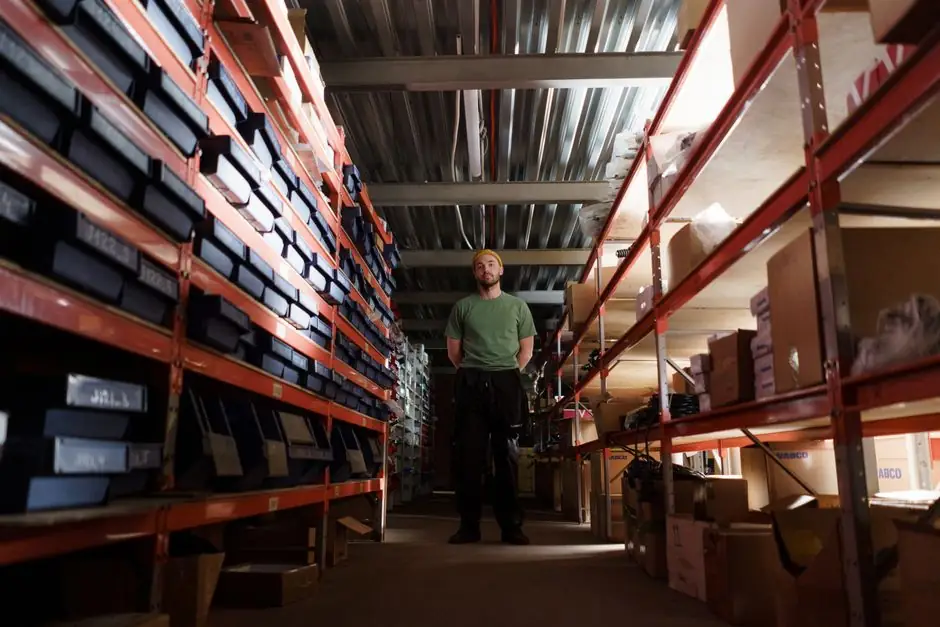
Automotive parts warehouses handling tens of thousands of SKUs per facility are specifying mid-level order pickers with 3–6 m platform lift heights as the baseline, with low-level and high-level machines reserved for the picking-height extremes of the rack [S4].
Buyers in 2026 are screening on three hard criteria: platform lift envelope, battery chemistry (lead-acid versus lithium-ion), and WMS/RFID integration, because automotive aftermarket parts demand single-item accuracy at a 99%+ pick rate rather than pallet throughput [S2].
Why the Order Picker Class Fits Automotive Spare-Parts Warehousing
Order pickers, unlike counterbalance forklifts that move full pallets, lift the operator and a small load together so individual line items can be pulled from racking at the storage face [S4]. The class is widely deployed in distribution centers, retail warehouses, eCommerce fulfillment hubs, manufacturing facilities, 3PL warehouses, and spare-parts warehouses, which is the operating profile of an automotive aftermarket DC [S2].
For an automotive parts operation, the workload is bin- and shelf-level picking of fasteners, filters, brake components, electrical modules, and small body panels. Pick rates of 80–150 lines per hour are typical, and errors on part numbers create warranty returns, so the machine's onboard barcode scanner and WMS interface are spec-line items, not accessories [S2].
Platform Lift Height Bands and Where Each Fits
Low-level order pickers cover ground to roughly 2.5–2.8 m, run at high travel speed in walk-behind or ride-on format, and are the right call for fast-moving inventory, grocery, retail, and spare-parts bin storage [S4]. In an automotive parts DC, this class is the workhorse for the bottom three rack levels where roughly 60% of small-component SKUs (fuses, gaskets, small electrics) live.
Mid-level machines span 3–6 m of platform lift, include harness points and safety rails, and target 3PL, manufacturing stores, distribution hubs, and medium-density storage [S4]. This is the dominant class for a tier-1 automotive aftermarket DC because the majority of parts are stored in the 3–5 m band for ergonomic reach and rack-utilization reasons.
High-level order pickers reach above 10 m and are used in large distribution centers, high-density storage, industrial warehouses, and eCommerce fulfillment centers [S2]. For automotive parts, these are specified only when the DC uses very narrow aisle (VNA) racking above 8 m, and the spec must include guide-rail or wire guidance because free-ranged high-level picking in a 10+ m aisle is a safety non-starter.
Power, Battery, and Charging Profile
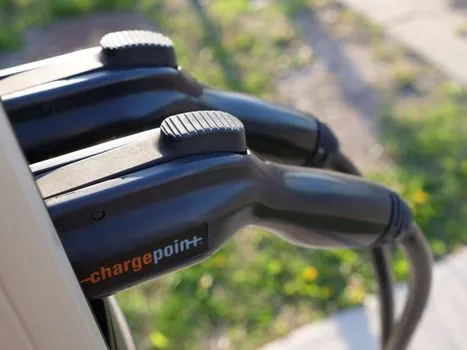
Electric order pickers are emission-free by design, which is why they are the default for indoor automotive parts warehouses where air quality and noise matter during multi-shift operations [S1]. The shift in 2026 is clearly from lead-acid to lithium-ion, driven by opportunity charging, zero maintenance on the battery side, and longer operational life cycles, which together support 24/7 continuous warehouse use [S1].
For an automotive DC running two or three shifts, lithium-ion opportunity charging during breaks removes the battery-swap bay and the spare lead-acid fleet. The trade-off is the higher unit cost of a Li-ion pack versus lead-acid, plus charger infrastructure rated for the higher charge acceptance rate. If the operation is single-shift, lead-acid remains a defensible spec and should be priced in as the alternate.
Integration Stack: WMS, Barcode, RFID, and Automation
Modern order pickers routinely ship with barcode scanners, digital displays, WMS integration, RFID, weight sensors, safety harness systems, and automated navigation assistance, and these are the items that move a picker from a manual cart to a node in a warehouse automation stack [S2].
For an automotive parts DC, the practical spec is WMS handshake at the platform, pick-to-light or scanner confirmation per line, and weight verification on the platform for catch-weight parts (oils, fluids, certain fasteners). RFID on the platform is justifiable when bin labels are replaced by RFID tags and the WMS handles the read event, but is overkill for a paper-label DC.
Selection Criteria Mapped to the Automotive DC Use Case
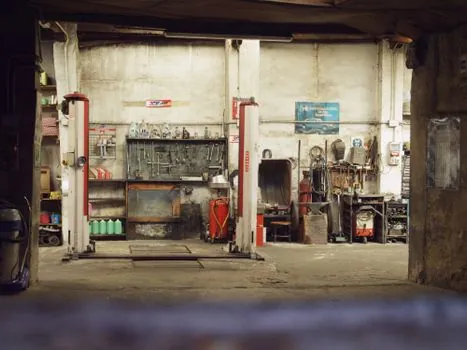
Three decision filters drive the right class. First, picking height: bottom 2.8 m only means low-level; 3–6 m shelves mean mid-level; above 6 m means high-level, and below that the spec should also include aisle width because a mid-level picker in a 2.5 m aisle will not turn [S4]. Second, SKU profile: thousands of small parts favor low- and mid-level machines with bin shelving; pallets of bumper covers and body panels are not picked this way, they move on a different fleet.
Third, throughput: 80–150 lines per operator-hour is typical for a manual order picker; beyond that, an automated or robotic order picker should be evaluated, though the unit economics still favor manual machines in most aftermarket DCs at 2026 pricing [S2]. A fourth filter, often skipped, is floor condition. Painted concrete, expansion joints, and small ramps all matter for a ride-on platform on pneumatic wheels versus cushion tires.
Comparison of Order Picker Classes for Automotive Parts DCs
Low-level order pickers: 2.5–2.8 m lift, walk-behind or ride-on, fastest travel, lowest unit cost, best for bottom-rack and small-parts picking [S4]. Mid-level order pickers: 3–6 m lift, harness and rail safety, ride-on platform, dominant class for tier-1 aftermarket DCs, mid-range unit cost [S4]. High-level order pickers: 10+ m lift, VNA operation with guidance, slowest travel, highest unit cost, justified only for tall narrow-aisle racking in mega-centers [S2].
On the same four criteria: cost (low to high across the three), coverage of typical automotive SKUs (low- and mid-level cover the bulk; high-level needed only above 6 m), safety complexity (harness mandatory above 2.5 m, with rail and guidance above 6 m), and WMS dependency (all three integrate, but mid- and high-level are where the integration cost is justified). The spec the engineer should walk into the RFQ with is mid-level, 4–5 m platform lift, Li-ion, WMS-integrated, with high-level held as the alternate if rack heights exceed 6 m.
Limitations, Failure Modes, and Where the Picker Is the Wrong Tool
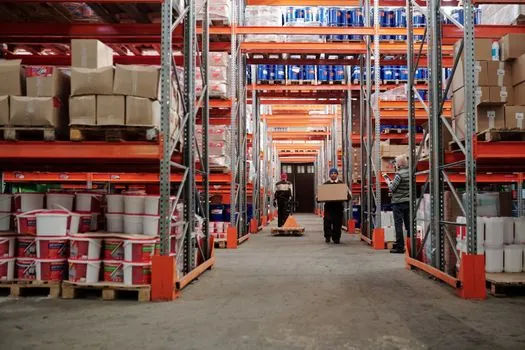
An order picker is the wrong machine for full-pallet moves of bumpers, hoods, or windshields; that work belongs on a counterbalance forklift, reach truck, or VNA truck, not on a platform picker [S4]. Mixed fleets are normal, and the DC layout should physically separate the picker aisles (typically 2.8–3.5 m wide) from the counterbalance aisles (typically 3.5–4.5 m) to avoid swept-path conflicts.
Failure modes specific to automotive parts picking include platform overload from stacked small-parts bins, harness non-use above 2.5 m, and WMS desync when the scanner drops the connection. The mitigation for the first is a platform weight sensor with a hard cutout; for the second, it is a procedural control tied to lift height, not a feature; for the third, it is a Wi-Fi survey and a fallback to on-platform batch mode so a dropped link does not stall the pick.
Cold-Storage and Edge-Condition Variants
Order pickers specified for cold chain or cold-storage automotive parts (battery storage, certain chemicals) need components rated for temperatures down to about -25°C, which is a documented design point on at least one OEM's cold-chain variant [S1]. For non-cold automotive parts DCs, this is a non-issue, but if the DC shares an order-picker fleet with a freezer or chilled zone, the spec must call out cold-rated hydraulics, lubricants, and battery behavior at low temperature, because Li-ion charge acceptance drops sharply below 0°C and lead-acid capacity drops with temperature.
For a parallel decision pattern in adjacent fleets, a reach truck selection map for retail distribution walks through similar lift-height and aisle-width trade-offs but for pallet moves rather than single-item picking, which is useful when scoping the mixed fleet inside the same automotive parts DC.
The dominant 2026 spec for a tier-1 automotive aftermarket DC is mid-level, 3–6 m platform, Li-ion, WMS- and scanner-integrated, with low-level as the bin-picking complement and high-level held as the alternate only when rack heights exceed 6 m. Trackable signals over the next planning cycle: the OEM shift from lead-acid to Li-ion as standard, the rollout of platform-level RFID reads, and any RFQ that bundles the order picker with a WMS API contract rather than treating the machine as a standalone purchase.
Spec-level background on the components involved: pressure transmitter.