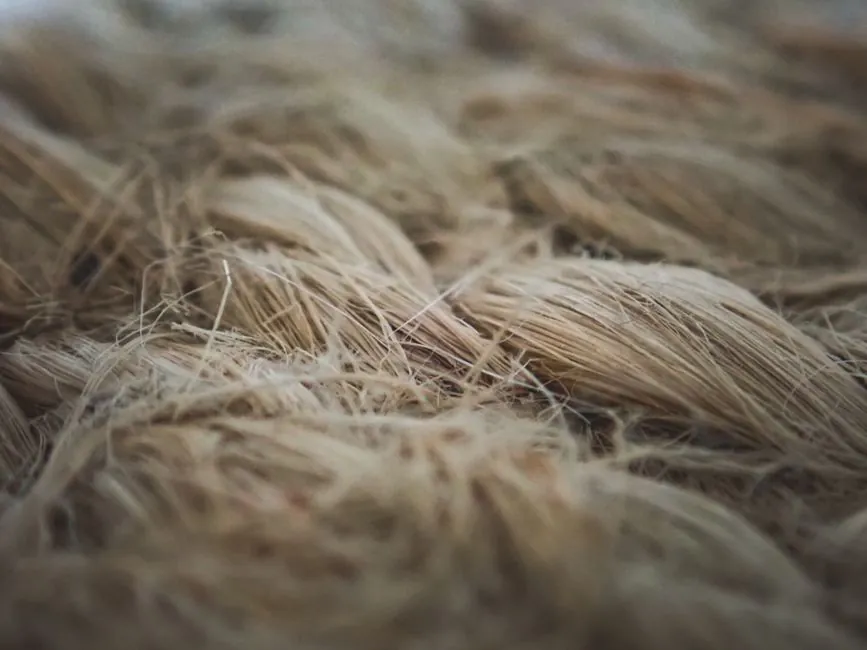
Para-aramid from Chinese suppliers lists at US$11.00–13.00/kg in 10 kg lots, US$18.00–20.00/kg for 15 mm chopped grades, and US$29.50–30.00/kg for continuous-filament 1000D/1500D yarn, with MOQ 10 kg and 15 workday lead times [S7][S6][S1].
2026 is an unusually competitive window because the global aramid market sits near US$3.9 billion with roughly 188 kt of installed capacity, Teijin closed its Dutch aramid pulp line in early 2025, and DuPont's aramid business is being acquired by Arclin with a completion target of April 2026 [S4]. The structural shift buyers need to absorb is that China has moved from a capacity-constrained participant to the marginal supplier for both para-aramid 1414 and meta-aramid 1313 grades.
Para vs Meta Aramid: Pick the Chemistry Before You Pick the Supplier
Para-aramid (aramid 1414 / PPTA) is built from PPD + terephthaloyl chloride and spun in concentrated sulfuric acid via liquid-crystal spinning, delivering tenacity around 18–22 cN/dtex and initial modulus in the 80–120 GPa range [S4]. Meta-aramid (aramid 1313 / PMIA) uses MPD + isophthaloyl chloride in amide solvents such as DMAc, with tenacity near 4–5 cN/dtex and a modulus an order of magnitude lower; its value proposition is heat and flame endurance rather than specific strength [S4].
Substituting one for the other is the most common opening mistake in aramid sourcing. Para is the correct choice for optical-cable reinforcement, automotive braking, ballistic fabrics, and high-modulus composite panels; meta is the correct choice for aramid paper, electrical insulation, and thermal-resistant filtration. If your spec sheet calls for a 400D/1000D/1500D multifilament yarn with high-modulus behaviour, you are looking at para-aramid 1414, the same chemistry supplied as 100% PARA Aramid under the YL1500D model code at Yangzhou Yilikim [S1][S2]. For a related decision frame on reinforcement material families, the aramid vs carbon vs glass reinforcement breakdown is worth reading in parallel with this guide.
Five Numbers on the Spec Sheet That Decide Whether the Deal Works
Denier (D), filament fineness in dtex, twist level, fibre length, and HS code are the five numbers that swing a quote from US$18/kg to US$500/kg on the same product label [S4]. The Chinese B2B listings in this dataset use 100D, 400D, 800D, 1000D, and 1500D continuous multifilament under the YL-series model codes, with fineness 1.68–2.52 dtex at 51 mm staple reference, and twisted or twisted-free variants customisable on order [S1][S2][S3].
For chopped aramid, the cut length is the discriminator: 1 mm, 3 mm, 6 mm, and 12 mm are the standard Chinese offerings, and Starcarbon's datasheet confirms chopped strand is processed from continuous para-aramid filament by precision cutting [S5]. Beyond denier and length, the HS code 5402112000 appears on every YILIKIM para-aramid yarn listing, which is the harmonised tariff line customs will use to clear the shipment and to flag any dual-use export review [S1][S2][S3]. Lead-time discipline is also a numeric spec: 15 workdays from order to dispatch is what the audited Jiangsu supplier publishes, and average response time is under 5.36 hours [S1].
2026 Capacity Map: Where the Volume Actually Lives

Global para-aramid capacity is concentrated in five players totalling around 130 kt/yr, with Teijin (Twaron/Technora) holding roughly 36,500–40,000 t/yr, DuPont's Kevlar line around 35,000 t/yr, Yantai Tayho (Taparan) at 16,000 t/yr, Kolon (Heracron) at 15,000–15,300 t/yr, and Sinochem International at 8,000 t/yr after its 2,500 t expansion [S4]. Tayho runs that 16,000 t figure split evenly between para and meta, with overall utilisation 70–80%, and disclosed that 40–50% of para-aramid demand is pulled into optical-cable reinforcement for AI data-centre buildout [S4].
New Chinese para-aramid projects are still arriving: a 5,000 t/yr integrated monomer-to-spinning line in Jiangsu entered production in 2025, and Shenma Industrial has a 4,000 t/yr project under construction with batch sales already underway [S4]. Sinochem reported 2025 aramid exports of 1,218 t, an 83% year-on-year jump, a signal that Chinese suppliers are no longer just serving domestic demand [S4]. Meta-aramid has been growing 20–30% annually over the past two years on aerospace and electrical-insulation paper demand, with high-end aramid paper still tight while commodity grades face price pressure [S4].
Price Bands on Live Listings: What Chinese Suppliers Are Quoting Now
The three live Chinese price points cluster between US$11/kg and US$30/kg depending on grade, form, and order volume. Zhejiang Nexus Specialty Fiber quotes US$11.00–13.00/kg for 10 kg of high-tensile aramid fibre, US$18.00–20.00/kg for 10 kg of 15 mm chopped aramid for composites, and a US$30/kg sample price across both SKUs [S7][S6]. Yangzhou Yilikim posts US$30.00/kg at 30–999 kg, US$29.80/kg at 1,000–1,999 kg, and US$29.50/kg at 2,000+ kg on its YL-series 1000D/1500D continuous multifilament, with the same US$30/kg sample fee [S1][S2][S3][S8].
For a cross-grade comparison, the table below lines the four forms up against the four decision variables that drive landed cost: | Form / Supplier | Tenacity class | Price (US$/kg) | MOQ | Lead time | | --- | --- | --- | --- | --- | | High-tensile yarn, Zhejiang Nexus [S7] | Para-class | 11.00–13.00 | 10 kg | Per inquiry | | 15 mm chopped, Zhejiang Nexus [S6] | Para-chopped | 18.00–20.00 | 10 kg | Per inquiry | | 1000D multifilament, Yilikim [S1] | Para 1414 | 29.50–30.00 | 30 kg | 15 workdays | | 1500D multifilament, Yilikim [S2][S3] | Para 1414 | 29.50–30.00 | 30 kg | 15 workdays | The single biggest spread driver is whether the yarn is true high-modulus para-aramid 1414 (US$29.50–30.00/kg, audited Jiangsu supplier, 1,100 mt/yr capacity) versus a general high-tensile aramid (US$11.00–13.00/kg, Zhejiang supplier, 10 kg entry MOQ) [S1][S7]. On the upstream fibre-family decision, aramid, carbon, and glass reinforcement side-by-side gives the modulus-versus-cost context most spec sheets leave out.
Use-Case Map: Optical Cable, Braking, Concrete, and Protective Gear
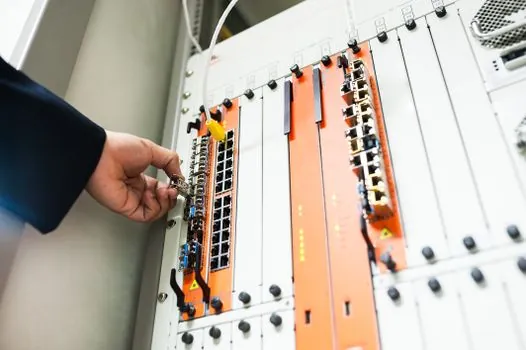
Optical-cable reinforcement is the single largest pull on para-aramid 1414, accounting for 40–50% of demand at major Chinese producers, and some optical-communication suppliers report overseas order books filled into 2028 [S4]. The YL-series 1000D/1500D continuous multifilament yarn at Yangzhou Yilikim is explicitly listed for optical-cable use alongside automotive braking, reinforced concrete, and protective gear, with a normal yellow colour, multi-ply construction, and fireproofing characteristic [S1][S2][S3].
For friction-material and rubber-composite reinforcement, 1 mm, 3 mm, 6 mm, and 12 mm chopped para-aramid from Starcarbon provides the dispersion profile needed for plastics, rubber, and friction materials, with even fibre distribution a stated QC criterion [S5]. Concrete reinforcement is a third outlet: para-aramid pulp is one of the recognised macro-fibre families alongside carbon and concrete-grade fibre reinforcement, and it shares the high-modulus, chemical-resistant property set with the continuous-filament grades. If you are weighing aramid against other chopped reinforcement options, the aramid vs chopped-strand selection gate walks through the conversion and length-tolerance trade-offs.
Supplier-Vetting Signals and What the Audited Records Actually Show
Yangzhou Yilikim is a Jiangsu-based limited company established in 2015 with 18 employees, nine years of export experience, ODM service available, and an audited response time of ≤5.36 hours; the same profile lists nearest ports at Shanghai, Yangzhou, Nanjing, Shenzhen, and Weihai [S1][S2][S3]. Production capacity is 1,100 mt/yr, QC is run by 15 QA staff on visual and function inspection, and the supplier reports no overseas warehouse, showroom, agents, branches, or offline trade-show participation [S1].
Zhejiang Nexus Specialty Fiber, the other Chinese seller in the dataset, is a wholesale-only listing without the same audited profile; both suppliers support sample shipments at US$30/kg and US$90/kg respectively, which is the realistic way to qualify a new source before committing to a 30 kg MOQ [S6][S7]. For procurement teams that want a fuller picture on the YL-series spec and on para-vs-meta gate logic, the related guide on aramid fibre procurement spec gates and sourcing rules cross-references the same denier and HS-code discipline; the carbon fibre procurement strategy for 2026 is the obvious parallel read for teams splitting spend between aramid and carbon reinforcement.
Limits, Failure Modes, and What the Spec Sheet Does Not Tell You
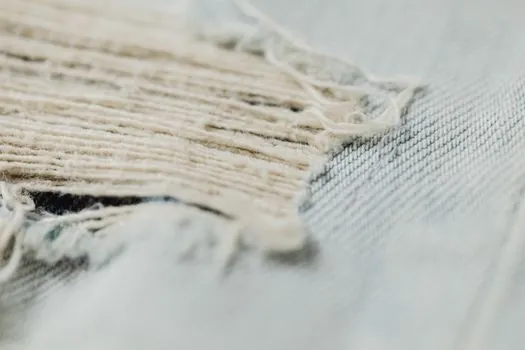
Para-aramid has poor UV resistance and absorbs moisture, both of which the audited Chinese listings flag in the feature column as "Moisture Absorbent" rather than as a positive [S1][S2][S3]. Tenacity quoted at 18–22 cN/dtex is the as-spun fibre figure; real-world composite laminate strength depends on the matrix chemistry, fibre–matrix coupling, and whether the yarn is twisted or untwisted, none of which the B2B listing reveals [S4]. UV-exposed outdoor applications need a protective coating or a hybrid construction, and meta-aramid should not be specified where para-grade modulus is required.
Export-control exposure is also part of the spec: aramid is on dual-use watchlists in multiple jurisdictions, and the HS code 5402112000 will be the line customs uses to route the shipment through any review. Optical-cable-grade para-aramid is reportedly sold out into 2028 at some suppliers, which means spot orders may be filled at a premium or refused outright during peak AI data-centre buildout [S4]. For cross-material sourcing, carbon fibre SQC gaps and the aramid spec gate are the two adjacent failure-mode patterns worth pre-checking before signing a PO.
Trackable next signals for any aramid sourcing decision in 2026: the Arclin acquisition of DuPont's aramid business is targeted to complete in April 2026, which will reset the negotiated-price reference for Kevlar-class para-aramid; Tayho's 16,000 t para line and the new 5,000 t Jiangsu para-aramid project will report 2026 utilisation rates that indicate whether the 130 kt/yr global para figure holds or expands; and meta-aramid 1313 spot pricing will signal whether the 20–30% growth rate in aramid paper is still pulling supply tight. A 30 kg sample order at US$30/kg against any audited Chinese supplier is the lowest-cost way to validate the denier, dtex, and twist spec before committing to multi-tonne volumes.