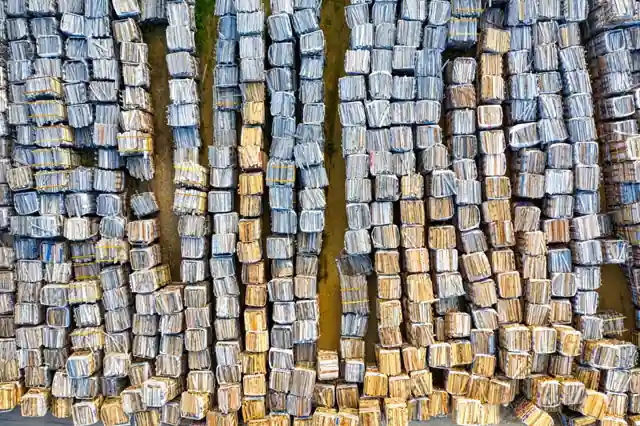
Open-portal Chinese primary magnesium ingot (99.9–99.99% Mg) trades in a US$2,250–3,000/ton band on 5–20 metric ton MOQs, with Tianjin as the standard loading port and 7–30 day delivery windows as of July 2026 [S2].
Production is concentrated in three provinces (Inner Mongolia, Shanxi, and Henan), and individual supplier listings declare up to 1,000 metric tons/month of supply capability, which is enough to cover alloy-mill and desulfurisation-shop demand without contract negotiation against major producers [S2][S3].
Purity Grades, Chemistry, and What the Spec Sheets Actually Show
Standard commercial Chinese primary magnesium ingot is offered at 99.9% minimum Mg (commonly shown as 3N), with the Okorder listing current to mid-2026 quoting a 7.5 kg per-ingot weight at a 20 m.t. MOQ, while higher-purity metal at 99.95% (≈3N5) Mg is available from the same mill pool at a 5 m.t. MOQ and 1,000 m.t./month declared supply capability [S2].
Elemental magnesium (atomic weight 24.305 g/mol, formula Mg) is the basis, and trading listings index against the 99.9 / 99.95 bands rather than fine sub-grades, while 4N (99.99%) and 5N (99.999%) material is a separate qualification with longer lead times and pricing well above the open-portal bands [S2]. Trace chemistry on Shijiazhuang Shiyun Metal's 99.9% Mg ingot pins Si <0.02%, Al <0.02%, Fe <0.006%, Cu <0.005%, Ni <0.0009%, and Cl <0.004%, which is the typical spec envelope a buyer's incoming-PQC lab should run against [S1].
Price Bands, MOQ Floors, and Province-Level Spreads
Inner Mongolia Pusheng Iron & Steel quotes US$2,500–3,000/ton at a 20-ton MOQ and carries Diamond Member / Audited Supplier status on Made-in-China.com as of 18 July 2026, with a second audited Inner Mongolia producer under the same listing showing an identical US$2,500–3,000/ton band at the same 20-ton MOQ floor, signalling that 20 tons is effectively the wholesale entry point for this region [S2].
Shanxi Jinshengyuan New Material undercuts the Inner Mongolia range with US$2,250–2,300/ton at a 5-ton MOQ, which makes it the practical first contact for small-batch trial orders and qualification sampling, and the price spread of roughly US$200–250/ton between the Shanxi and Inner Mongolia floors can dominate landed cost on a 100 m.t. trial shipment [S2]. Anyang Yitong Metallurgy Refractory in Henan runs a US$300–1,000/ton band on a 5-ton MOQ for 99.9%–99.99% Mg ingot, with HS code 8104110000 and 1,000 ton/month production capacity, and it also trades aluminum-strontium master alloy at the same 5-ton MOQ for buyers who want a single vendor relationship across pure Mg and Al-Sr grain refiners [S2][S3].
For comparison, Shijiazhuang Shiyun Metal's Hebei listing sits at US$2,500–2,800/ton, 30-day delivery, 1,000 m.t./month capacity, and ingot weights of 1 kg, 300 g, and 150 g in 110 x 40 x 35 mm or 70 x 50 x 50 mm formats, which is a useful cross-check on the Inner Mongolia band [S1]. Magnesium oxide by-product from Shandong Yifengtuo Chemical at US$150–180/ton, 20-ton MOQ, is a useful cross-check on Chinese bulk inorganic pricing but not a substitute for ingot [S2].
Supplier Map: Inner Mongolia, Shanxi, and Henan (Anyang)
Inner Mongolia dominates primary production because the Pidgeon (silicothermic) reduction route is energy-intensive and Inner Mongolian coal-fired power keeps the smelter electricity cost competitive, with Shanxi sitting in the same northern metallurgical belt and serving the lower-MOQ / lower-freight lane into central China [S2].
Henan (specifically Anyang) is the third node, with the Made-in-China.com filtered directory returning 20 Henan/Anyang primary magnesium ingot listings as of 18 July 2026, including Anyang Yitong Metallurgy Refractory, which is the natural freight and metallurgical-alloy hub for buyers who want a single vendor relationship for both pure Mg and Al-Sr grain refiners [S2][S3]. Anyang Daguan Metal Material extends the same hub into trading-channel supply across Al, Cu, Zn, Pb, and Ni for buyers running multi-metal PQC programs [S4].
Selection Criteria: Purity, MOQ, Incoterms, and Loading Port
Buyers specifying 3N (99.9%) Mg for steel desulfurisation or general alloying can transact on the open B2B portals against TT or LC at the published bands, with Tianjin as the standard loading port and 7–30 day delivery windows depending on the supplier [S2][S5].
Buyers specifying 4N (99.99%) Mg for aerospace or electronics should expect separate qualification against ISO9001:2015-certified suppliers such as ZHENAN (2,000 m.t./month supply ability, 7–10 working-day delivery, L/C + T/T + Western Union accepted) and Anyang Yitong (1,000 ton/month, 99.99% Mg, square silver-white ingot, ISO 9001 certified, 41%–50% export share) [S3][S5][S6]. The downstream alloy-application spread (aviation, automotive, metallurgy, chemical) is broad enough that any buyer's incoming-PQC should fix a defined impurity envelope (Fe, Si, Ni, Cu, Cl, Al) before signing a 100-tonne contract [S1][S3].
Who Should and Should Not Source From These Listings
These open-portal listings fit buyers who need 5–1,000 m.t./month of 3N to 3N5 primary Mg, are willing to transact against TT or LC, can accept Tianjin as the standard loading port, and are downstream of Pidgeon-route smelting (alloy makers, die-casters, and steel desulphurisation shops) [S2].
They are a poor fit for buyers who need ASTM B92 / B93-grade specification enforcement with traceable lot-level mill certs, 4N+ purity for electronics or aerospace qualification, or full container-load Incoterms (FCL) against a single master bill of lading, and any such buyer should plan for separate qualification cycles and pricing well above the open-portal bands [S2][S3]. For buyers weighing the magnesium ingot path against other Chinese light-metal sourcing plays, the Magnesium Ingot Procurement: Purity, Packing, and Sourcing Specs companion guide is a useful cross-reference, and procurement teams running multi-metal PQC programs can compare notes against the Cobalt sulfate sourcing from China: spec map, supplier profile, and procurement gates reference for the same Henan/Anyang hub.
Verifiable Next Nodes and Trackable Signals
Track the Tianjin loading-port freight index against the 20-ton MOQ floor on the Inner Mongolia listings: a sustained US$2,500–3,000/ton band through Q4 2026, combined with a 7-day rather than 30-day delivery window, is the cleanest signal that the open-portal supply pool is still loose rather than tightening. [S2]
Component reference pages worth checking: magnesium die casting machine, linear guide, and crossed roller guide.