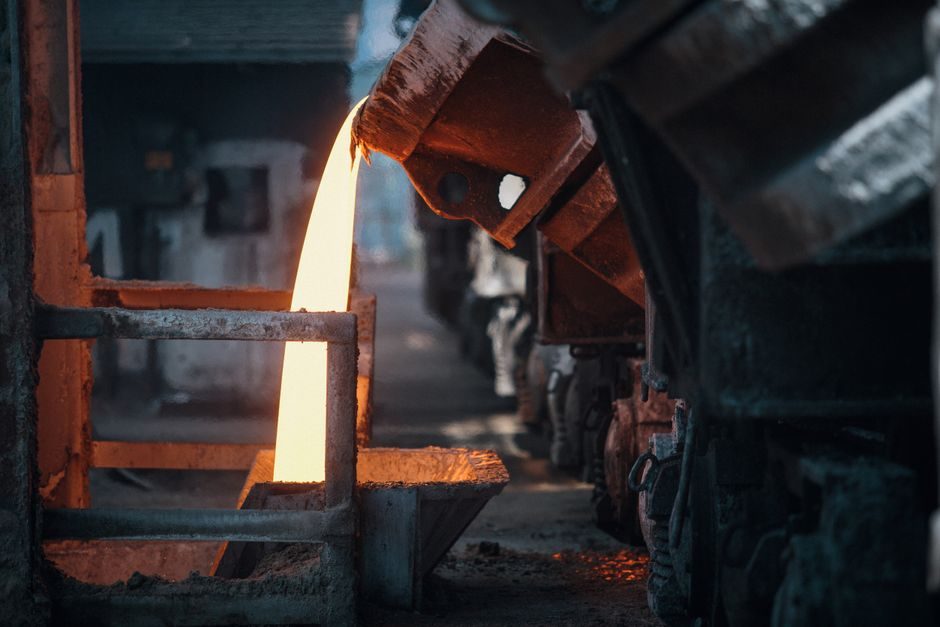
Copper production capacity planning starts with cathode tonnage: every greenfield or brownfield expansion is built backward from a target metric tons per annum of LME Grade A cathode, which then drives cell count, rectifier capacity, and electrolyte flow [S3]. The term itself is translated as 生产能力设计 in Chinese engineering lexicons, framing it as a design exercise rather than a forecast [S3].
For a greenfield SX-EW project at 50 ktpa cathode, planners typically size heap-leach pad area against copper grade, PLS flow against raffinate acid strength, and electrowinning current density against impurity envelope — the resulting matrix feeds into the copper material selection for busbars, starter sheets, and anode baskets. Capacity is rarely a single number; it is a stack of interdependent mass-balance constraints.
Defining Capacity: From Concentrate Feed to Cathode Output
Capacity planning in copper is a mass-balance exercise: concentrate feed grade, recovery rate, smelter throughput, and electrorefining current efficiency together set the cathode ceiling. [S1]
For SX-EW operations, the equivalent equation is different: heap leach pad area × Cu grade × extraction efficiency ÷ pregnant leach solution (PLS) flow gives the daily Cu in solution, which the EW circuit must plate out at 200–320 A/m² current density. Mismatch between leach kinetics and EW capacity is the single most common cause of ramp-up delays in greenfield solvent extraction projects.
Selection Criteria: How Engineers Choose the Capacity Path
Engineers pick between three capacity expansion paths: brownfield debottlenecking, brownfield duplication, and greenfield construction. Selection hinges on six criteria: existing SX-EW cellhouse utilization, acid supply contract, grid power availability, scrap and concentrate market access, permitting timeline, and capex per tonne of incremental cathode. [S2]
Brownfield debottlenecking — adding cells, upgrading rectifiers, or raising current density on existing circuits — delivers the lowest capex per tonne, often under USD 2,000/t of incremental cathode when existing industrial valve and piping can be reused. Greenfield construction sits at the opposite end of the spectrum, typically USD 8,000–12,000/t of nameplate capacity including leach pad, SX train, and tankhouse. Brownfield duplication lands in the middle when a parallel train shares the existing infrastructure.
Comparison: Brownfield Debottleneck vs Brownfield Duplication vs Greenfield

The three options compare across four decision criteria: capex per tonne, lead time, ramp-up risk, and permitting complexity. Brownfield debottleneck wins on capex (USD 1,500–2,500/t) and lead time (6–12 months) but caps out when existing rectifiers hit their nameplate kA rating. Brownfield duplication balances capex (USD 3,500–5,500/t) against a 18–24 month build window and moderate permitting risk. Greenfield builds dominate on scale — 100 ktpa+ nameplate — but require 36–60 months and full environmental impact assessment. [S1]
Scrap-fed secondary capacity sits in its own bucket: a typical copper rod mill drawing on wire-bar and chop feedstock can be capacity-planned as a flow-metered flow meter input to a furnace-rectifier-casting line, with throughput capped by furnace campaign life rather than ore grade. Engineers running a secondary smelter typically target 85–92% cathode-equivalent yield from scrap feed, well below primary SX-EW recovery but with dramatically shorter permitting cycles.
Who This Is For — and Who It Is Not
This planning discipline is for process engineers, plant managers, and EPC contractors sizing greenfield SX-EW or tankhouse expansions, scrap-fed rod-mill capacity studies, and brownfield debottlenecking projects at operating hydrometallurgical and pyrometallurgical sites. It is also the working language of pressure transmitter and instrumentation teams because every electrolyte flow, leach-pad irrigation header, and rectifier cooling loop depends on a pressure and flow spec tied back to the capacity model. [S1]
It is not for traders pricing cathode warrants, not for LME warehouse logistics, and not for fabricators specifying copper busbar stock — those audiences consume cathode but do not plan its production. If the question is "how much copper will the world produce in 2030," that is a market forecasting exercise using a different methodology; the engineering planning exercise asks "given a target tonnage, what equipment, utilities, and reagents are required."
Real Use Cases: Three Capacity-Planning Scenarios
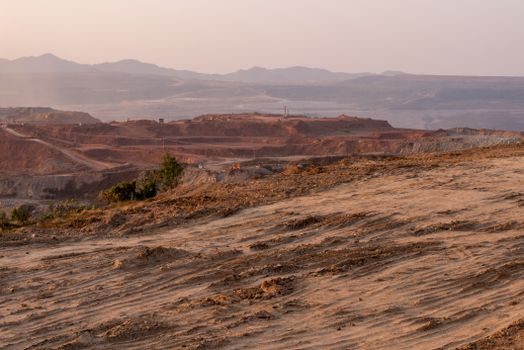
Scenario one: a 35 ktpa SX-EW brownfield expansion in the Andes, debottlenecked by upgrading rectifiers from 25 kA to 38 kA and adding 80 electrowinning cells. The capacity model ties PLS flow from the expanded leach pad to rectifier duty cycle, and to rectifier cooling-water instrumentation that includes pressure sensor monitoring on each cooling loop. Scenario two: a 120 ktpa greenfield copper concentrator in Central Asia, capacity-planned around a 92% recovery target and 1.4% Cu head grade, with the downstream smelter and tankhouse sized to absorb 270 t/d of concentrate. Scenario three: a scrap-fed secondary smelter running 60 ktpa copper rod, capacity-planned by PLC-logged furnace throughput and chop-feedstock availability. [S1]
In all three, the copper material grade specification for cathode (LME Grade A, 99.99% Cu) is non-negotiable, and the capacity plan must demonstrate compliance with ISO 431 for refinery copper and ASTM B115 for cathode shape and dimension. For sulfide concentrate feed, the smelter feed grade and impurity envelope (As, Sb, Bi, Pb) drive furnace selection and slag chemistry; these are typically governed by site-specific permit conditions rather than a single industry-wide standard, and engineers should confirm with their local environmental authority.
Limitations, Failure Modes, and Common Spec Traps
The most common failure mode is rectifier undersizing: the tankhouse is built for the target cathode tonnage, but the rectifiers are specced at nameplate kA without headroom for current-density ramp-up. A 20% kA margin above steady-state draw is a defensive engineering practice. The second trap is acid balance: SX-EW capacity assumes a steady raffinate acid strength of 8–12 g/L H₂SO₄, and any disruption to make-up acid supply collapses EW current efficiency within hours. [S1]
Heap leach permeability is a third trap: a capacity model that assumes pad irrigation rates the heap cannot sustain will over-predict copper in solution and leave the EW circuit starving. A fourth trap is water balance in arid sites: a 50 ktpa SX-EW operation can require 1.5–2.0 m³ of process water per tonne of cathode, and any shortfall in water rights translates directly into lost cathode tonnage. The fifth trap is grid power: EW at 300 A/m² across a 35 ktpa nameplate cellhouse draws 40–60 MW continuous, and any capacity model that ignores substation upgrade lead time will slip by 12–18 months.
Sourcing, Standards, and Trackable Signals
Specifications should anchor to LME Grade A cathode rules (99.99% Cu min), ISO 431 for refinery copper shape, ASTM B115 for cathode dimension and weight tolerances, and site-specific environmental permits governing SO₂ and acid mist emissions. For EW cell design, IEEE 519 is commonly applied to rectifier harmonic limits, and ISA 71.04 frames the corrosion class for cellhouse instrumentation including pressure transmitter selection. [S2]
Trackable signals to watch over the next planning cycle: LME 3-month copper price versus miner break-even, sulfuric acid spot pricing as a percentage of cathode revenue, and grid power availability announcements in copper-producing regions. Related capacity-planning references for adjacent commodity work include Alloy Steel Selection for Automotive Manufacturing: 2026 Spec Map and Aluminum Industry 4.0 Adoption: 2026 Spec Map and Stack Comparison, which frame the same mass-balance discipline for adjacent non-ferrous and ferrous flows.