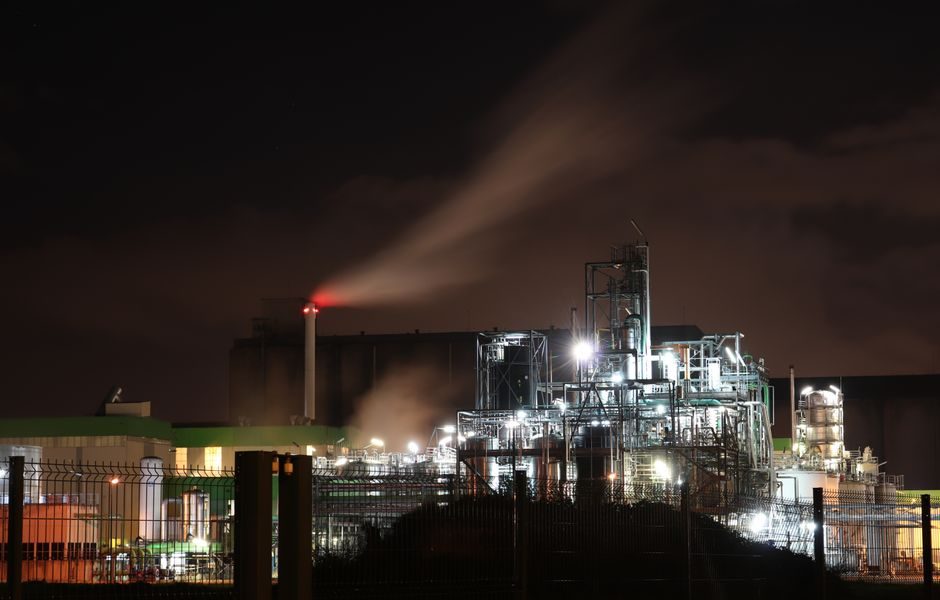
Fixed gas detection in oil and gas facilities pairs a 4-20 mA or RS485 transmitter head with a hazardous-area-rated sensor module, and the dominant sensing technologies specified for hydrocarbon monitoring are catalytic bead (pellistor) and non-dispersive infrared (NDIR) [S2][S3].
Dräger's fixed-catalogue covers Polytron 5100 EC (electrochemical, toxic/oxygen), Polytron 5700 IR (PIR 7000 hydrocarbon IR), the wireless GasSecure GS01, and REGARD 7000/1000 control panels, with at least 46 fixed-point products listed across flammable, toxic and flame categories [S2]. Crowcon describes its fixed range as engineered for offshore platforms and similar hydrocarbon service, complementing its 90,000+ Triple Plus+ portable fleet already sold into oil and gas, chemical and utility operators [S1][S4].
Sensing Technology Comparison: Catalytic Bead vs IR vs Electrochemical
Catalytic bead sensors are the workhorse for %LEL hydrocarbon detection but fail in oxygen-free backgrounds and are vulnerable to sensor poisons and inhibitor gases [S1]. NDIR (PIR 7000 type) sensors resist poisoning, work in inert atmospheres, and cover both %LEL and %vol hydrocarbon ranges — Crowcon's IR module additionally reads hydrocarbons up to 100% vol for tank and line purging [S1][S2]. Electrochemical DrägerSensors (Polytron 5100 EC) address toxic gases and oxygen in standard applications, with plug-and-play pre-calibrated cells [S2].
For crude-oil, LNG and produced-water service, the spec-driving differences are: (a) poisoning resistance, where IR wins over pellistor; (b) oxygen-free background performance, where IR is the only practical option; (c) response to specific toxic threats like H2S, where only an electrochemical cell delivers ppm-level resolution [S1][S2]. A typical fixed detector exposed to upstream oil and gas sees a mixed threat envelope (HC %LEL, H2S ppm, O2 deficiency), so most platforms stack at least one of each sensor class at the perimeter and one per analyser shed.
Selection Criteria: Gas, Range, Output, and Environment
Selection begins with the target gas and the measurement range: ATO's fixed NH3 detector covers 0-50/100/200/500/1000/2000/5000 ppm selectable, while the GD300-C6H6 benzene detector spans 0-10/100/200/1000/10000 ppm, both with 4-20 mA + RS485 dual output, sound/light alarm, and a real-time display [S5]. The GD300-NH3 SKU at 0-50 ppm lists at $754.13, and GD300-C6H6 at $1,765.79, illustrating that gas-specific cell cost and range scale dominate price more than the transmitter head [S5].
For oil and gas upstream and midstream, the four hard criteria are: (1) hazardous-area certification (ATEX/IECEx zone 1 or 2 for the housing, with the Dräger Polytron 5700 IR and the Gri GRI-9105/9107 both marketed for petroleum/chemical service) [S2][S3]; (2) ingress protection — Polytron 5100 EC ships in an IP66 housing [S2]; (3) output protocol — 4-20 mA + HART for legacy DCS integration, RS485/Modbus for newer SCADA, and wireless for hard-to-cable points (GasSecure GS01) [S2]; (4) sensor life and calibration interval, which for pellistor cells is typically the limiting maintenance cost versus IR's longer life [S1].
Architectural Choice: Point Detector vs Wireless vs Open-Path
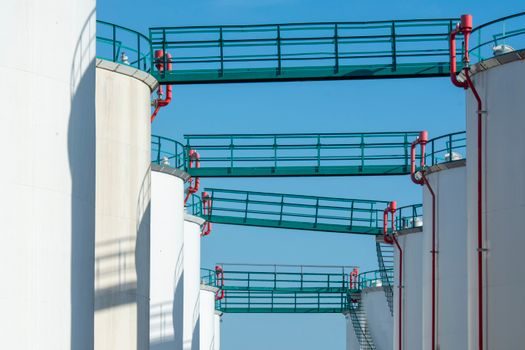
Wired point detectors remain the workhorse: Dräger's Polytron 5100 EC and 5700 IR feed back to a REGARD 1000 (up to four transmitters, three configurable alarm relays, fault relay, data logging) or a REGARD 7000 for complex multi-channel systems [S2]. Wireless point detectors — Dräger's GasSecure GS01 — eliminate cable tray runs for remote wellheads, flare tips and tank farms where cable is the dominant installed cost [S2].
Open-path and ultrasonic leak detection round out the architecture for line-of-sight hydrocarbon plumes and high-pressure gas leak detection, but both Dräger and Crowcon still place point NDIR/IR as the workhorse for the release point itself [S2][S4]. On a typical offshore platform, the recommended split is wired IR point detectors at the wellhead module and drilling riser, electrochemical H2S cells in the mud-handling area, and wireless IR on the perimeter and flare.
Use Cases by Facility: Upstream, Midstream, Refining
Upstream (offshore platform, FPSO, wellhead): Crowcon's fixed product line and Crowcon's site guidance target offshore platforms specifically, with IR preferred for the oxygen-depleted / inert background of enclosed wellhead modules and for tank purging [S1][S4]. Midstream (compressor stations, terminals, pipelines): wired NDIR point detectors at every valve manifold and pump skid, with a REGARD 7000 aggregating up to hundreds of channels at the control room [S2].
Downstream (refineries, petrochemical): toxic threats (H2S, benzene, NH3, Cl2, SO2, NO2) dominate the engineering brief, and the gas-portfolio of fixed detectors in this segment is wide — Crowcon's portable family alone covers CO, NH3, CO2, H2S, Cl2, NO2, SO2, plus LEL hydrocarbons, illustrating the same sensor range that the fixed line carries [S1]. Gri Instrument's GRI-9105/9107 explicitly targets petroleum chemical, metallurgy, mining, fire, gas, environmental protection, electric power, communication, papermaking, printing and dyeing, and food — with NDIR + PID sensor support and a real-time concentration display [S3].
Limitations, Failure Modes, and Cross-Reference

Catalytic bead sensors fail in oxygen-free or low-oxygen backgrounds, are poisoned by silicones, lead, and sulphur compounds, and read false-low under sensor inhibition — IR avoids all three failure modes but cannot detect hydrogen at %LEL because H2 is a homonuclear diatomic with no IR signature [S1]. Electrochemical cells drift, consume electrolyte, and have a 1-3 year typical service life, with cross-sensitivity to other electroactive gases (e.g., a CO cell responding to H2) [S2].
Specifying engineers should also consider the fixed gas detector family taxonomy to map point, open-path and ultrasonic detectors against the release scenario. For a broader multi-channel comparison, see the multi-gas detector and combustible gas detector encyclopedia pages, and review the gas detector overview for sensing technology basics. For construction-site variants, the previously published piece on Fixed Gas Detector Selection for Construction Sites covers sensor-stack and certification differences relevant to a contractor's portable fleet, while Portable Gas Detector Selection for Work at Height covers the tethered-confined-space entry case where fixed area monitoring overlaps with worker-worn instruments.
Standards, Sourcing, and Engineering Practice
Process-industry practice PIP PCEA001 (November 2015) is the published Fixed Gas Detection Guidelines document used by EPCs to harmonise coverage, sensor density, and controller architecture across refinery and upstream projects [S9]. Engineers typically layer PCEA001 on top of IEC 60079 (hazardous-area electrical equipment) and the regional equivalents — ATEX 2014/34/EU in Europe, IECEx internationally, and NEC 500/505 in the US — though the specific clause-mapping is project-specific.
Procurement: the major OEM fixed-catalogue routes are Dräger (Polytron/REGARD family), Crowcon (fixed line complementary to its Triple Plus+ portable fleet), MSA, Honeywell/Analytics, and Industrial Scientific, with Gri Instrument (GRI-9105/9107) and ATO (GD300-NH3, GD300-C6H6) representing the cost-engineered Asian supply chain for petroleum/chemical service [S2][S3][S4][S5]. Crowcon's installed base reference of more than 90,000 Triple Plus+ units in oil and gas, chemical, utility and manufacturing worldwide is the largest single published portable-flagship reference point in the research set [S1].
One trackable signal is the continued migration from catalytic bead to NDIR for hydrocarbon detection in inert-background service, driven by poisoning events and the IR sensor's dual %LEL/%vol range that supports purging operations [S1]. A second is the steady roll-out of wireless IR detectors (GasSecure GS01 type) to extend coverage on existing platforms without pulling new cable, and a third is the harmonisation of fixed-detector design rules under PIP PCEA001 across EPC contractors [S2][S9].