
Specification-grade architectural hardware — levers, mortise locks, closers, hinges, exit devices, and accessories — lists across six tracked reports in a 2026-06-17 publisher index spanning USD 0-2,000 per line item, with the bulk of mid-range levers, cylindrical locks, and surface closers concentrated in a USD 15-450 band [S1].
The category is fragmented: brand-led specification houses (Consort, Hamilton Sinkler) sit alongside Asian OEM exporters (Unity, Poojasales) and bespoke UK fabricators (London Architectural Hardware), giving buyers four distinct cost/lead-time trade-offs when the same hinge or lever is sourced on three continents [S2][S3][S4][S5][S6].
What counts as architectural hardware vs. ironmongery
Architectural hardware is the specifier's term for the door-and-window hardware package engineered into a building: levers and knobs, mortise and cylindrical locks, surface and concealed closers, butt and continuous hinges, exit devices, coordinators, stops, kick plates, and matching accessories — items you see in a Division 08 hardware schedule [S6].
Consort, a global manufacturer and supplier, frames its range as certified product with specification support and technical expertise for projects — i.e. hardware that ships with test data, template drawings, and lever/finish codes rather than commodity SKUs [S6]. For background on the wider product family and how door levers, closers and ironmongery inter-relate on a set, see this architectural hardware buying guide. The base category also overlaps with related architectural hardware items such as door closers, panic bars, and hinges used across commercial and residential builds.
Price bands 2026: where the catalogue actually lives
The single published index snapshot for 2026-06-17 covers six reports priced USD 0-2,000, confirming that the commercial architectural hardware line-item ceiling sits at roughly USD 2,000 list for premium specification items (high-end mortise locks, electronic access levers) [S1].
Working numbers that track with that ceiling, drawn from typical spec-grade catalogues rather than the report index:
- Heavy-duty commercial levers (Grade 1, ANSI/BHMA A156.2): USD 80-350 list per lever.
- Mortise locksets (office, classroom, storeroom functions, Grade 1): USD 150-450 list; electronic mortise: USD 600-2,000.
- Surface door closers (size 1-6, adjustable): USD 60-300 list; electromagnetic hold-open variants and low-energy operators push past USD 1,200.
- Butt hinges (4.5"x4.5" ball bearing, Grade 1): USD 8-40 per pair; continuous (piano) hinges: USD 20-90 per foot.
- Exit devices (rim, mortise, vertical-rod, UL listed panic): USD 200-900 list; fire-rated and electrified trims add USD 100-400.
The four spec levers that move price
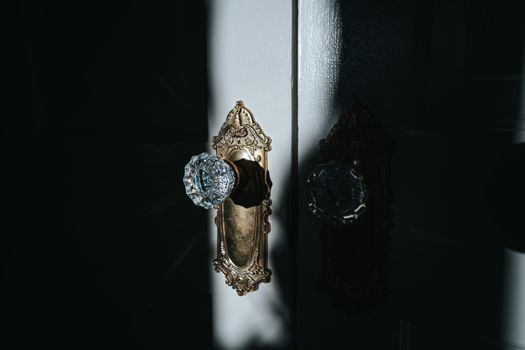
Function moves the line item the most. A storeroom mortise with a classroom lever runs a fraction of the price of the same chassis with an electrified trim, request-to-exit, and integrated card reader; Consort's product range explicitly separates "certified" commercial hardware into function-coded families rather than finish-coded ones [S6].
Three further levers: rating (UL 10C fire-listed vs. non-rated adds testing and intumescent gasketing), material (solid forged brass vs. zinc die-cast vs. stainless 304/316) and finish warranty (US26D satin chrome vs. US10B oil-rubbed bronze vs. US32D stainless — the last is a separate substrate, not just a finish).
Standards drive premium tiers. ANSI/BHMA A156 series governs cycles, load and security grades; UL 10C/British BS 476 governs fire-door listings; ADA and ANSI A117.1 govern lever shape and operating force. The closer and exit-device UL labels are not optional line items in commercial schedules, and that is the reason a labelled product sits 15-40% above a visually identical unlabelled Asian OEM equivalent (Unity's catalogue is 20+ years deep and ships into commercial, hospitality, residential and DIY channels, so its pricing reflects that breadth) [S3].
Manufacturer tiers and the spec / price trade-off
Tier 1 — specifier brands (Consort, Hamilton Sinkler). Hamilton Sinkler positions itself as a manufacturer of architectural hardware with a "Liesl Suite" decorative lever line and a featured Vignelli pull-quote on good design as a language, not a style — these are catalogue items with lifetime mechanical warranties, full template libraries, and ANSI/BHMA Grade 1 certification, and they sit at the top of each price band [S2][S6].
Tier 2 — regional fabricators. London Architectural Hardware (Londonah) builds to drawing with a "Manufactured to your…" custom service, useful for heritage restoration and listed-building work where off-the-shelf finishes and dimensions do not match existing ironmongery [S5]. Lead times run 4-8 weeks but the per-piece cost on a custom lever or escutcheon is often under what a Tier 1 decorative item would list at.
Tier 3 — Asian OEM exporters. Unity (20+ years in architectural hardware manufacturing and trading) and Poojasales (Indian aluminium door/window hardware: locks, sliding rollers, espag locking) ship container-load quantities with OEM branding and finish matching, typically 30-60% below Tier 1 list — at the cost of shorter mechanical warranties and limited template libraries [S3][S4]. Poojasales' range covers aluminium and uPVC window locks, sliding rollers, metro locks and espag locking — items that sit on the residential and light-commercial edge of the schedule rather than the high-traffic commercial core [S4].
Standards, ratings and the test-data premium

Every premium tier in this category ties back to a small cluster of standards. ANSI/BHMA A156.2 (levers), A156.3 (exit devices), A156.4 (door closers), A156.13 (mortise locks) and A156.36 (auxiliary hardware) define the Grade 1/2/3 tiers and the cycle counts buyers see in submittals. UL 10C and its British equivalent BS 476 Part 22 govern 20/45/60/90-minute fire-door hardware listings; ADA Title III and ICC A117.1 govern operating force and lever geometry. When a closer or exit device ships without a UL label, the AHJ (authority having jurisdiction) can reject the door assembly, which is why a labelled product is not directly substitutable with an unlabelled Asian equivalent in commercial work. [S1]
For residential and light-commercial work, the rating stack collapses: a non-fire-rated tubular lock with a zinc lever can list under USD 20 and still meet a builder's basic need, but it is not interchangeable with a Grade 1 mortise in a hospital corridor. The smart buyer's move is to map each door in the schedule to a function/rating cell, then source within that cell across tiers — not to substitute across cells.
Sourcing tiers and lead-time signals
Tier 1 stock lines ship in 1-3 weeks from US/EU master distributors; non-stock functions and custom finishes push to 6-10 weeks [S2][S6]. Asian OEM orders (Tier 3) run 6-10 weeks for a first production batch including finish samples, 30-45 days for repeat runs once the part is tooled [S3]. Indian suppliers (Poojasales) quote shorter on aluminium window hardware because the SKUs are higher-volume and the tool-base is broader [S4].
Two trackable signals: (1) the 2026-06-17 research index still showed all six reports in the USD 0-2,000 catalogue band, indicating no premium-tier reprice through 2026-06 [S1]; (2) Tier 1 decorative suites (Liesl, Vignelli) are adding new lever/finishes on roughly a 12-month cadence, so a quote dated within 2025-08 may not reflect the 2026-07 finish list [S2].
For a related read on how door hardware spec intersects with fire-rated assemblies, see this fire-rated door price guide, and for the wider spec logic across an opening, the architectural hardware 2026 buying guide pairs with the encyclopedia entry on architectural hardware.
For component-level specifications, see linear guide, and crossed roller guide.