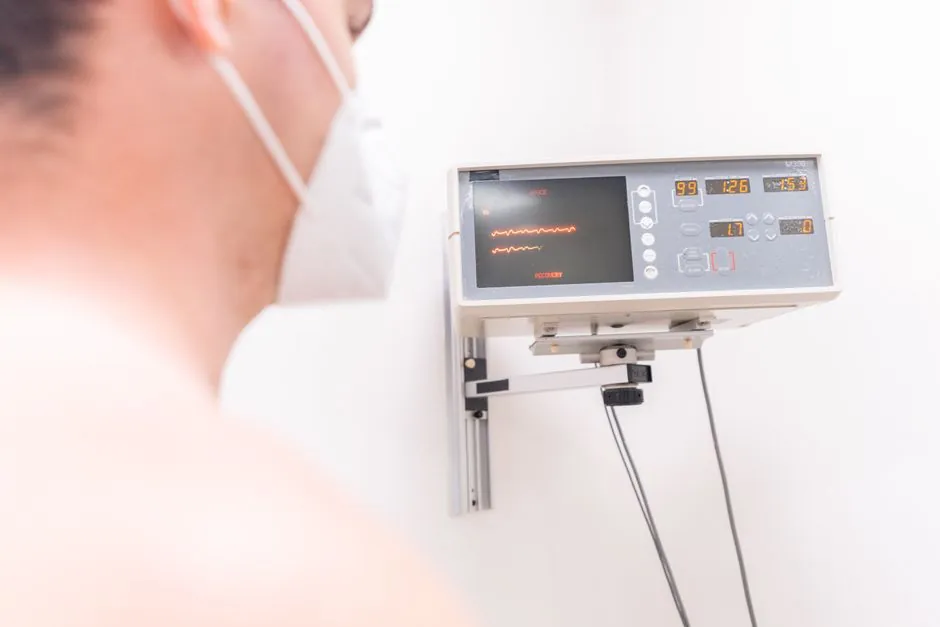
Arsine (AsH3) and other Group V/IV hydrides are monitored at parts-per-billion to low parts-per-million levels, well below the odor or irritation threshold, which is why a fixed Toxic Gas Monitoring System (TGMS) is mandatory across gas cabinets, valve manifold boxes (VMBs), and subfab utility tunnels in modern fabs [S4][S5].
A fab TGMS is a fab-wide network of gas sensors and controllers that continuously watches the air inside gas cabinets, VMBs, and subfabs for hydrides, halides, and acid gases; on threshold breach it raises alarms and triggers source-gas shutoff, exhaust/abatement confirmation, and personnel warning, with every event logged to a central monitoring platform [S5].
Why Arsine Cannot Ride a Generic Sensor Stack
Arsine, phosphine, and silane are acutely toxic and in some cases pyrophoric, and they do not respond on a single sensor technology, which forces multi-technology detector stacks on every fab gas panel [S3][S4]. Honeywell's 2026 facility guidance states explicitly that an electrochemical sensor cannot effectively detect silane or arsine on its own, and recommends a per-gas sensor inventory rather than a one-technology-fits-all approach [S3].
The detection challenge is sharpened by exposure limits: hydrides such as AsH3 and PH3 alarm at concentrations far below anything a person can perceive, and chlorine (Cl2), arsine, and hydrogen fluoride (HF) are flagged as causing severe harm even at parts-per-million levels [S4][S5]. Reactive hydrides can also ignite spontaneously on contact with air, so a silane leak is simultaneously a toxic and a fire hazard and demands tighter alarm thresholds than a non-pyrophoric gas of equal toxicity [S4][S5].
Sensor Stack: Electrochemical, Pyrolyzer, IR, PID, Chemisorption
The workhorse for arsine, phosphine, and similar Group V hydrides is the electrochemical cell, where target gas diffusing into the electrolyte drives a redox reaction that produces a current proportional to concentration; these cells resolve the low ppb-to-ppm band hydrides require and are specific enough to suppress nuisance alarms [S5][S9]. Their trade-off is finite consumable life, so the TGMS tracks each cell's age and calibration and flags cells approaching end-of-life before they drift out of specification [S5].
Gases that do not read cleanly on a bare electrochemical cell are routed through a pyrolyzer front end, which heats the sample to crack a difficult molecule into a species the downstream sensor can register reliably, expanding coverage from one base technology to a broader gas list and improving response on otherwise sluggish or cross-sensitive channels [S5]. Complementary detectors complete the stack: infrared (IR) for hydrocarbons and CO2, photoionization detectors (PIDs) for volatile organic compounds, UV and thermal-conductivity sensors for reactive or corrosive gases, and chemisorption cells for highly toxic hydrides at ppb levels [S4].
For a working reference on the broader detection architecture used in process plants, the toxic gas detection architecture for chemical plants write-up lays out the same sensor-placement logic that fabs apply at the gas-cabinet boundary, and a toxic gas detector primer defines the sensing families cited above. Wider cabined monitoring, including the gas-cabinet enclosure and valve manifold boxes that the TGMS watches, is covered in the gas cabinet reference.
Placement Rules: Gas Cabinet, VMB, Subfab, Cleanroom
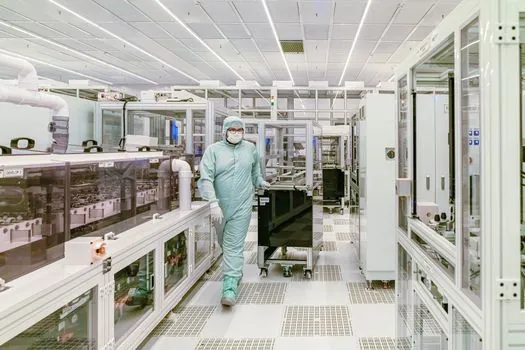
Sensor placement is dictated by where a hydride can accumulate, not by uniform spacing, so the highest-density sampling sits inside the gas cabinet enclosure, inside the VMB, and inside exhausted enclosures around bulk specialty-gas systems, with a sample line drawing from each ventilated box so a leaking fitting or failed seal is caught before the gas escapes the enclosure [S5]. Subfab utility chases, where much of the gas piping and tool gas-box plumbing lives, are monitored separately from the cleanroom above, and people-occupied areas near gas lines receive their own detector coverage [S4][S5].
Gas properties dictate vertical placement: arsine and phosphine are heavier than air and pool low, while silane behaves differently on ignition, so detector height, spacing, and number per cabinet are gas-specific rather than generic [S3]. The TGMS is engineered so that a sensor failure, lost sample flow, or controller fault is itself an alarm condition rather than a silent coverage gap, and a single fab commonly monitors dozens of distinct gas species with the controller tracking which sensor belongs to which gas and which cabinet [S5].
Interlocks, Alarm Thresholds, and Standards
On threshold breach, the TGMS raises audible and visual alarms, transmits alerts to facility management software, and interlocks to shut off the source gas while starting or confirming exhaust and abatement, a tiered response that delivers both local awareness and system-wide visibility [S4][S5]. Alarm setpoints are pre-defined per gas against occupational exposure limits rather than against a single facility-wide number, and the SEMI S2 environmental, health, and safety guideline for semiconductor manufacturing equipment together with SEMI S6 safety guidelines for exhaust handling are the two governing documents repeatedly cited for fab TGMS design [S4].
Continuous rather than periodic monitoring is the baseline because the consequence of a missed leak is severe, and modern fabs are extending fixed gas monitoring into integrated safety networks where sensor streams feed analytics platforms that flag trend deviations, micro-leaks, and predictive-maintenance triggers, while auto-logging safety events for compliance reporting [S4].
Comparison: Detector Technology vs Gas Family

Selection is best framed as a matrix of gas family against sensing technology, since no single technology covers the fab gas list [S3][S4][S5]. Electrochemical cells lead on AsH3, PH3, H2S, HCl, and B2H6 at low ppm, IR covers hydrocarbons and CO2, PIDs handle VOCs, UV/thermal conductivity cover reactive or corrosive species, and chemisorption extends to ultra-low-ppb hydrides; for gases that electrochemistry reads poorly, a pyrolyzer front end cracks the molecule so a downstream cell can register it [S4][S5]. Honeywell's own 2026 guidance is explicit that electrochemical sensors cannot effectively detect silane or arsine without such augmentation, which is why multi-technology stacks dominate new fab builds [S3].
Misconceptions That Drive Sensor Stack Errors
Five recurring mistakes in fab TGMS design are: assuming one sensor technology covers every gas, treating calibration as optional, using generic rather than gas-specific alarm thresholds, treating detection as sufficient without an integrated safety strategy, and ignoring how gas properties dictate sensor placement [S3]. Drift from humidity, temperature, and contaminant exposure can push a cell into false negatives, which is why calibration discipline is treated as a compliance item rather than a maintenance chore [S3].
For a 2026 view of how the analog and digital layers under these controllers are splitting between 4-20 mA HART and Ethernet-APL, the Ethernet-APL vs 4-20 mA HART comparison lays out the spec-level trade-offs that a fab TGMS upgrade now has to choose between, and a gas analyzer reference defines the optical and electrochemical analyzer families the TGMS feeds data into.
Trackable Signals to Watch Next
Two verifiable signals to monitor over the next two quarters: SEMI S2/S6 revision ballots that may tighten hydride-specific setpoint language, and OEM disclosures on pyrolyzer-assisted electrochemical cells that extend consumable life past the current 12-24 month service interval, since both will reshape the spec sheets engineers see on the next bid [S4][S5].