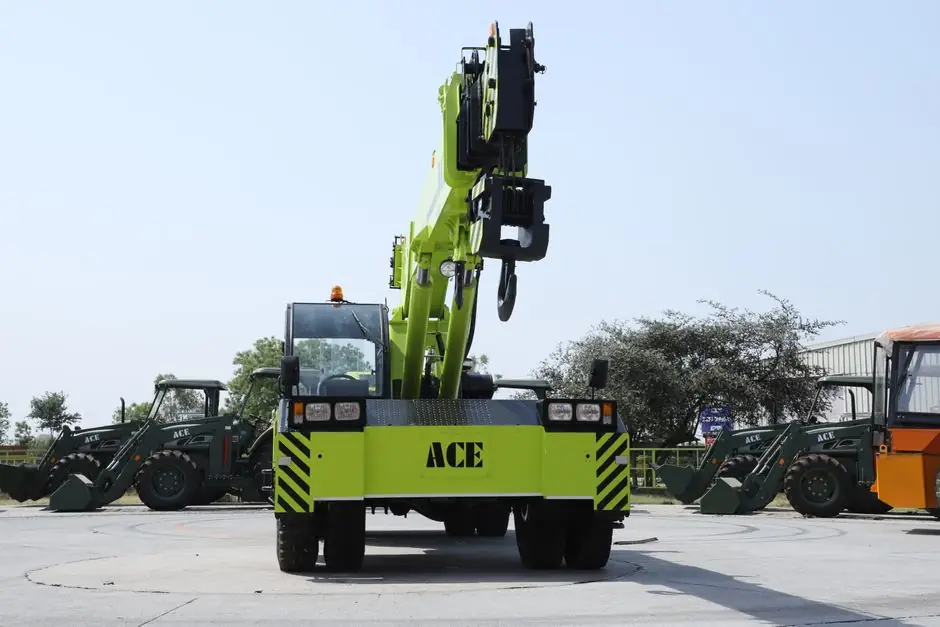
A knuckle boom crane folds into a compact stow behind the cab, but the final transport height still depends on chassis, subframe, and boom kinematics; a typical pickup-mounted unit adds 0.6–1.2 m to the bare cab roof and a heavy chassis-mounted loader crane can drive overall height to 4.0 m, requiring axle and bridge checks before each road move [S2][S4].
For engineers and fleet buyers, the folded transport envelope is just as critical as the published lift chart: it determines whether a unit can roll under a 4.1–4.3 m bridge, enter a workshop bay, or share a workshop with a dump truck on a confined yard. The same data also feeds truck scale axle-load calculations when the unit is weighed in running order [S4].
What "folded boom transport height" actually means on an articulated crane truck
Folded boom transport height is the maximum vertical dimension from ground to the highest point of the crane with the boom fully stowed in its road-travel position, and it includes the subframe, turret, and any boom-rest hardware sitting above the cab or cargo body [S2][S4]. On knuckle boom trucks the boom folds back on itself in a Z-shape behind the cab, so the package is short in length but retains a fixed vertical stack that becomes the dominant height contributor once the bare chassis is accounted for [S2].
A 1,740–38,185 lb (≈790–17,320 kg) capacity knuckle boom on a standard commercial chassis is described as "stowing comfortably behind the cab" because the boom tucks within the cab-guard height, not above it; this is the layout that lets the carrier retain flatbed space for payload alongside the crane [S2]. The trade-off is that on lighter pickups the crane, subframe, hydraulic tank, pump, hoses, and outriggers collectively erode chassis payload, so folded height must always be read together with the in-service axle loads [S4].
Typical folded height ranges by crane class
Compact folding cranes on pickups and light trucks generally add 0.6–1.2 m of hardware above the cab roof line, putting finished transport height in the 2.4–2.9 m range for most 1–3 t/m class units, which clears typical 4.1–4.3 m bridge envelopes with margin to spare [S4]. Mid-range loader cranes in the 10–25 t/m class typically measure 2.8–3.4 m folded, because the larger main boom and heavier knuckle joint add a thicker stack above the turret [S2][S6].
Heavy industrial articulated cranes above 20,000 kg payload on multi-axle carriers can push the folded transport envelope toward 4.0 m, and the route-planning guidance for pickup-mounted units, "ensure the folded boom height complies with bridge clearance limits and verify axle weights at weigh stations", applies even more strictly to this class [S4][S6]. For comparison, a typical telescopic boom truck stows the retracted sections in a straight line along the cargo bed rather than folding vertically, so its folded length is much longer but its transport height is set by the cab plus a relatively low boom-nest, not by a tall knuckle stack [S1][S5].
Knuckle boom vs telescopic boom: folded envelope trade-off
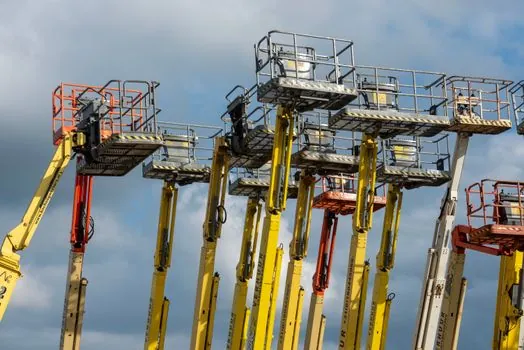
The core difference in stowed geometry is structural: a knuckle or articulating boom uses a multi-joint tandem structure that folds like a human finger, while a telescopic boom uses nested sections that extend and retract in a straight line along the boom axis [S3]. That single design choice drives all of the road-transport consequences a fleet manager cares about.
A side-by-side reading of the two layouts against common transport criteria: folded height (knuckle lower stack, telescopic set by cab and boom-nest only), folded length (telescopic longer because sections ride along the deck), stow time (knuckle faster, often a single motion), and load-bed usable length (knuckle better because the folded boom sits behind the cab, not over the deck) [S1][S2][S3]. The same knuckle package is also why an articulated unit is the default fit for a truck-mounted crane where the operator needs short setup and frequent repositioning between lifts, while telescopic units dominate where straight-line vertical reach is the priority [S1][S5].
Selection criteria that move the folded height number
Five specification levers push the folded transport height up or down, and each one should be on the buyer's checklist before the lift chart is opened. First, boom section count: a 4-section knuckle stows shorter than a 5- or 6-section unit of the same capacity because the extra knuckle joint and overlapping arm eat vertical stack height. Second, subframe and turret height: a low-profile turret designed for cab-over chassis can shave 100–200 mm versus a high-collar turret for conventional bonneted trucks [S4].
Third, boom-rest and cab-guard design: integrated boom-rests that tuck the main boom below the cab-guard top rail keep the envelope tight, while external rest brackets above the cab line add the full boom depth. Fourth, hydraulic tank and pump location: a chassis-frame mounted tank preserves folded height, but a tank integrated into the turret base adds stack. Fifth, accessories in the stow position: jib extensions, rotator heads, and grapple hooks left in place can each add 50–150 mm; the road-legal checklist is explicit that the folded boom, "must comply with bridge clearance limits", so any accessory left in the road position has to be counted [S4].
Operating envelope, not just folded height, governs road legality
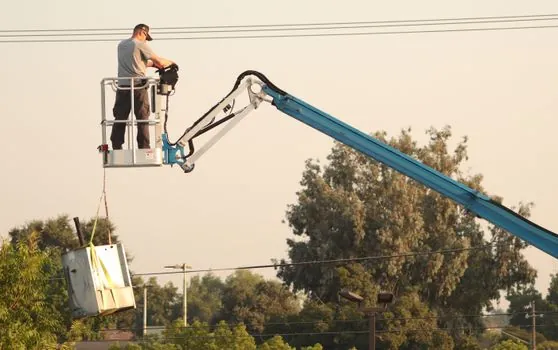
Road legality on a knuckle boom truck is set by three coupled numbers, not folded height alone: overall height, overall length, and axle group weights at running order. The pickup-class guidance frames the rule as a three-point check, "folded boom height complies with bridge clearance limits", "axle weights at weigh stations", and "vehicle still has sufficient legal payload after installation", and the same three-point logic scales up to heavy articulated units [S4]. On a heavy knuckle boom, the boom in stow is short, but the carrier itself can already be 3.6–3.9 m tall before the crane is added, so the crane package must fit inside whatever headroom the chassis leaves.
For working reach, telescopic boom truck averages sit between 130 and 160 ft (≈40–49 m) with some models near 200 ft (≈61 m), and with a jib extension a boom truck work platform can reach 207 ft (≈65 m) of working height, but these are deployed, not stowed, numbers and do not change the folded transport envelope [S5][S7]. A 31 ft (≈9.4 m) reach radius with payloads under 6,000 lb (≈2,720 kg) at close range, or 1,800 lb (≈816 kg) at the same radius, is the typical knuckle boom truck operating envelope, which is why a compact folded package matters: the unit has to drive between job sites at highway speed without escort [S8].
Sourcing, standards, and the load chart that overrides every other number
Folded transport height is not a free-standing spec: it sits inside the OEM dimension sheet, the vehicle type-approval document, and the crane's load chart, and the load chart is the document that overrides everything else when a lift is planned. The published lift chart "outlines how its lift capacity varies according to the distance and angle" and is the only document that authorises a specific lift configuration [S5]. On the regulatory side, truck-mounted cranes used in construction generally require a certified operator under OSHA rules, and the parent mobile-crane category is governed by ASME B30.5, which classifies any rotating crane and boom on a commercial truck chassis as a truck crane [S1].
Two closing signals are worth tracking on the next specification pass. First, the boom truck market is described as exceeding $1.5 billion, with Custom Truck One Source identifying knuckle booms as a flagship product line, so expect more OEM dimension sheets in the 1,740–38,185 lb capacity band to publish folded-height numbers explicitly rather than burying them in general arrangement drawings [S2]. Second, the capacity spread on articulating cranes, from roughly 500 kg on light-duty truck mounts to more than 20,000 kg on heavy industrial units, means folded-height guidance should always be read against the class, not across it: a pickup-class 1 t/m crane and a 20 t/m heavy industrial unit share the folding principle but live in completely different transport-height regimes [S6]. For broader reach-and-axle context, the 40-ton truck crane road weight, GVWR, and axle count spec map breaks down how a heavier chassis envelope interacts with a folded crane package.