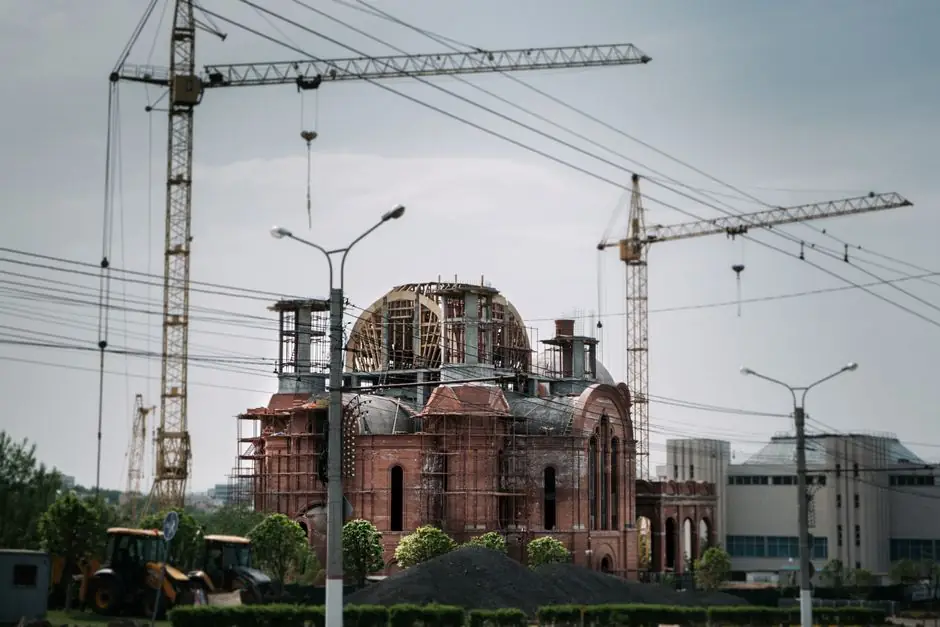
The choice between a 42 m and a 55 m truck-mounted concrete boom pump is a geometry and logistics decision, not a brand one: the 55 m class typically delivers 40 ft more vertical reach and 30 to 40 ft more horizontal reach than the 42 m class, but the larger unit demands a wider outrigger footprint, a heavier chassis, and higher mobilization cost on every job [S1][S3].
For a mid-rise deck, deep lot, or commercial slab where the pour sits 30 to 50 ft above grade and within 120 ft of the truck, a 42 m class boom is normally the economical fit. For high-rise core pours, deep footprint foundations, and stadium or bridge work where the truck must sit well back from the form, the 55 m class earns its premium by eliminating reposition cycles [S3][S4].
Reach Envelope: What the Spec Sheet Actually Gives You
Manufacturer data for the 55 m class, typified by the Schwing S 55 SX, lists 54.5 m (178.8 ft) vertical reach and 50.7 m (166.3 ft) horizontal reach, with a 3 m end hose and DN112 (112 mm) delivery line [S4]. The 42 m class (Putzmeister BSF 42-5 in the published lineup) sits in the 42 m envelope where typical vertical reach is around 42 m (138 ft) and horizontal reach around 38 to 40 m (124 to 131 ft), based on the mid-large boom bracket between the 40 m and 43 m rows of one Ontario fleet guide [S3]. The headline gap of roughly 13 m of boom geometry translates to about 40 ft of vertical gain and 35 ft of horizontal gain on a single setup, which is the difference between repositioning twice and parking once on a typical 200 ft wide deck pour [S3][S4].
Pipeline, Output Pressure, and Pumping Cylinder
The 55 m class typically pairs with a five-section boom and a 120 m³/h theoretical maximum output on the P2023 pump battery, with a maximum concrete pressure of 75 bar and 24 strokes per minute, per the S 55 SX data sheet [S4]. A 42 m class pump running the same DN112 delivery line trades some of that output pressure head for a shorter pipeline and a lighter chassis, which is why fleets commonly run 42 m units with the same 5 in (DN125) line but at lower stroke counts on long horizontal runs. Both classes generally use 112 to 125 mm delivery line for structural concrete; pea-gravel mixes and shotcrete work drop to DN85 or smaller, but that is a line-pump domain rather than a boom-pump one [S5].
Outrigger Footprint, Setup Geometry, and Site Constraints
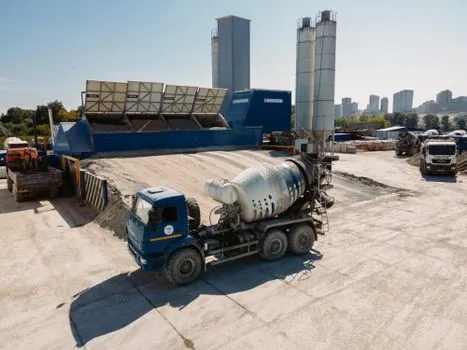
Rated reach is measured from the boom turret, not from where the truck actually parks, and that gap is where many pours are lost [S1]. Outrigger loads on the 55 m S 55 SX are 335 kN front and 310 kN rear, and the rig needs a firm, level pad with a spread commonly 25 to 40 ft on each side depending on short-rigging configuration [S1][S4]. The 42 m class sits in a smaller envelope, typically 20 to 30 ft of outrigger spread, which is the difference between fitting a downtown Charleston side street and being forced onto a line pump fed from around the corner [S1]. Power-line clearance rules, typically a 20 ft working distance from energized lines, can also rule out the geometry-optimal setup and force a longer boom to compensate [S1].
Decision Matrix: When Each Class Earns Its Mobilization
On cost and reach the two classes line up as follows: a 42 m class pump typically carries a $375,000 to $700,000 purchase price band and a lower hourly mobilization rate, suiting pours where the truck can park within 100 to 120 ft of the form and grade is under 10 stories [S5]. A 55 m class pump sits in the $700,000 to $1,000,000+ band per the same manufacturer range, with hourly rates reflecting the heavier chassis and five-section rigging [S5]. For high-rise cores above 130 ft, deep foundation mats wider than 150 ft, or sites where the only legal setup is more than 100 ft back, the 55 m class wins by removing one or two reposition cycles, which on a 500 y³ deck pour can save 2 to 4 hours of crew time and boom-pump standby [S3]. For residential slabs, two-story homes, and most mid-rise decks under 12 stories, the 42 m class is the right size, and over-spec'ing to a 55 m adds axle weight and permit cost without buying useful reach [S1][S3].
Concrete Pump Truck and Boom Geometry Trade-Offs
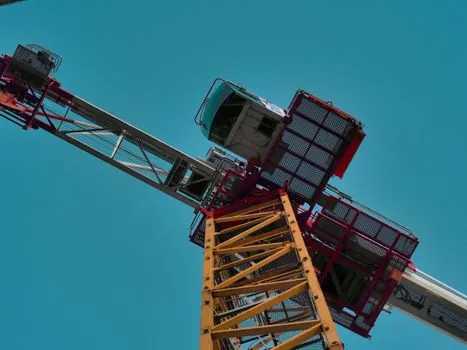
The concrete pump truck platform is the same for both classes in broad strokes: a multi-section articulating boom fed by a truck-mounted piston or free-flow hydraulic pump, but the 55 m units typically run a five-section Z-fold or roll-fold boom to keep the parked envelope short while adding reach, whereas many 42 m units are four-section RZ or multi-Z booms optimized for faster deployment on tight sites [S2][S3]. Fleet operators who run both sizes report that the five-section 55 m boom gives finer tip control and a smaller working envelope at full extension, which matters on urban sites where a four-section 42 m unit has to be parked further out to clear an overhead obstacle [S1][S2].
Selection Checklist Before You Book
Five site numbers drive the 42 m vs 55 m decision: vertical height to the top of pour, horizontal distance from the legal truck park to the farthest form, outrigger pad size and ground bearing capacity available, overhead clearance including power lines, and the volume of concrete per hour the mix plant can supply (which sets whether a 120 m³/h pump is even usable) [S1][S3][S4]. If any one of those numbers breaks the 42 m envelope, the 55 m class becomes the conservative choice, and below that envelope the 42 m class is the cost-effective one. The truck-mounted concrete pump category spans 20 m to over 65 m, so the 42 m and 55 m nodes are not the only options, but they are the two most-commonly rented sizes in the mid-large bracket for North American commercial work [S2][S3].
Limitations, Failure Modes, and Common Mistakes
The most common reach-failure mode is rated vs effective reach: a 55 m boom that needs to climb 20 ft over a neighboring structure loses roughly 20 ft of horizontal reach to that climb, and a 42 m boom facing the same geometry can be left 10 to 15 ft short of the pour [S1]. Outrigger sinkage on soft ground, misjudged end-hose length, and parked-truck position errors (forced by the site, not chosen by the operator) are the next three most common causes of a partial pour [S1]. On the production side, specifying a 55 m class pump on a mix plant that can only deliver 60 m³/h wastes the 120 m³/h theoretical output and does not save any time over a 42 m class unit running at the same effective rate [S4][S5].
Track these signals on the next comparable pour: (a) whether the bid documents specify boom length by class (42 m vs 55 m) or by reach number, since the latter is the spec the dispatcher actually solves against, and (b) whether the chosen pump ran at or below 60 percent of its theoretical output, which is a clean indicator that the boom class was over-sized for the site's supply chain. For a broader look at how a concrete mixer truck supply chain interacts with boom-pump class sizing, the supply-rate ceiling is usually the binding constraint before the boom envelope is.
For related coverage, see 230 VAC vs 400 VAC Servo Drive for Small Axes: A Spec-First Decision.