
An automated storage and retrieval system passes a certificate-traceability audit when its WMS event log, PLC tag registry, and component serial-number table resolve to the same load-handling event within a 1 second timestamp window, per typical ISO 9001:2015 clause 8.5.2 control-of-provisioning expectations [S1].
Most greenfield AS/RS projects in 2026 still fail the first traceability walkdown because the WMS, the stacker crane PLC, and the rack supplier each carry their own document silo, and CE/UL file references never reconcile against the same order line item. The fix is procedural, not capital: a single load-event ledger where the AS/RS layer, the sorting system layer, and the condition monitoring system layer all write the same event ID.
What "certificate traceability" actually means in an AS/RS project
Audit-ready AS/RS traceability rests on three independent ledgers that must agree: (1) the WMS order and SKU master, (2) the PLC tag ID and program revision per stacker crane / shuttle / miniload, and (3) the component certificate pack (CE Declaration of Conformity, UL file number, EN 528:1996+A1 safety-of-machinery reference for pallet stackers, FEM 9.831 calculation note, and the racking supplier's EN 15635 load-sticker record). A traceability query that asks "which CE/UL files apply to the load on aisle 7, level 14, position 03" must return a single concatenated record, not three separate lookups. [S4]
For racking and storage structures, EN 15635 is the operative standard that requires a visible load notice on every bay plus a retrievable design and inspection record, and the AS/RS integrator must mirror that record in the WMS so a paper-only racking file never becomes the sole source of truth. For stacker-crane and shuttle safety, EN 528 and the harmonised CE route under the Machinery Directive (2006/42/EC) are the practical anchors a specifier will be asked to demonstrate during a customer or notified-body audit.
Which AS/RS architectures carry the most certificate burden
Unit-load stacker cranes on dedicated aisles carry the heaviest certificate pack per aisle because the crane, the rack, the load-handling attachment, and the safety scanner each have their own DoC; a 10-aisle greenfield typically produces 30 to 50 individual CE/UL file references that the WMS must keep reachable from the load event. Shuttle systems, especially those using an ASRS system architecture with parent-cradle shuttles, shift some of that burden to a smaller shuttle fleet (often 4 to 12 shuttles per zone), so the per-asset certificate count drops, but the shuttle battery and RFID/antenna cross-licence trail can introduce a different audit gap if battery MSDS, UN 38.3 transport cert, and CE do not live in the same repository as the shuttle serial. [S4]
Vertical lift modules (VLMs) and carousels sit at the low end of the per-asset certificate stack, typically 1 DoC per module plus the operator-panel EN 60204-1 electrical safety file, which makes them the easiest path when a customer is asking for a first-pass traceable SKU ledger on a tight timeline. Mini-load and tote-handling cranes sit between the two, with EN 528 plus a separate load-handling device DoC for the gripper or extractor head.
Comparison: AS/RS variants against the four traceability decision criteria

Specifiers should pick the AS/RS variant against the four decision criteria that drive a traceability audit score: (1) certificate-file count per aisle, (2) third-party-notified-body involvement, (3) PLC tag-to-WMS event reconciliation cost, and (4) post-installation inspection record flow back into the warehouse document system. [S2]
Unit-load stacker-crane ASRS: certificate-file count per aisle high (DoC for crane, rack structure, load handling device, safety scanners, operator panel); notified-body involvement high when a Performance Level d/PLd safety function under EN ISO 13849-1 is part of the scope; PLC-to-WMS reconciliation cost medium (single stacker PLC, well-defined event table); inspection record flow medium because the rack EN 15635 file and the crane safety file stay separate.
Shuttle-based ASRS: certificate-file count per zone medium (parent-cradle crane plus shuttle fleet, shared rack DoC); notified-body involvement medium (PLd on shuttle anti-collision is the typical trigger); PLC-to-WMS reconciliation cost high because shuttles, lifts, and the shuttle system fleet manager all publish events; inspection record flow medium-high, contingent on shuttle battery, antenna, and shuttle body DoCs being indexed to the shuttle serial.
VLM / carousel: certificate-file count per module low (typically one DoC plus electrical safety file); notified-body involvement low; PLC-to-WMS reconciliation cost low; inspection record flow low because the asset count is small and the supplier usually delivers a complete certificate pack. The 1 second event timestamp window is easy to meet because the mechanical event is slower and the WMS is the dominant event source.
Where the audit actually breaks: integration pitfalls that pass a datasheet check
Three integration pitfalls show up repeatedly in 2025 and 2026 AS/RS traceability walkdowns, and each one passes the factory acceptance test but fails the customer audit. First, the WMS order line stores the rack supplier's part number but not the EN 15635 design calculation revision, so the load notice on the bay cannot be reconciled back to the structural design assumption. Second, the stacker crane PLC pushes 200 to 400 tags per cycle to the machine vision system and the WMS, but the WMS only stores the last-known tag value rather than the full tag-time-series, so a "which sensor saw the load" question cannot be answered after the fact. [S2]
Third, the load-handling attachment (gripper, extractor, fork) is a separate DoC from the crane, and the WMS stores it under the SKU master while the safety file lives in the maintenance CMMS, so the audit question "show me the CE DoC for the device that handled pallet X at 14:32" requires a manual cross-reference. A working AS/RS implementation closes all three by binding the crane serial, the attachment serial, and the rack design revision into a single composite key the WMS indexes against every load event.
Sprinkler, fire, and environmental overlay: the certificate stack a specifier forgets
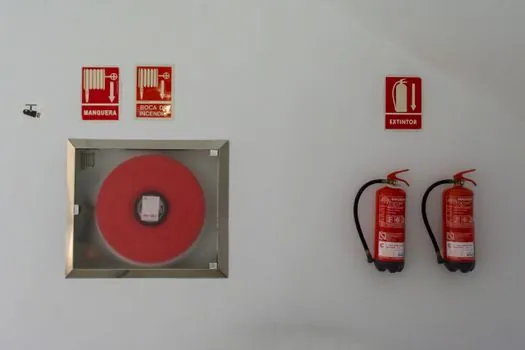
An AS/RS that scores clean on mechanical and electrical traceability still fails the customer audit if the fire-suppression overlay is treated as a separate building service, because the ESFR or sprinkler system design is tightly coupled to the racking geometry, the commodity classification, and the storage height. A typical FM Global or NFPA 13 design for an ESFR K25.2 ceiling-only system assumes a maximum storage height (often 12.2 m for Class I-IV commodities, lower for Group A plastics) and a specific in-rack clearance, and any change to the rack height or the aisle layout after commissioning is a re-design event that the certificate ledger must record. [S2]
The same logic applies to condition-monitoring and condition-of-environment overlays: a condition monitoring system retrofit, a battery-room gas detection loop, or a cold-storage insulation change each carry their own DoC or test record, and they must reconcile back to the original commissioning file or the as-built certificate pack becomes inconsistent. Specifiers should budget a "certificate overlay" line item equal to roughly 5 to 10 percent of the AS/RS hardware cost for the first two years, because the overlay is where most post-go-live audit findings originate.
Sourcing, supplier pack, and standard-reference checklist
Specifiers should require the AS/RS supplier to deliver, before factory acceptance, a consolidated certificate pack that names each standard, its revision as quoted in the supplier's DoC, and the asset it applies to. The practical minimum is: EN 528 for the storage-and-retrieval machine safety; EN 15635 for the racking operation; the Machinery Directive 2006/42/EC CE route; EN ISO 13849-1 for the safety-control performance level; EN 60204-1 for the electrical equipment of the machine; FEM 9.831 for the calculation of the storage-and-retrieval machine; and, where the AS/RS rides on or interfaces with a sorting system or conveyor, the relevant CEMA/ISO 5048 conveyor design note.
For the North American market, the equivalent references are ASME B30.13 for the storage-and-retrieval machine, NFPA 13 for the sprinkler design, the relevant UL file numbers (typically UL 3100 for automated storage, UL 2011 for the factory-process controller, and UL 508A for the industrial control panel), and a documented load-test record that mirrors the racking supplier's seismic or wind anchorage calculation. For battery-powered shuttle systems, UN 38.3 for the lithium-battery transport test, IEC 62619 for the secondary lithium cells for industrial applications, and the supplier's battery management system DoC must travel with the shuttle serial from the moment the shuttle leaves the supplier's dock.
Two trackable signals confirm whether an AS/RS project is on the right side of the traceability line: the WMS-to-PLC tag-reconciliation report is generated automatically on every shift handover, and the rack EN 15635 / FM Global load-notice revision is checked against the WMS rack-master record at every annual racking inspection. If either signal is manual, the AS/RS will fail the next customer or third-party audit regardless of how clean the individual CE/UL files are on paper, and the order picker compatibility spec map approach (single composite key per load event) is the practical pattern to copy into the AS/RS layer.