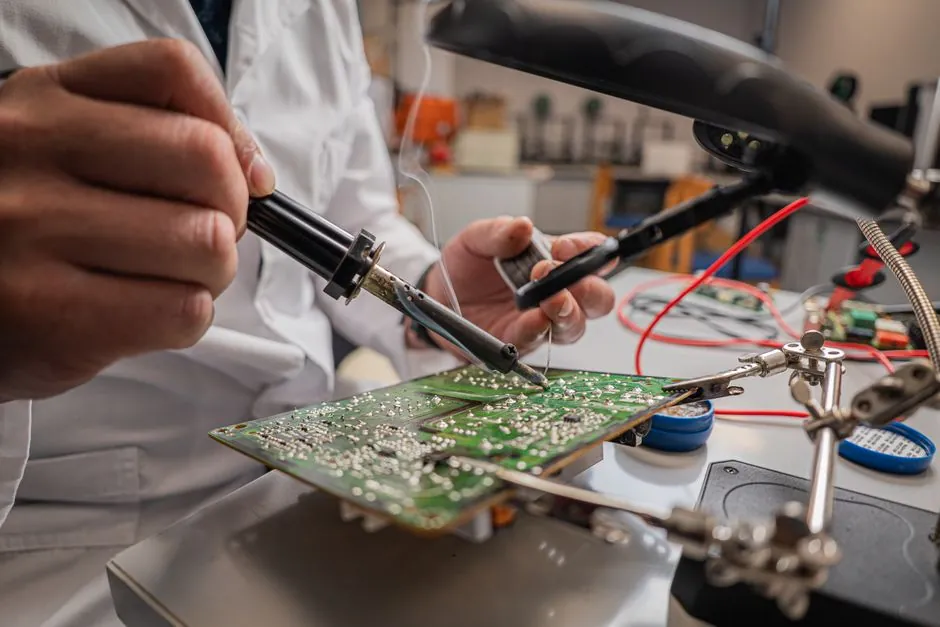
OEM builds to the buyer's drawing; ODM brings the reference design and the buyer rebrands it. In the satellite hardware supply base, that distinction decides who owns the IP, who carries the qualification risk, and how fast a constellation programme can reach first flight [S3].
The model is the same one Alibaba's seller guide has described since 2020: the OEM client supplies full design documentation and the ODM client picks from an existing platform [S3]. Applied to space hardware, that difference becomes a trade between schedule pressure, mission uniqueness, and the non-recurring engineering the buyer is willing to fund. Chinese ground-segment and antenna vendors, for example CatCast Technology in Sichuan, list 1-piece MOQs on DVB-S2X satellite receivers and IRDs at US$350 to US$2,200 per set, the kind of low-volume access typical of an ODM catalogue [S5].
Defining the two models for satellite hardware
An OEM contract in satellite manufacturing is build-to-print: the buyer, typically the prime contractor or constellation operator, owns the bill of materials, the Gerber stack-up for the avionics PCBs, the thermal model, and the test plan, and pays the factory to assemble, test, and deliver. The ODM contract is build-to-spec-plus-platform: the manufacturer offers a reference satellite bus, payload chassis, or ground terminal that already has a flight or commercial track record, and the buyer stamps its logo on the enclosure and the user manual [S3].
The reference for what counts as platform IP is concrete in adjacent product lines. Ningbo Lijie Electronics, based in Zhejiang, presents itself as a multi-satellite antenna factory with an R&D capacity marked "OEM Service" and sample availability, covering GPS/GNSS antennas, UAV drone antennas, base station antennas, and high-precision surveying antennas [S7]. When the same vendor offers a "reference design" that the buyer can re-badge, the project slides from OEM into ODM even if the RF chain is unchanged. Yudu Ace Air Art in Jiangxi, by contrast, lists a "Satellite Globe" factory under its inflatable-products line, a useful reminder that the word "satellite" in B2B catalogues often refers to a globe-shaped promotional item priced at US$550 to US$750 per unit rather than an orbital platform [S1].
Decision criteria: IP, schedule, NRE, and unit cost
Four criteria separate OEM from ODM in practice. First, IP ownership: OEM keeps every drawing, firmware source, and test report in the buyer's vault, while ODM licenses the platform and the manufacturer keeps the master design [S3]. Second, schedule: an ODM platform with a flight-heritage bus can compress a 24- to 36-month satellite development into 6 to 12 months if the mission fits the reference envelope; an OEM build stretches longer but allows off-envelope payloads. Third, NRE: ODM programmes typically carry a lower NRE line because the factory amortises its design cost across many customers, while OEM requires the buyer to fund drawings, analysis cycles, and qualification articles. Fourth, unit cost: OEM volumes below roughly 50 units per year rarely beat ODM on recurring cost because the dedicated line is not amortised, whereas ODM catalogues hit attractive price points at MOQ 1, for example CatCast's professional IRD at US$690 to US$780 per piece and a DVB-S2 to IP gateway at US$1 to US$2,500 per gateway [S5].
For a constellation operator flying 100 or more identical satellites, the math usually flips: the OEM path wins on per-unit recurring cost once tooling and test fixtures are written off, while the ODM path becomes a stepping-stone for the first 1 to 5 demonstration satellites. The same trade shows up in the ground segment: a 24-channel DVB-S2X satellite FTA tuner to IP gateway from an ODM catalogue is a 60- to 90-day integration job, whereas an OEM build with a custom L-band IF, a specific Biss decryption scheme, and a bespoke HTTP/RTSP/SRT output requires a 4- to 6-month engineering cycle [S5].
Who each model is for, and who it is not for

OEM is the right model for prime contractors flying a unique payload, for defence or science missions with ITAR or equivalent export controls, and for buyers who need to hold the full design history file for in-service sustainment. ODM is the right model for constellation operators that need to validate a market quickly, for new-entrenchant ground-segment integrators building a first product line, and for buyers whose differentiation sits in software or service rather than hardware. [S1]
OEM is the wrong model for a seed-stage startup with no in-house avionics team, because the buyer cannot supply a complete build-to-print package. ODM is the wrong model for any mission whose mass, power, or pointing budget falls outside the reference platform, because forcing an ODM bus into an off-envelope payload usually voids the manufacturer's warranty and re-opens qualification. Hangzhou Fullwell Optoelectronic Equipment, a Zhejiang ODM for telecom and CATV WDM EDFA, optical receivers, and pre-Sat-TV transmitters, illustrates the boundary: the ODM scope is clearly defined around standard telecom optics, and any project needing custom wavelength plans or non-standard gain figures has to leave the ODM lane [S2].
Side-by-side comparison: OEM versus ODM for satellite hardware
On a one-axis scorecard, OEM scores higher on IP control, mission uniqueness, long-term sustainment, and post-delivery engineering change orders; ODM scores higher on time-to-orbit, upfront NRE, MOQ flexibility, and unit price at low volumes. On schedule, a typical OEM satellite bus build runs 18 to 36 months from kickoff to acceptance review, while an ODM small-sat platform can deliver in 6 to 12 months. On price, the ODM ground-segment catalogue reaches MOQ 1 at US$1 to US$2,500 per unit [S5], while an OEM build of a comparable L-band to IP gateway typically carries a US$15,000 to US$50,000 NRE amortised across the first 50 to 200 units. On risk, OEM concentrates qualification risk on the buyer's design organisation, while ODM pushes it back to the manufacturer's reference design and the buyer's integration team.
For the antenna chain specifically, an OEM build of a multi-band GNSS plus L-band terminal requires the buyer to specify the gain pattern, the axial ratio, and the LNA noise figure line by line, while an ODM build from a vendor like Ningbo Lijie accepts the antenna as a stock SKU and configures the radome and mounting separately [S7]. For broader satellite procurement economics, the satellite manufacturing cost breakdown reference maps how the OEM versus ODM choice cascades into bus, payload, and qualification line items, and the smart small-satellite production line design guide shows how an ODM platform plugs into a throughput-driven AIT flow without re-tooling the cell.
Real cases: ground-segment ODM catalogues in China
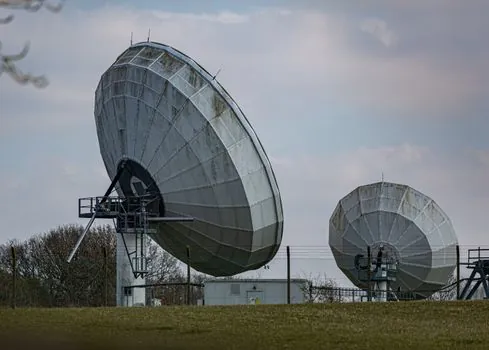
Three Chinese vendor profiles from 2025 and early 2026 illustrate how the ODM ground-segment market is structured. CatCast Technology in Sichuan lists modulators, encoders, IP gateways, IRDs, optical transmitters, EDFAs, IPTV system servers, and set-top boxes as main products, with DVB-S/S2/T/T2/C input and IP output professional IRDs at 24-channel density and 1-piece MOQ [S5]. Hangzhou Fullwell Optoelectronic Equipment in Zhejiang, with an "ODM Service" R&D capacity flag, covers XGS-PON plus CATV WDM EDFAs, XGS-PON plus CATV WDM optical receivers, telecom pre/Sat-TV plus CATV transmitters and receivers, and fiber amplifiers, all built around standardised optical linecards that the buyer re-labels [S2].
Ningbo Lijie Electronics in Zhejiang, with an "OEM Service" R&D capacity flag and sample availability, covers GPS/GNSS antennas, UAV drone antennas, base station antennas, high-precision GPS antennas, and surveying and mapping antennas, and extends into portable solar generators and energy storage systems, a useful signal that the same factory can support both OEM antenna work and ODM power-stack integration for a mobile ground terminal [S7]. Across these three vendors, the ODM unit price for a satellite-adjacent product sits between US$1 and US$2,500 at MOQ 1, and the lead time from PO to ex-works delivery is typically 15 to 45 days for catalogue SKUs versus 60 to 120 days for an OEM build of a comparable functional block [S2][S5][S7].
Space-segment precedent: the OEM-to-constellation path
Chang Guang Satellite's Jilin-1 commercial remote sensing constellation is the clearest public example of how an OEM-style in-house build scales into a constellation. The first Jilin-1 satellite launched in October 2015, and by August 2019 the operator reported 14 satellites in orbit, daily worldwide revisit, and a monthly nationwide probe cycle, with the latest-generation satellite at 40 kg, one of the lightest in its class at the time [S4]. That OEM-style in-house model is what a constellation operator replicates when the mission, the payload, and the revisit requirement are unique enough to justify owning the full design.
For buyers who want a shorter path, the ODM route exists at the small-sat and ground-segment end of the supply base, where vendors like Yudu Ace Air Art, CatCast, Hangzhou Fullwell, and Ningbo Lijie publish MOQ-1 catalogues with disclosed price ranges and sample services [S1][S2][S5][S7]. The procurement signal to track over the next 12 months is how many of these catalogue vendors add an explicit "space-grade" or "radiation-tolerant" SKU to their ODM line, because the moment ODM crosses into the rad-hard envelope, the OEM-versus-ODM trade for small constellations flips again, and the satellite manufacturing equipment spec map becomes the relevant reference for the test-cell investment that decision triggers.
For the relevant spec sheets and selection criteria, see additive manufacturing material, pressure transmitter, and flow meter.