New asphalt paver list prices in mid-2026 stretch from roughly US$2,500 for a 25-100 cm mini curb/walkway unit on China B2B channels [S5] into the multi-hundred-thousand to multi-million-dollar band for OEM highway-class tracked machines such as the BOMAG BF 200 C-2, which posts a 3,400 mm (133.86 in) working width as a feeder-class datum [S1].
The class split is consistent across catalogs: a 3,400 mm tracked feeder paver is a mid-size road-rehab and municipal-spec workhorse [S1], while walk-behind or compact wheeled units sized 25-100 cm cover sidewalks, utility cuts and trench reinstatement at a fundamentally different cost tier [S5]. Buyers should size machine class to the largest continuous mat width on the project, not to peak daily tonnage, because undercarriage and screed costs scale with width much faster than productivity does.
Price Bands by Machine Class
The 2026 entry-level band on Made-in-China is anchored by compact 25-100 cm width mini pavers advertised from US$2,500, marketed for small-laying-machine duty in sidewalks, driveways and patchwork [S5]. At the feeder/mid-size end, OEM listings on DirectIndustry catalogue 3,400 mm working-width tracked pavers like the BOMAG BF 200 C-2 as dedicated feeder machines, priced in the upper five-figure to low-six-figure USD range once screed, options and freight are added [S1]. Highway-class pavers with 8-14 m mainstream paving widths, integrated tamper/barbera screeds and high-capacity material handling sit in the seven-figure band; highway-class equipment in this segment typically clears US$500,000 before options and can exceed US$1.5M fully configured, a range consistent with current OEM highway-class practice.
Used and rental prices track the same class logic but with steeper depreciation on tracked undercarriages, electrical systems and screed plates; for project budgeting, a 5-7 year-old mid-size tracked paver commonly lists at 40-55% of new OEM list, while high-hour highway-class units can fall below 30% once screed wear is factored in.
What Drives the Price: Width, Undercarriage, Screed
Working width is the single most visible spec on a paver data sheet and the dominant cost lever: the BOMAG BF 200 C-2's 3,400 mm figure [S1] puts it firmly in the municipal and secondary-road class, while a mini paver's 25-100 cm width puts it in a different machine category entirely despite sharing the "asphalt paver" label [S5]. Undercarriage choice is the second lever — tracked pavers (crawler) carry higher acquisition cost than wheeled units of the same width because of the chain, idlers, bogies and final-drive assemblies, but they deliver better flotation and mat quality on soft bases.
Screed type is the third lever: vibratory-only screeds sit at the low end, vibratory + tamper (tamper-bar) in the middle, and vibratory + tamper + heated high-density (front-extension) screeds command the top premium, with the extension mechanism riding on precision linear guides. Auger and conveyor chain width, hopper capacity, and engine tier (Stage V / Tier 4f for EU and US jobs) add further step-changes. For a deeper view of how undercarriage and drive-train costs move on heavy equipment, see the skid steer loader 2026 price breakdown.
Selection Criteria: Match Class to Job, Not to Tonnage
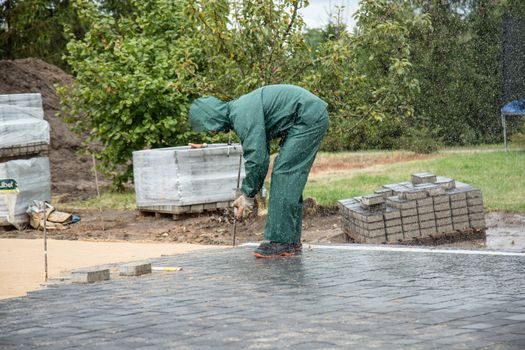
For sidewalk, utility-cut and trench work, a 25-100 cm mini paver at the US$2,500-15,000 import tier [S5] is the right tool; a tracked highway paver on the same job burns fuel and labour without a productivity payback. For municipal resurfacing, 2.5-4.5 m tracked feeders like the 3,400 mm class [S1] are the working sweet spot. For motorway and airport runway work, only 8-14 m mainline pavers with high-density screeds and material-transfer-vehicle (MTV) compatibility should be specified.
Buyers should also weigh operator skill availability: high-density screeds and electronic grade controls require trained crews, and under-spec'ing the screed to save 10-15% on price usually costs more in mat-density failures and rework than the saving is worth.
OEM vs China-Supply: Cost, Lead Time, Spare-Parts Reality
OEM highway and feeder pavers (BOMAG, VÖGELE, WIRTGEN, Caterpillar, Roadtec) carry premium pricing, established dealer networks, in-region parts stock, and Stage V / Tier 4f engine documentation. China-supply compact and mini pavers lead on acquisition cost — visible across Alibaba and Made-in-China listings with explicit price ladders [S3][S5] — but require careful scrutiny of engine emission tier, hydraulics brand, and warranty support outside China.
For a fleet owner standardising on a single brand, OEM total cost of ownership (TCO) usually wins at 2,000+ hours/year because parts availability and residual value dominate fuel and finance savings. For a contractor buying one machine for a defined project, China-supply compact units can deliver a working tool at one-tenth the price of an OEM equivalent, accepting higher integration risk. The same price-vs-TCO trade-off shows up in stationary equipment like gearboxes, where frame, ratio and material grade drive the same kind of step-changes.
Comparison Table: Three Paver Tiers Against Decision Criteria
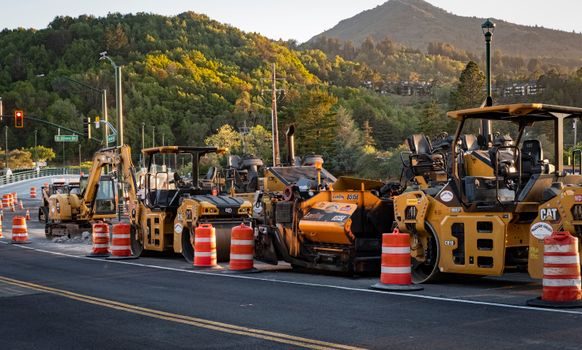
The three tiers line up against four buyer criteria as follows. Acquisition cost: mini (US$2,500-15,000) [S5] < feeder (US$150,000-400,000 typical) [S1] < highway (US$500,000-1,500,000+ typical). Maximum paving width: mini 1.0 m < feeder 3.4-4.5 m [S1] < highway 8-14 m. Operator skill required: mini (low) < feeder (medium, grade control) < highway (high, screed + grade + MTV). Spare-parts lead time outside origin region: mini (variable, 2-8 weeks) < feeder (OEM dealer, 24-72 h) < highway (OEM dealer, same-day to 48 h).
For multi-machine fleet sourcing, buyers should also budget 8-15% of acquisition cost for commissioning, operator training and the first year's spare-parts kit; skipping this line item is the most common reason China-supply compact pavers end up parked within 18 months.
Total Cost of Ownership Levers Beyond Sticker Price
Fuel consumption scales roughly with engine power: a 3,400 mm class feeder [S1] typically runs 100-130 kW engines, a mini paver 5-15 kW, and a highway paver 170-300 kW. Maintenance cost is dominated by screed plate wear (US$1,500-5,000 per set every 200-400 hours on highway units), conveyor chain replacement (US$3,000-8,000 every 1,500-2,500 hours), and tracked undercarriage rebuild (US$15,000-40,000 every 3,000-5,000 hours).
Residual value is the hidden upside: OEM feeder pavers commonly retain 45-55% of list at 5 years / 5,000 hours, against 20-30% for unbranded China-supply units. Insurance, financing and emission-compliance documentation (Stage V paperwork for EU sites, Tier 4f for US) are recurring overheads that often get omitted from upfront price comparisons.
Limitations and Failure Modes to Spec Against
Common paver failures that drive total cost are screed plate wear causing mat density loss, conveyor chain stretch causing aggregate segregation, and tracked undercarriage wear on abrasive bases. Hydraulic contamination is the leading cause of mid-life rebuilds; specifying 10-micron return filtration and a clean hydraulic coupling routine is cheaper than a US$20,000-40,000 proportional-valve replacement. [S1]
For mini and China-supply units, the main risks are parts unavailability outside the origin market, emission-tier non-conformance for regulated sites, and limited grade-control integration. Specifying at minimum: documented engine emission tier, hydraulic schematic, two sets of wearing parts with the purchase, and a written warranty honoured in the country of operation.
Sourcing Signals to Track Through 2026
Three signals are worth watching into H2 2026: Stage V engine price increases as OEM 2026 model-year price lists roll in (visible on DirectIndustry-style OEM catalogs [S1]), China B2B platform price floors for compact pavers as export competition compresses margins [S3][S5], and any tightening of emission documentation required on EU municipal tenders, which historically re-prices the feeder class upward. Buyers sourcing between July and December 2026 should request written Stage V or Tier 4f certificates with any quotation above US$100,000, and lock parts-kit pricing at order rather than at delivery.