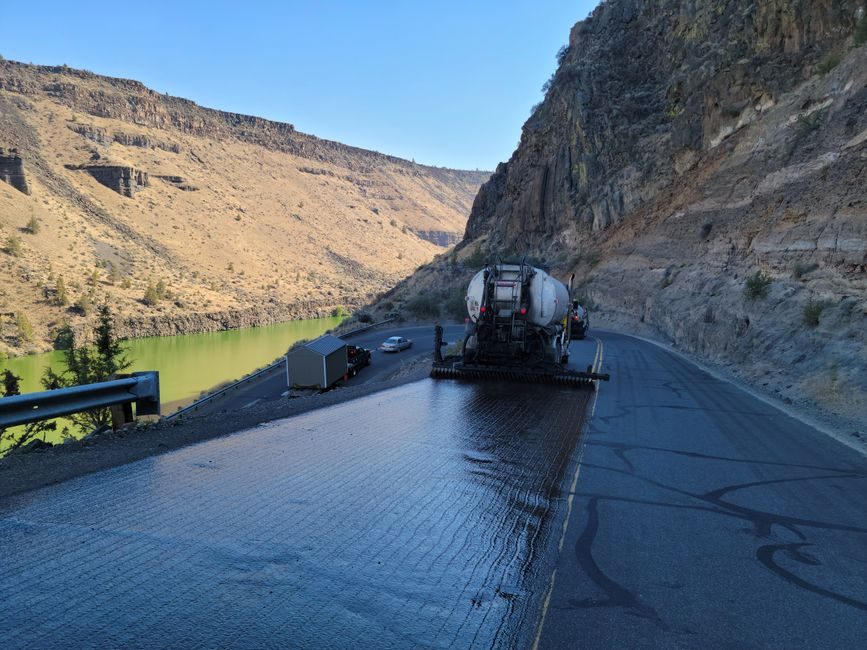
Asphalt pavers fall into three primary locomotion classes — wheeled, crawler (track), and tractor-mounted — with working widths spanning roughly 1,500 mm on compact tractor units to 9.2 m on large road-class crawlers such as the SANY SSP90C-8 [S1][S2].
The free-floating screed, developed in the early 1930s, remains the core placement element: it averages out grade and elevation changes under the wheelbase, and through its weight plus vibratory action imparts the initial density into the mat [S3]. An asphalt paver is therefore best understood as a material-handling tractor coupled to a tamping/vibrating screed whose width and density output define the work envelope.
Three Locomotion Classes and Where Each Fits
Crawler pavers run on steel or rubber track undercarriages and are the default for highway, airport, and mainline road work because track footprint lowers ground pressure and improves pull on loose base [S3]. The SANY SSP90C-8 sits at the top of this class with a 9.2 m working width and a 180 kW engine, sized for high-throughput mainline paving [S1]. Wheeled pavers use rubber tires and trade lower ground pressure for higher mobility between job sites, commonly deployed on urban streets, bridges, and mid-size lots where frequent repositioning outweighs the need for tracked traction [S2][S5].
Tractor-mounted pavers are a third, smaller class: a paving attachment is hung on a tractor or skid-steer carrier, producing compact units with working widths around 1,500–1,900 mm (59.06–74.8 in) such as the ATTEC 06.AP series [S2]. These are used for cycle paths, trenches, service drives, and patching where a full self-propelled paver is over-scoped. Self-propelled wheeled and crawler units, by contrast, carry their own engine, integrated conveyor or auger distribution, and a hydraulically extended screed for highway-scale throughput [S5].
Working-Width, Power, and Throughput Bands
Working width is the single most decision-driving spec. Compact tractor-mounted units cluster at 1,500–1,900 mm, wheeled mid-size pavers typically run 2.5–6 m hydraulically, and large crawlers stretch to 9 m and beyond — the SSP90C-8's 9.2 m figure is at the upper end of OEM catalog offerings [S1][S2]. Paving width is set by bolting or hydraulically extending bolt-on screed extensions onto a fixed main screed; basic vibration or tamper–vibration systems are the norm, with high-compaction screeds adding a second pressure bar for pre-compaction [S3].
Engine power scales roughly with width. The 180 kW rating on the SSP90C-8 illustrates the high end for a 9 m-class road paver; smaller wheeled units typically operate in the 55–130 kW band. Screed weight, vibration frequency, and tamper stroke (where fitted) drive the initial mat density, which in turn dictates how many roller passes are needed to reach target compaction — a key link to downstream flow meter and pressure transmitter instrumentation used in intelligent-compaction (IC) rollers measuring mat stiffness in real time.
Self-Propelled vs Tractor-Mounted: A Criteria Comparison
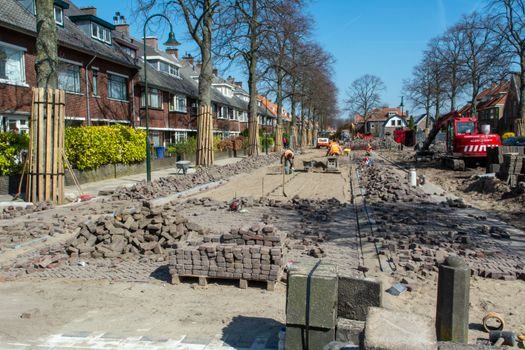
The cleanest way to separate paver types for a buyer is a side-by-side on four decision criteria: working width, prime power, mobility between sites, and mat density output. The table below lines up the three classes with the specs that drive selection. [S1]
Self-propelled crawler: working width up to ~9.2 m, on-board engine 130–180+ kW, mobility between sites low (transported on lowboy), mat density high (full vibrating/tamping screed with pre-compaction options) [S1][S3]. Self-propelled wheeled: working width typically 2.5–6 m, on-board engine 55–130 kW, mobility between sites high (rubber tires, road-legal on public routes in many jurisdictions), mat density medium-high [S5]. Tractor-mounted: working width 1,500–1,900 mm, power sourced from carrier tractor, mobility between sites very high (uses existing tractor fleet), mat density limited by lighter screed and shorter vibratory action [S2].
In practice, the choice is driven by lane-kilometres per shift, longitudinal joint control requirements, and whether the machine must drive between sites under its own power. Highway and airport work goes crawler; municipal street and bridge-deck work goes wheeled; trench, path, and shoulder work goes tractor-mounted.
Screed Type and the Free-Floating Principle
The screed is the differentiating sub-assembly on any paver, and its behaviour — not the tractor — defines mat quality. The free-floating screed concept, formalised in the early 1930s, lets the screed plate float on the mat it has just laid and average out vertical disturbances in the head-of-material flow, which is why paver ride height, head-of-material height, and tow-point position are the three primary machine-side controls a screed operator manages [S3].
Two screed families dominate: vibrating screeds (a single eccentric-weight vibrator mounted in the screed plate) and tamper-bar screeds (a mechanism that strikes the mat at 1,000–3,000 cycles per minute to consolidate mix before the vibrator). The Asphalt Paving Handbook notes that the screed, "through its weight and vibratory action, imparts the initial density into the material being placed," which is why screed dead weight, vibrator frequency, and tamper amplitude are the parameters written into mix-design-specific paving plans [S3].
Material Feed System: Conveyor, Auger, and Hopper
Every self-propelled paver shares a common material-handling chain: truck dumps mix into a receiving hopper, slat conveyors carry it rearward to the auger chamber, and reversible augers spread it in front of the screed at a constant head-of-material height [S3]. Hopper capacity, conveyor slat width, and auger diameter scale with throughput; on 9 m-class crawlers the hopper is sized to take a full end-dump truck load without spillage, while on compact wheeled units a smaller, foldable hopper suffices.
Auger geometry and flight pitch are designed to prevent segregation of coarse aggregate at the edges — a frequent cause of longitudinal joint defects. The Asphalt Paving Handbook flags consistent head-of-material in the auger chamber as a non-negotiable for joint quality, which is why modern pavers integrate sonic or pressure sensor-based feed control that auto-adjusts conveyor speed to match paver forward speed and screed width [S3].
Engine, Hydraulics, and Emissions Tier
Diesel engine power on self-propelled pavers scales linearly with paving width in the 55–180 kW band; the SANY SSP90C-8's 180 kW rating shows where high-end road pavers sit [S1]. Modern units use electronic diesel engines meeting regional emissions tiers (EU Stage V, US EPA Tier 4 Final, China NR4) and drive the tracks, conveyors, augers, and screed vibration through load-sensing hydraulic systems.
Hydraulic architecture matters for two reasons. First, closed-loop travel drives give the precise ground speed control a free-floating screed needs to maintain a constant mat thickness. Second, independent hydraulic circuits for the vibrator and tamper let the screed operator set vibration frequency and tamper stroke separately, which is how paving plans for stiff stone-matrix asphalt (SMA) differ from those for fine-graded surface courses. Sophisticated pavers also publish CAN-bus or PLC-based diagnostic data, the same data layer that links to plant-side PLC controls and to telematics dashboards on modern contractor fleets.
Limitations, Failure Modes, and What to Watch
Class-for-class failure modes differ. Crawler pavers suffer most from undercarriage wear on abrasive base rock and from track tension loss on long pulls. Wheeled pavers fail first in the drive axle and in tyre wear on hot, tack-coated mats. Tractor-mounted units are limited by the carrier tractor's hydraulic flow and by the inability of compact screeds to sustain pre-compaction across deep lifts. Across all classes, the dominant mat-quality defect is longitudinal segregation at the auger gearbox side, traced to inconsistent head-of-material and an auger running too low or too high relative to the screed plate [S3].
Selection traps to avoid: specifying a wheeled paver on a soft, uncompacted sub-base (it will rut the base faster than it paves it); specifying a compact tractor-mounted unit for a 4 m driveway pour (it cannot sustain the 1.5 m pass count needed to match ride-quality specs); and ignoring screed plate wear, which has the same effect on smoothness as setting the wrong vibration frequency. Buyers should also weigh the impact on industrial valve and hydraulic-hose service intervals, since tracked pavers in dusty conditions load downstream filtration heavily.
Applicable Standards and Sourcing Notes
Asphalt paving practice is governed by owner-agency specs (DOTs, FAA advisory circulars for airports) that reference mix-design standards (e.g. Superpave, Marshall) and method specifications for placement. The Asphalt Paving Handbook, published by NAPA in April 2025, is the consensus reference for screed behaviour, material feed, and joint construction [S3]. OEM product pages such as those for the SANY SSP90C-8 crawler (9.2 m, 180 kW) and the ATTEC 06.AP tractor-mounted series (1,500–1,900 mm) are the primary published sources for working-width and locomotion class [S1][S2]. A plain-language classification of self-propelled, wheeled, and tractor-mounted paver classes is also documented in industry overviews [S5].
For related coverage, see Cold Milling Machine: Spec-Backed Pros, Cons and Selection Triggers.