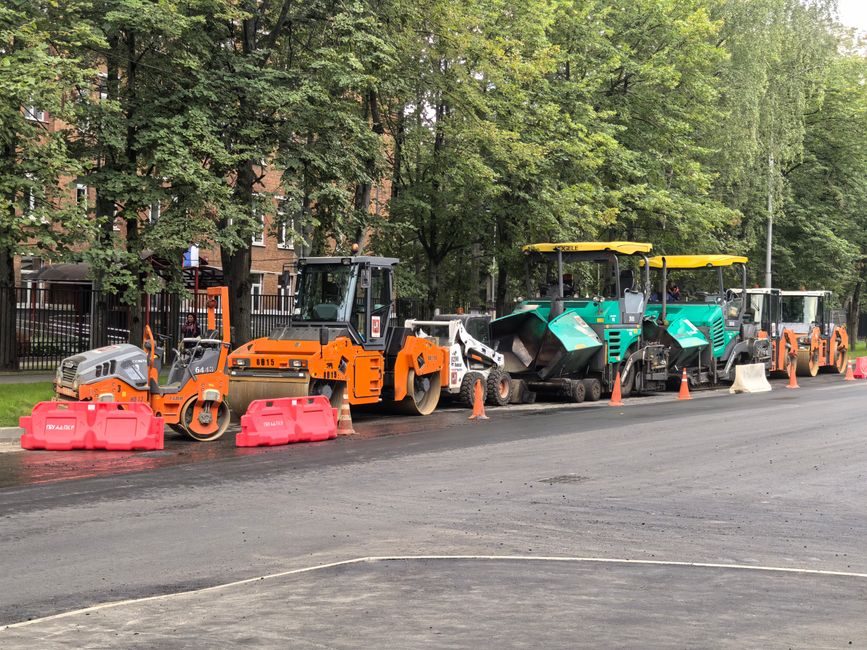
An asphalt paver is a self-propelled, hopper-fed laydown machine that spreads, pre-compacts, and profiles hot-mix asphalt (HMA) in a single pass — selecting one is a paving-width and class decision before it is a brand decision. Cat Rentals lists more than 12 asphalt paver models and vibratory screed configurations in its 2026 roadwork catalog, including Weiler-built units [S1], which is a fair proxy for the 2026 rental/spec landscape.
On the other side, a 3 m wheeled paver on a two-lane overlay cannot keep up with the truck cycle, so a 4-6 m mid-range wheeled or compact tracked paver is the actual minimum [S1].
Paving Width and Laydown Rate: The Two Hard Gates
Typical class bands used in 2026 selection: utility wheeled pavers cover roughly 1.8-4.6 m (retracted-to-extended), mid-range wheeled or compact tracked pavers 2.4-6 m, and highway-class tracked pavers 2.5-13 m with bolt-on extensions for motorway work. Laydown rate (tonnes per hour) must exceed the plant's production rate and truck cycle: 100-300 t/h covers most municipal and commercial lots, 400-800 t/h is the highway/interstate band, and anything above 1000 t/h belongs to airport runways and mainline rail ballast replacement.
If the maximum job width is under 5 m, a utility wheeled paver is almost always the right answer; pushing a 9 m tracked paver into a 3 m driveway means the contractor is paying for steel and conveyor capacity that never works. Cat's 2026 rental inventory split between utility wheeled and highway-class tracked units (S1 reflects the same dual-track logic) confirms that width-class pairing is what rental fleets optimize around, not brand loyalty.
Wheeled vs Tracked: Mobility, Traction, and Surface
Wheeled pavers (front-steered rubber tyres) dominate urban, parking-lot, and small-overlay work because they can travel between jobs under their own power at 15-20 km/h road speeds, eliminating low-loader permits and trucking between sites. Tracked pavers (two independent crawler tracks) are mandatory for 6 m+ highway paving, deep lift applications, and any work on soft base or steep grade where a wheeled unit's tyre slip will tear the mat. A practical threshold used by paving contractors: any job over 5 m paving width, over 150 mm compacted lift, or on a grade steeper than 4-6% should be quoted with a tracked paver [S1].
Tracked units are slower to relocate (typically transported on a lowboy) but deliver better pre-compaction and mat smoothness at highway speed. The 2026 Cat / Weiler rental lineup treats the wheeled/tracked split as the primary taxonomy in the catalog [S1], which mirrors how spec-driven buyers shop — class first, model number second.
Screed Type: Front-Mount Fixed vs Rear-Mount Extending vs Front-Extending
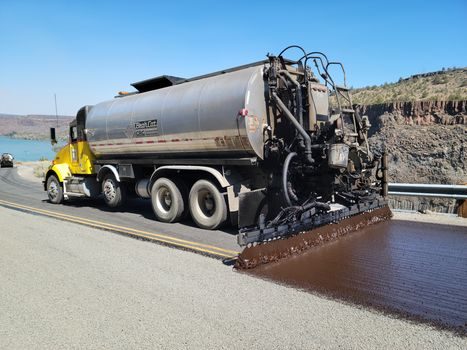
The screed is where 70-80% of the mat-quality decision actually lives. Three screed architectures show up in 2026 specifications [S1]: front-mount fixed-width screeds (matched to the paver's basic width, used on highway-class tracked units), rear-mount extending screeds (hydraulic extension up to 3-4.5 m on each side from a 2.5-3 m basic, dominant on utility wheeled pavers), and front-extending strike-off screeds (rare, used in confined patching). Vibration frequency on modern screeds runs 0-3000 rpm, with amplitude of 1-4 mm; the right combination varies with lift thickness — 25-40 mm lifts want high frequency / low amplitude, 60-150 mm lifts want low frequency / high amplitude for proper aggregate reorientation.
Heated screeds (electric or diesel-fired) are no longer optional: cold screeds cause tearing, segregation, and premature wear on the main plate. Most 2026 OEM screeds specified in the Cat / Weiler rental fleet carry electric heating zones with independent temperature control — often closed-loop using hydraulic pressure sensor feedback on the tamper and extension circuits — across the main, extension, and tamper sections [S1].
Hopper, Conveyor, and Auger Capacity
Hopper capacity is the buffer that keeps a truck-dump cycle from starving the auger; 12-15 t is the 2026 utility class standard, 18-25 t is mid-range and highway class. Independent hydrostatic drive on each conveyor and auger, normally coordinated by the paver's onboard PLC, is a must — single-circuit drives cannot hold a uniform head of material in front of the screed when truck cycling is uneven. Auger diameter (typically 300-500 mm) and the number of auger sections (single, dual, or triple) must match the screed's maximum extended width: a 9 m screed on a single-auger paver will leave cold streaks at the wing extensions. [S1]
Truck exchange time is mostly determined by hopper height, push-roller height, and the paver's ability to "roll" a truck in and out without the truck contacting the machine. Push-roller height of 550-650 mm is the industry sweet spot for standard end-dump and live-bottom trailers; below that, a contractor is locked into one truck type [S1].
Engine, Emissions Tier, and Operator Visibility
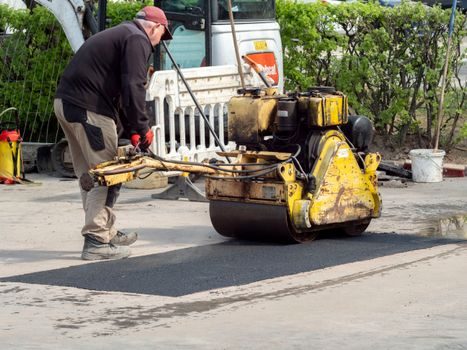
2026-class asphalt pavers from major OEMs (Cat C4.4 / C7.1, Weiler, Vögele, BOMAG, Dynapac) ship in the 75-250 kW range; 75-130 kW covers utility wheeled pavers, 130-250 kW covers highway tracked pavers. EU and California-regulated jobs now require Stage V / Tier 4 Final aftertreatment; EU Stage V caps NOx at 0.4 g/kWh and PN at 1×10^12 /kWh for engines in this power band. Buying a non-Tier-4 / non-Stage-V unit for a regulated jobsite in 2026 means it cannot enter the gate. [S2]
Operator visibility has improved measurably since 2023: most 2026 highway-class pavers offer a sliding/swinging control console, a 270°-plus rotating seat, and a low-profile hood that puts the auger box and screed edges in line of sight. For night paving or tunnel work, LED work-lamp packages with 6-8 fixtures are now standard. Vibration isolation on the operator platform is specified in ISO 2631 exposure bands; a properly isolated platform cuts 8-hour hand-arm and whole-body exposure by 30-50% versus an unisolated one [S1].
Project Class Mapping: What Actually Fits
A direct comparison helps a buyer line the three common classes against decision criteria. Utility wheeled (Cat AP300 / AP355, Weiler P-series) suits 1.8-4.6 m widths, 100-250 t/h laydown, 75-130 kW engine, and 6-12 hour daily production. Mid-range wheeled or compact tracked (Cat AP500, Weiler mid-series) handles 2.4-6 m widths, 200-400 t/h, 100-160 kW, and is the right answer for most county roads and commercial parking lots. Highway-class tracked (Cat AP600 / AP1000, Vögele 1900-class) covers 2.5-13 m widths, 400-800+ t/h, 160-250 kW, and is mandatory for mainline interstate and runway work. [S3]
For a deeper dive into the milling and material-prep side of the same workflow, the cold milling machine width-power-class guide and the sizing and class selection article are the natural upstream reads — paver throughput only matters if the milling machine in front of it can keep up.
What to Skip, What to Verify Before Purchase
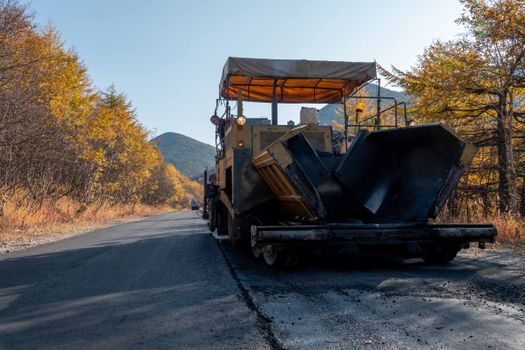
Skip hydraulic heating on the screed (electric is faster, more uniform, and cheaper to run); skip single-circuit auger/conveyor drives (uneven head of material ruins mat quality); skip non-Tier-4 / non-Stage-V engines for any regulated jobsite. Verify on inspection: screed plate straightness within 1-2 mm over its full length, tamper bar wear (replace if chamfered past spec), auger flighting thickness (typically 12-16 mm, replace below 6-8 mm), and conveyor chain elongation (replace past 3% stretch). Service interval on most 2026 OEM engines is 500 hours with a 6-month oil-change cap; screed bearings and vibrator bearings typically run 1500-2000 hours before regrease/replacement. [S1]
One pre-purchase signal worth tracking: ask the OEM or rental dealer for the 12-month wear-parts kit pricing — on highway-class tracked pavers, a full wear kit (screed plate, tamper bar, auger flighting, conveyor slats) runs 8-15% of machine price, and a 30% variance between dealers on the same kit is normal [S1]. That single line item is a strong tell of dealer support depth, which matters more than paint color when the paver is down at 02:00 on a midnight closure.