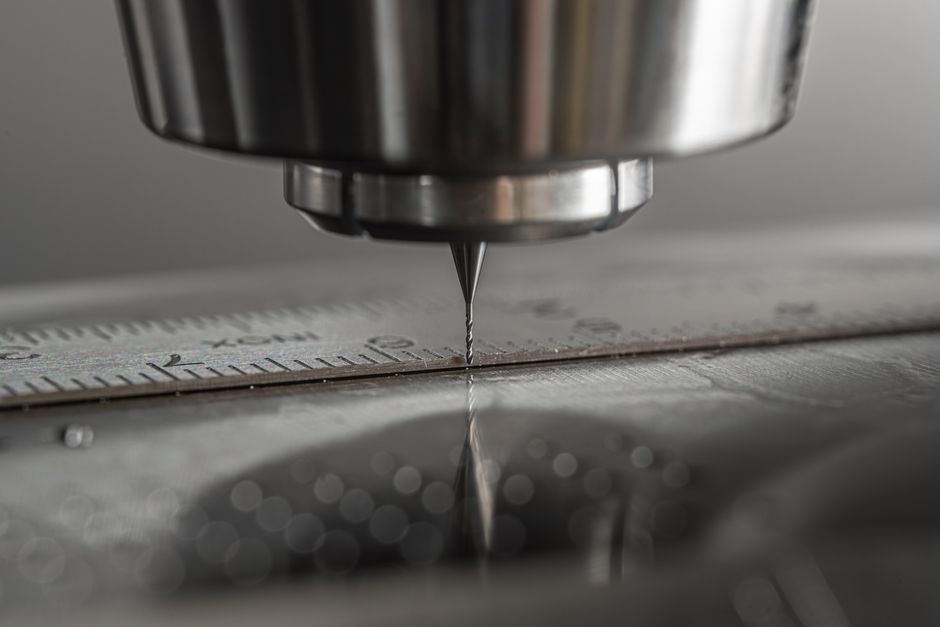
A cold milling machine (cold planer) is a crawler-mounted, drum-driven pavement removal asset sized by milling width 500-2200 mm, operating weight 7-35 t, diesel engine power 100-750 kW, and rotor speed 90-180 rpm with 70-200 carbide picks, and the right unit is the one whose width, weight class, and rotor geometry match the asphalt or concrete layer to be removed and the daily square-meter output the contractor must hit [S1].
For municipal patch work the 500 mm half-lane class with a 7-14 t operating weight and 100-160 kW engine is the industry baseline; for motorway rehabilitation the 1.5-2.0 m full-lane class at 20-35 t and 300-750 kW is the working spec, and the cold milling machine category on the source-side encyclopedia covers the small, compact, and large frames used across these bands.
Match Milling Width and Working Weight to Lane Geometry and Haul Truck
Milling width is the single biggest driver of daily output: a 1.0 m compact planer removes roughly 250-400 m²/h at 30-50 mm depth on asphalt, while a 2.0 m large planer removes 800-1500 m²/h at the same depth, and the 1.5 m class sits between them at 500-900 m²/h [S1]. Width also has to clear the haul-truck cycle: if a 2.0 m machine mills a full lane in one pass, the excavator-and-truck fleet behind it must be sized to clear 30-50 t of milled material per hour, and any width mismatch shows up as a truck queue, not as a machine queue.
Working weight follows width almost linearly: compact half-lane units 7-14 t, mid-range 1.0-1.3 m units 14-22 t, and large 1.5-2.0 m units 22-35 t [S1]. For a city job with manhole covers and curb lines the 14-22 t class is the practical ceiling; over 25 t the axle load starts to exceed the 11-13 t per axle limit many European municipal permits enforce, and a tracked undercarriage with 3-4 bogies per side becomes mandatory.
Engine Power, Rotor Drive and Picks-per-m²: the Throughput Math
Engine power has to cover three loads at once: hydraulic traction, the water-spray dust-suppression pump, and the rotor drum drive, and the rule of thumb in the source material is roughly 15-20 kW of installed engine power per 100 mm of milling width at 100 mm cutting depth [S1]. That puts 100 kW engines on 500 mm frames, 250-350 kW engines on 1.5 m frames, and 450-750 kW engines on the 2.0 m full-lane class, with the upper end reserved for 300+ mm deep cutting on concrete or reinforced asphalt.
Rotor geometry decides finished surface quality and pick consumption: a 70-pick drum on a 500 mm machine gives a fine 8-12 mm tooth spacing suited to thin-lift surface milling, while a 160-200 pick drum on a 2.0 m machine runs 15-18 mm spacing tuned for high material removal, and pick consumption on asphalt typically runs 0.5-2.0 picks per 100 m² at 30-50 mm depth and climbs to 5-15 picks per 100 m² when cutting concrete with rebar [S1]. For contractors running 1500+ hours per year, the rotor quick-change system and the pick-retrieval cycle are the second-decision item, after power, that separates a buy from a regret.
Cutting Depth, Gradient and Cylinder Hydraulics: the Geometry Constraints
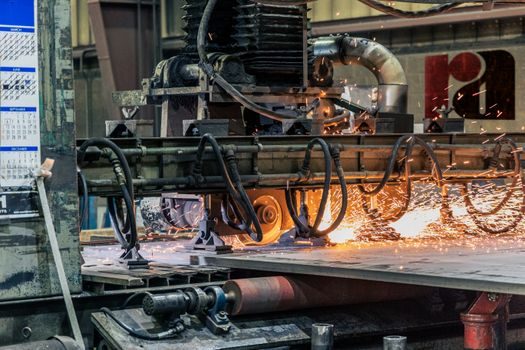
Standard cutting depth on a 1.0 m compact planer is 0-300 mm; on a 1.5 m mid-range it is 0-330 mm; and on a 2.0 m large it is 0-350 mm, with the deepest 350 mm class reserved for full-depth asphalt removal down to the unbound base layer [S1]. Cylinder stroke and side-shift travel are the second-order geometry numbers: a 500 mm side-shift allows flush milling against a curb or barrier, and 250-400 mm of lift cylinder travel lets the machine load-mill over a manhole frame in a single pass.
Gradient capability on tracked units is typically 30-35° (58-70%) for travel and 8-10° (14-18%) for sustained milling on slope, and any spec sheet that quotes a single gradient number is usually quoting the travel figure, not the milling figure [S1]. For mountain-road milling on 6-8% sustained grade, the milling grade number is the binding limit, and water-cooled diesel with a continuous-duty rating (not a net peak rating) is the only choice that survives a summer shift.
Four-Level Comparison: Compact vs Mid-Range vs Large vs Profiler
Four cold-milling classes line up against four decision criteria - milling width, operating weight, engine power, and typical job - as follows [S1]. Compact (500-1000 mm / 7-14 t / 100-160 kW): municipal patch work, utility cuts, parking lots. Mid-range (1.0-1.3 m / 14-22 t / 180-260 kW): urban arterial resurfacing, bridge-deck milling. Large (1.5-2.2 m / 22-35 t / 300-750 kW): motorway rehabilitation, runway milling. Profiler (drum width 380-500 mm on a 5-9 t chassis / 75-130 kW): fine-profile and micro-milling to 2-5 mm tolerance, used for surface texture restoration before thin overlay.
The profiler class is the one contractors most often miss-spec: it is not a half-lane compact, it is a finish machine whose drum runs 600-1500 picks at 6-8 mm spacing and whose forward speed is half that of a compact planer, and the buy is justified only when the contract has a smoothness spec (typically IRI under 1.5 m/km) that a standard planer cannot meet [S1]. For everything else, the compact-to-large decision is purely a daily-output-and-truck-cycle question.
Use Cases and Failure Modes: What Trips a Spec on a Real Job
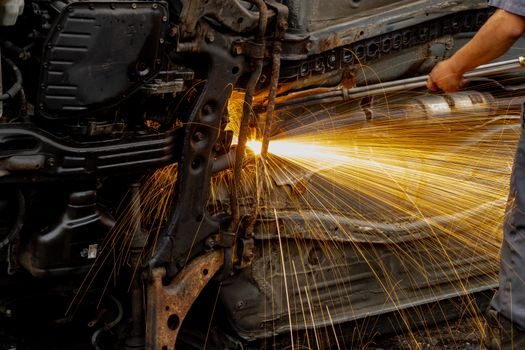
Three failure modes dominate the field. First, under-powering the rotor on a 100 mm depth cut: the engine bogs, the hydraulics overheat, and the machine idles in the cut; the spec fix is the 15-20 kW per 100 mm rule noted above, not a bigger cab [S1]. Second, over-width on a confined urban street: a 2.0 m machine cannot position against a curb in one pass and the contractor ends up doing a second pass with a 1.0 m machine, which is the wrong order of equipment. Third, mismatched pick grade: standard asphalt picks on a concrete deck burn out 3-5× faster and force a mid-shift drum change, while concrete picks on asphalt give poor fragmentation and overload the conveyor.
On the CNC machine supplier map 2026: factory clusters, price bands and sourcing levers reference frame, cold-milling OEMs concentrate in Germany, Austria, the US, and China, with European units carrying a 30-60% price premium over equivalent Chinese-built compact frames and a comparable lead-time penalty on spare rotors [S3]. For buyers sourcing through OEM channels, the more relevant comparison is the Hot-Chamber Die Casting Machine Buying Guide 2026: Tonnage, Alloy and Sourcing Levers on spec-driven sourcing discipline, where the lesson transfers 1:1: define the four numbers (width, weight, power, picks) before the brand list.
Standards, Sourcing Levers and Pre-Shipment Inspection
Cold-milling machines in the EU are governed by the Machinery Directive 2006/42/EC for the整机 safety case, by EN 500-1 to EN 500-6 for mobile road-construction machinery noise and vibration, and by Stage V / EPA Tier 4 Final for engine exhaust on units sold in Europe and North America respectively; the operator station has to meet ROPS/FOPS per ISO 12117-1 and ISO 10262, and dust-suppression water-flow is typically spec'd to 8-15 L per m² of milled surface [S1]. Specifying a unit that meets all four in writing is the difference between a deliverable machine and a port-of-entry rework.
Two sourcing levers separate a clean buy from a problem buy. First, require the OEM to publish pick-consumption curves at 30 mm, 100 mm, and 200 mm cutting depth on C40 concrete and on dense-mix asphalt; without that data, the buyer cannot size the picks-and-spares budget. Second, on any Chinese-built frame above 22 t operating weight, book a pre-shipment inspection (PSI) covering rotor run-out under 0.5 mm at the bearing journal, hydraulic oil-sample ISO 4406 cleanliness code under 18/16/13, and a 4-hour continuous-load milling test on a graded test pad [S3]. These three checks are the same PSI scope used on a cutting machine production line and they are the minimum to keep a 35 t machine out of warranty disputes.
Closing reference: for buyers who already run a core machine fleet for casting or compaction work, the cold-milling addition is a natural extension but only when the daily output target sits above 1500 m² on asphalt, and the next trackable signal is the Stage V transition deadline for engines above 560 kW, which forces the 600-750 kW large class onto SCR-only aftertreatment from January 2026 build dates onward per the EU non-road mobile machinery emission step [S1].