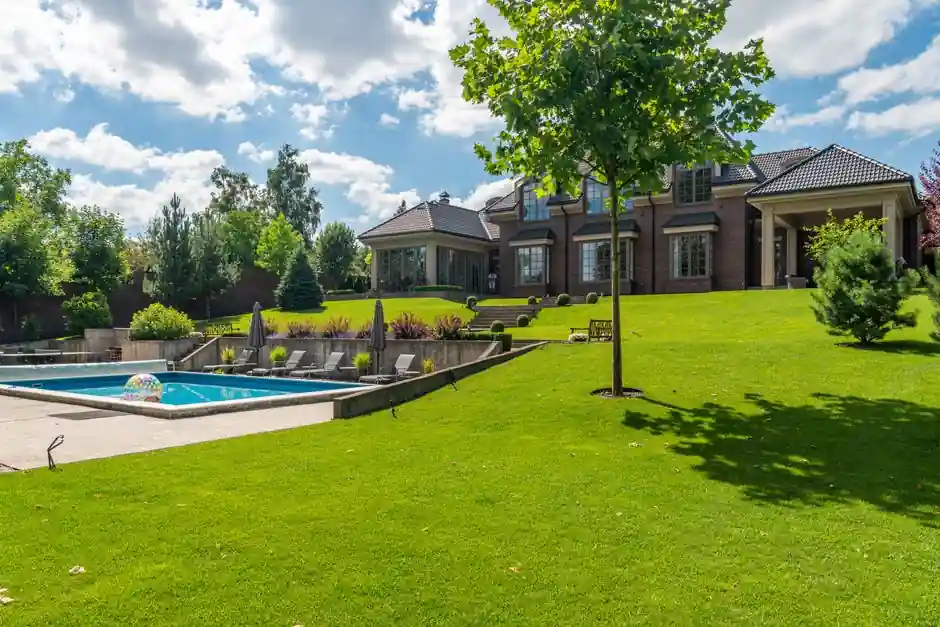
On landscape construction sites in 2026, 24x to 28x magnification is the working sweet spot for an automatic (optical) level, because the field of view stays wide enough for a single operator to find the rod and take a reading in seconds [S4].
The decision is driven by three numbers on the spec sheet: magnification, objective lens aperture (mm), and sighting distance (ft/m). General landscaping grading, irrigation-trench layout, and retaining-wall step checks rarely exceed a 300 ft (90 m) sight line, so beyond that range the optical error curve (collimation plus earth curvature) starts to dominate the reading [S4]. A second input is regulatory: in jurisdictions such as Brunswick County, NC, landscape irrigation is still permitted under a Stage 2 mandatory water-conservation alert declared on 17 August 2026, which keeps slope-and-drainage grading work active even under D3 (Extreme Drought) conditions [S1].
Magnification tiers and where each one earns its keep
The four commonly stocked tiers of automatic level are 20x, 24x, 28x, and 32x, and each maps to a different working envelope rather than to a "better/worse" ladder [S4]. A 20x instrument is the lightest and gives the widest field of view, so it suits short-range patio and turf-edge work where the rod is rarely more than 100 ft (30 m) away. A 24x or 28x instrument covers the bulk of landscape construction: walkway sub-base checks, deck-pier elevations, swale and berm grading, and irrigation-laterals layout, all of which are routinely staked at 100 to 250 ft (30 to 75 m) from the instrument. A 32x instrument is the right pick only when sight lines exceed roughly 400 ft (120 m), for example on golf-feature shaping or large estate drives, where 32x also cuts through atmospheric shimmer that would blur a 24x image [S4].
The trade-off is mechanical, not optical: as magnification rises from 20x to 32x, field of view narrows, so finding the staff through the eyepiece becomes slower unless the operator pre-aligns with the external gun-sight [S4]. On a landscape crew where one surveyor is running levels between a skid-steer and a rodman, that lost acquisition time compounds across a day. For a deeper look at how the same magnification rules apply on a different trade, see the automatic level spec map for HVAC installation, which uses the same 20x/24x/28x/32x framework against pipe-hanger and condensate-run tolerances.
Aperture, image brightness, and the low-light problem
Magnification alone is not the full story: the objective lens aperture sets how much light reaches the reticle, and an under-sized aperture turns a 32x instrument into a "milky" eyepiece at dawn and dusk [S4]. Entry-level automatic levels typically ship with a 30 mm aperture, which is adequate for 20x and 24x magnification in full daylight. Above 28x, a 36 mm to 40 mm aperture is the practical floor if the crew is expected to work first-thing mornings or late afternoons, which is the common case on landscape sites that front residential streets and need to avoid peak heat. If the spec sheet pairs 32x magnification to a sub-32 mm aperture, walk away: the optical math does not work and the instrument will be parked in its case before 09:00 every day [S4].
Working range, curvature, and the 300 ft (90 m) cap
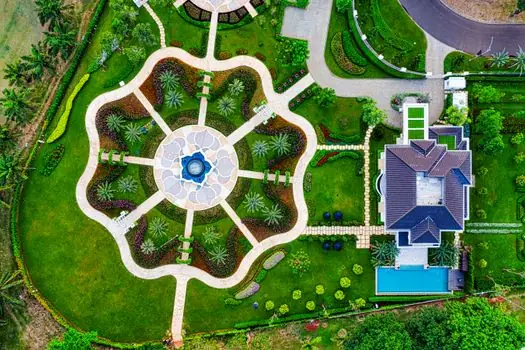
For general construction and civil work, including landscape grading, the working rule of thumb is to cap rod distance at roughly 300 ft (90 m), regardless of how much magnification the instrument can deliver [S4]. Beyond 90 m, two error sources start to compete with the reading: residual collimation error in the compensator, and earth-curvature plus refraction over the longer sight line. For a landscape project this matters when laying a swale across a long lot or checking falls on a driveway, because the contractor's tolerance (typically ±0.02 ft, or about 6 mm, over the run) cannot absorb a 5 mm curvature miss at 120 m. If the site forces longer sights, the answer is not "buy more magnification" but "move the instrument and turn the section into two setups."
What landscaping sites actually need versus what they don't
Landscape work is dominated by short, repeated elevation checks rather than long, sparse traverses, which is why the 24x to 28x band dominates procurement [S4]. The features a landscaping crew should weight are: a magnetic-dampened automatic compensator (so the line of sight self-levels after the operator has roughly centred the bull's-eye bubble), a stadia ratio for quick distance estimation (most automatic levels are 1:100), and a robust IP54-or-better housing because the instrument lives on turf, not on a paving slab. A 32x instrument adds real value only when the scope of the project includes long, straight runs such as a 400 ft (120 m) irrigation main or a golf-green surround, and even then only if the aperture is sized correctly [S4].
For a different but adjacent use case, the automatic level spec map for plumbing install lines the same magnification tiers up against DWV slope tolerances, and is a useful cross-check when the same crew is laying both irrigation and drainage on the same site.
Drought-aware timing: why grading work is still active in 2026
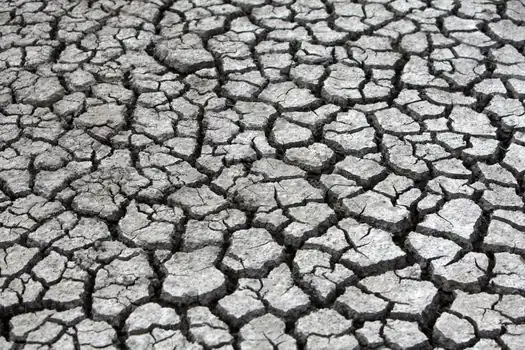
Water-conservation rules in 2026 are reshaping the landscaping calendar rather than shutting it down. Brunswick County, NC moved to a Stage 2 Mandatory Water Conservation Alert on 17 August 2026, but under that stage automated outdoor irrigation is permitted, including spray and drip systems used on residential and commercial landscaping, while non-irrigation outdoor water use still carries tighter controls [S1]. The county is classified D3 (Extreme Drought) on the U.S. Drought Monitor, the second-highest tier, so grading and drainage work that prepares sites for the next planting window is still moving. For instrument selection this means crews need an automatic level that can be set up before sunrise to beat the heat, which pushes the spec toward a larger objective aperture even at 24x or 28x [S4][S1].
Machine-control alternative for earthmoving-heavy sites
Where the scope of landscaping crosses into land forming, for example sports-field construction, golf-feature shaping, or large estate grading, an optical automatic level is no longer the right primary tool, and a GPS/GNSS-based land-forming system takes over. The PTx Trimble FieldLevel II system, listed in the PTx Trimble product catalogue, automates scraper hydraulic valves on tandem or dual scraper setups and supports 2D and 3D design with AutoPlane and Multiplane surface creation, running on a TMX-2050 display with RTK-precision survey [S3]. For earthworks contractors this is the answer to the optical level's 300 ft (90 m) ceiling, because the surface model is held in software rather than read off a rod by a human. For a single-lot landscape job it is overkill; for a 20-acre (8 ha) landform it is the only realistic way to hit grade without a full survey crew.
Selection criteria summary for the 2026 buying decision

The four numbers a buyer should pin down before ordering are: magnification (20x, 24x, 28x, or 32x), objective aperture in mm (30 mm minimum, 36 to 40 mm for 28x and above), compensator accuracy (commonly ±0.5 arcseconds or ±2.5 mm per 1 km double-run for general-construction models), and shortest focus distance (typically 0.5 m to 1.5 m, important for tight garden-edge work). The site realities to match against those numbers are maximum rod distance (under or over 300 ft / 90 m), lighting window (full sun only, or dawn-to-dusk), and whether the work is repeated short checks (favours 24x/28x with wide FOV) or sparse long sights (favours 32x with large aperture) [S4]. A 24x instrument with a 30 mm aperture and a ±2.5 mm/km compensator remains the default landscape workhorse in 2026; step up to 32x only when sight lines and lighting both demand it, and step up to GNSS land forming only when the project area and tolerance make rod-and-eye impractical [S3][S4].
Trackable signals for the next buying cycle: the U.S. Drought Monitor weekly update for any region holding D3 status (which keeps landscape grading active even when irrigation is rationed) [S1], and any 2026 refresh of GNSS land-forming displays that fold automatic-level workflows into the same cab tablet, which would shift the cost crossover between optical and GNSS on mid-size landscape jobs [S3].
Detailed specification references: automatic level, automatic molding line, and infrared level.