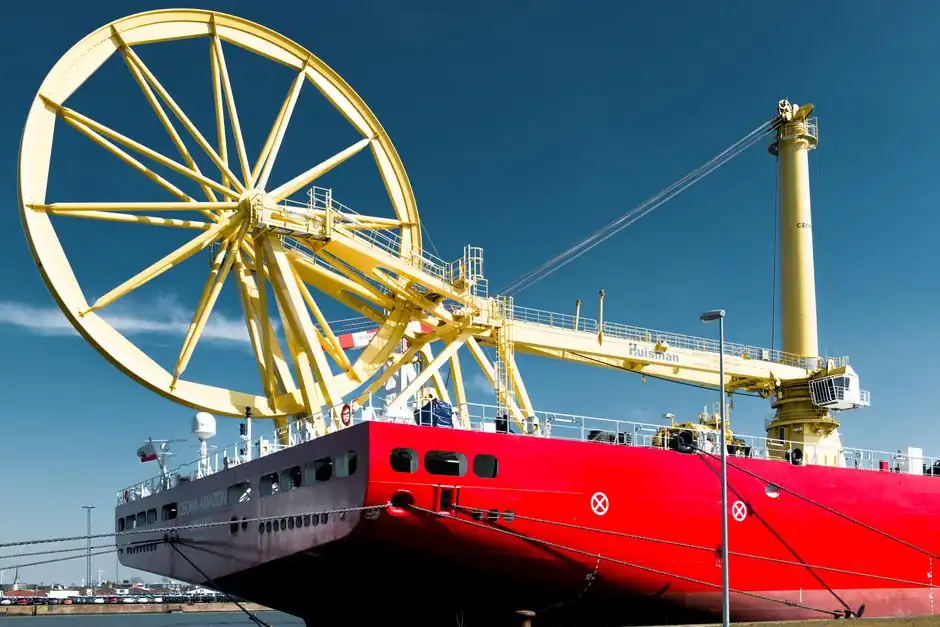
For carbon and weathering steel in marine service, the three-coat benchmark of inorganic zinc silicate (IZS) primer at 75 microns, high-build epoxy mid-coat at 125-200 microns, and aliphatic polyurethane topcoat at 50-75 microns remains the workhorse atmospheric system specified across offshore platforms, jetties, and port cranes [S1].
Submerged and splash-zone steel generally steps up to glass-flake epoxy or modified epoxy applied at 300-500 microns dry film thickness, paired with sacrificial anodic cathodic protection, because a purely barrier system cannot survive continuous wet/dry cycling and chloride-driven osmosis [S1][S5]. Specifiers should match the system to the ISO 12944 corrosivity zone (C5-M for marine atmospheric, Im2 for submerged) and the design service life, not to the lowest unit price on a tender sheet.
Why Exposure Zone Drives the Chemistry Choice
Marine corrosion is not one mechanism, it is a stack of them, and each structural zone on a vessel or jetty experiences a different mix of chloride concentration, oxygen availability, UV load, and mechanical impact [S1]. Atmospheric zones see UV-driven chalking and osmotic blistering, so the dominant requirement is a UV-stable topcoat over a high-build epoxy barrier; the IZS primer underneath acts as a sacrificial layer that protects the steel at any cut edge or holiday [S1][S5].
Splash zones combine wave impact, wet/dry cycling, abrasion from floating debris, and full oxygen saturation, which is the most aggressive combined environment on a typical marine structure; a standard atmospheric three-coat system will fail rapidly here and must be replaced with a tough, high-build coating or a reinforced laminate system [S1]. Submerged zones, by contrast, are governed by cathodic disbonding and osmosis, so the coating must be immersion-grade epoxy rated for negative-side compatibility with impressed-current cathodic protection (ICCP) potentials, typically -0.8 to -1.05 V versus Ag/AgCl reference [S1].
Primer Chemistry: Epoxy vs Zinc-Rich vs Surface-Tolerant
Epoxy primers remain the most widely used marine primer family because of their balance of adhesion, chemical resistance, and tolerance to variable surface profile; they are the default for ballast tanks, cargo holds, underwater hull areas, and offshore structures [S5]. For new-build structural steel where the design life exceeds 20 years, inorganic zinc silicate primers at 75-100 microns DFT deliver the highest level of galvanic (sacrificial) protection and are commonly specified under the high-build epoxy mid-coat [S1][S5].
For maintenance painting where blast cleaning to Sa 2.5 (ISO 8501-1) is impractical, surface-tolerant epoxy mastics formulated for hand or power-tool preparation (St 2/St 3) are the standard fallback; the industry reference for ballast tank coatings is a surface-tolerant epoxy or coal-tar epoxy system, valued for seawater resistance on less-than-perfect substrates [S1]. Shop primers, often zinc-rich weldable types at 15-25 microns, are applied at the fabrication stage for temporary corrosion protection during staging and are not counted toward the final film build [S5].
Mid-Coat and Topcoat Function in the Stack

The high-build epoxy mid-coat, typically 125-200 microns DFT per coat, carries the barrier function: it resists water vapour transmission, blocks chloride diffusion, and builds total system thickness to the 250-350 micron range the corrosivity class demands [S1]. When extra abrasion or immersion resistance is needed, a glass-flake-filled epoxy variant at 300-500 microns is layered in place of, or on top of, the standard mid-coat.
The aliphatic polyurethane topcoat, usually 50-75 microns DFT, contributes UV stability, gloss and colour retention, and chemical resistance to splash and atmospheric fallout; acrylic polyurethane and polysiloxane topcoats are alternatives where higher UV durability or reduced solvent content is specified [S1][S3]. For ballast tanks, the topcoat is typically omitted because there is no UV exposure and the immersion-grade epoxy is the final layer; the PSPC (Performance Standard for Protective Coatings) IMO resolution MSC.215(82) type-approved systems follow that pattern.
System Comparison: Three Decision Criteria
Specifiers should score candidate systems against four criteria before any purchase order is cut: design service life, surface-prep feasibility, exposure zone severity, and total applied cost per square metre per year of expected life. On that scorecard the IZS / epoxy / PU system is the workhorse for C5-M atmospheric steel with a 15-25 year life; glass-flake epoxy over zinc primer leads for Im2 submerged service with ICCP; surface-tolerant epoxy mastic is the only practical option for St 3 maintenance on existing ballast tanks; and the shop-primer-plus-three-coat system is mandatory for new-build hull blocks where blasting will happen in a yard rather than in situ [S1][S5].
For thermal-insulated service lines and process piping where corrosion under insulation (CUI) is the failure mode, single-layer thermal-insulative coating systems such as Sherwin-Williams Heat-Flex AEB are an emerging alternative to mineral wool jacketing, with stated benefit of eliminating CUI at operating temperatures in the typical hydrocarbon range [S3]. Where a project demands digital pre-qualification of the system, OEMs now expose interactive selectors such as PPG PMC City that map asset type, corrosion exposure, and environment to a candidate product stack, which short-lists the specifier's work but does not replace the engineering review [S2].
Surface Preparation, Standards, and Inspection
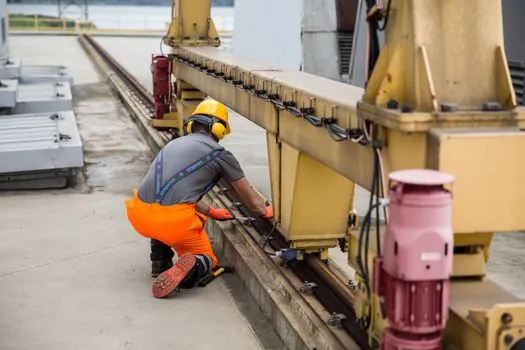
Surface preparation is the single largest controllable variable in coating service life; ISO 8501-1 visual rust grades (Sa 1, Sa 2, Sa 2.5, Sa 3) and the corresponding ISO 8503 surface profile grades (fine, medium, coarse) anchor the spec, and most high-performance marine systems require Sa 2.5 with a 50-100 micron profile for the IZS primer to anchor correctly [S1][S5]. Dry film thickness is verified against the spec using a calibrated coating thickness gauge on a statistically valid frequency, typically 5-10 readings per 10 square metres, with no single reading below 80 percent of the nominal DFT per ISO 19840.
The broader reference text for industrial and marine coating selection, "Selecting Coatings for Industrial and Marine Structures" (DOI 10.5006/37698, cited 2 times in the engineering literature), groups coating chemistries by service environment and is a useful starting point for engineers building a project-specific shortlist [S4]. On the underlying material side, the choice of substrate matters: where the steel is being specified, an engineering plastic or fibre-reinforced polymer insert may be used in place of coated steel for certain trim and contact components where coating maintenance is impractical.
Common Specification Mistakes and Failure Modes
Three errors show up repeatedly on marine coating tenders: specifying atmospheric-grade polyurethane over a splash-zone member, omitting cathodic-protection compatibility testing for immersed epoxies (which leads to early cathodic disbonding), and accepting a wet-tolerant epoxy in place of a true surface-tolerant mastic on St 3 preparation where humidity is high [S1]. Another frequent error is treating the topcoat as cosmetic: deleting the aliphatic polyurethane to save cost on a C5-M structural member, which then chalking-fails within 3-5 years and lets UV reach the epoxy mid-coat, which in turn becomes brittle and cracks.
A fifth, more subtle mistake is failing to verify the supplier's actual solids content and volume solids versus the data-sheet nominal value; high-volume-solid epoxies reduce solvent emission and per-coat DFT, but the application window narrows and the inspector must hold the applicator to the published pot life. Where a structure also carries a waterproof coating layer, for example a deck plate under a non-skid overlay, the two systems must be chemically compatible and applied within each other's re-coat windows or full-system delamination follows.
Where This Guidance Applies, and Where It Does Not
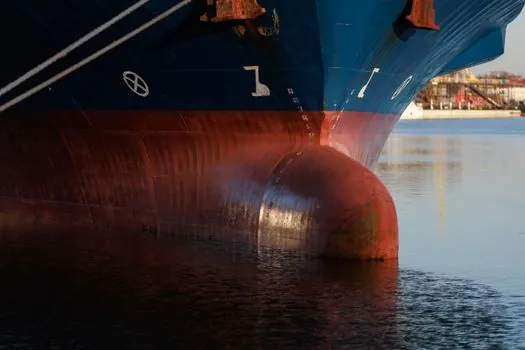
The IZS / epoxy / PU stack and its variants fit the typical marine engineering asset: fixed offshore platforms, jack-up legs, port cranes, sheet-pile quay walls, and the atmospheric hull of a commercial vessel. It is not a fit for stainless-steel or copper-nickel piping, where coating is generally unnecessary and a different corrosion allowance philosophy applies; it is also not a fit for potable-water tanks, where NSF/ANSI 61 or equivalent drinking-water approvals override generic marine ratings. [S5]
Engineers specifying for inland waterway, harbour craft, or shipboard marine HVAC condensate pans and ductwork should treat those as a separate sub-environment: the same primer-midcoat-topcoat logic applies, but the topcoat may need higher chemical resistance to glycol condensate and the substrate is often galvanised rather than carbon steel, which changes the primer from zinc-rich to a zinc-compatible epoxy or a vinyl wash primer. For new construction, the project's industrial adhesive and sealant schedule should be cross-checked against the coating compatibility list before final issue, because a polyurethane sealant applied over an incompatible epoxy can soften the topcoat at the bond line.
Track these signals over the next planning cycle: the IMO PSPC type-approved ballast tank system list (annual revision), ISO 12944-2 corrosivity zone mapping updates for new offshore wind regions, and the publication of any new revision to NACE SP0108 / AMPP SP2108 for corrosion-control of fixed offshore structures, each of which can shift a borderline system across the spec/no-spec line on a project currently in design.
For related coverage, see Slewing Drive Selection for Packaging Lines: Torque, Ratio, and Sealing Logic.