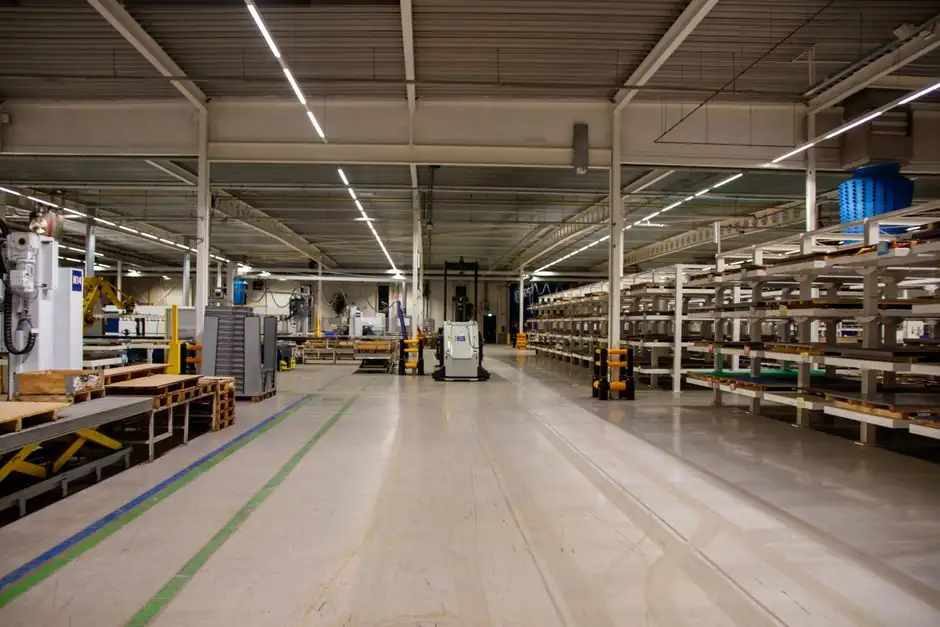
Automotive parts warehousing calls for a 2-ton class electric pallet stacker with a stand-on platform, AC drive and lift motors, and a lithium battery, the configuration called out as the industry standard for line-side delivery and parts inventory [S2]. Typical raw-material and WIP pallet weights in this segment fall in the 1.5–2.0 t range, and a 2 t rated load covers the vast majority of parts SKUs without under-utilising the truck [S2].
The selection problem is not whether to electrify, since electric walkie and stand-on stackers are now the default in 3PL, manufacturing, and parts operations, but which sub-class of pallet stacker matches the duty cycle, aisle width, and lift height of a given plant [S1][S2].
What Counts as a Pallet Stacker in the Automotive Context
A pallet stacker combines the mobility of a pallet truck with the vertical lift of a small forklift, normally capping out at roughly 6 m of lift height for standard units and around 2 t of rated load [S1][S9]. The Linde line illustrates the envelope: pedestrian and platform stackers in the L06–L16 AC family cover 0.6–1.6 t at compact chassis widths, while the L10–L12 range pushes toward 2 t with a narrow chassis and clear mast view [S4].
General-purpose stackers are commonly rated from 800 kg up to 2000 kg in modern OEM catalogues, with mast heights from about 1.6 m to 6.0 m depending on model [S1][S4]. Lighter units around 600 kg exist for small-line replenishment, but they are not the workhorse of an automotive finished-goods flow.
Selection Criteria for Automotive Parts Operations
Five numbers drive the spec: rated load, lift height, aisle width, pallet type (stringer vs block, open vs closed bottom), and daily throughput in pallets per shift [S1]. For automotive parts, raw-material pallets typically run 1.5–2.0 t, which is why a 2 t class is the most commonly specified [S2].
Duty cycle matters as much as peak load. The automotive benchmark is multi-shift continuous operation, which favours AC drive motors (0.9 kW class for traction) and AC lift motors (2.2 kW class) over legacy DC designs because AC supports frequent start-stop cycles with reduced maintenance downtime [S2]. Lithium battery fast-charging is now the default energy storage for 2-shift and 3-shift plants because opportunity charging during breaks removes battery-swap infrastructure [S2].
Aisle geometry is the third hard constraint. Straddle-leg stackers with adjustable baselegs accommodate multiple pallet sizes, but require a wider working aisle; counterbalanced walk-behinds (e.g. Linde L06–L16 AC) have no outrigger legs, so they can drive flush up to machinery and racks, at the cost of a longer, heavier chassis [S4][S5]. Plants running narrow-aisle pallet rack systems often choose stand-on stackers with a folding platform, which gives a shorter overall length than a rider stand-on but a more stable operator position than a pure walkie [S1][S3].
Comparing the Three Realistic Sub-Classes
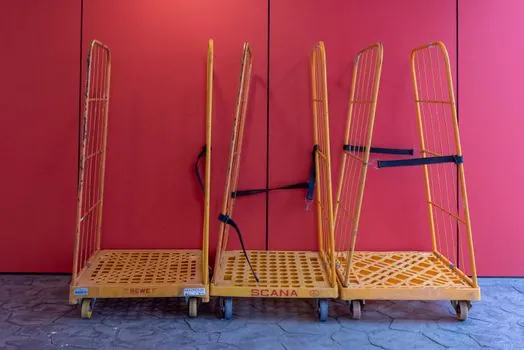
For automotive parts, the realistic options line up as: (a) pedestrian/walkie stacker, (b) stand-on stacker with folding platform, and (c) counterbalanced walk-behind. On four criteria, the comparison reads as follows, drawn from the same OEM data set. [S5]
Load capacity: walkies and stand-ons are typically rated 1.0–2.0 t; counterbalanced walk-behinds cover a similar 0.6–1.6 t band in the Linde L06–L16 AC family [S4]. Lift height: standard masts reach 1.6–3.0 m; duplex and triplex masts extend to 4.5–6.0 m for pallet rack applications [S2]. Aisle footprint: straddle and stand-on models need roughly 2.0–2.4 m of right-angle stacking aisle with a 1.2 × 1.0 m pallet; counterbalanced units can work slightly narrower because there are no outrigger legs but they are physically longer [S4][S5]. Best-fit use case: walkies for low-frequency replenishment, stand-on for line-side delivery in 3-shift plants, counterbalanced for mixed-fleet workshops where the stacker has to drive into a machine line [S1][S2][S4].
Who the 2-Ton Stand-On Stack-on Fits, and Who It Does Not
It fits plants with line-side delivery of automotive parts at distances up to a few hundred metres, multi-shift duty cycles (2-shift or 3-shift), and aisle widths of roughly 2.2–2.6 m around pallet rack installations up to about 4.5 m high [S2]. For battery choice, lithium is the right call when opportunity charging is available across a long shift; gel batteries remain the lower-cost option for single-shift stable operations in wholesale and 3PL flows [S2].
It does not fit operations that need to lift beyond about 6 m, where a stacker crane or reach truck becomes the right answer; nor does it fit very low-volume shops where a manual or semi-electric stacker is the lower-cost choice [S1][S9]. A related sister piece on pharma distribution walks through cleanroom and hygiene constraints in detail and is a useful parallel read when the same plant runs a parts line and a pharma-adjacent cell Pallet Stacker Selection for Pharma Distribution: Payload, Lift, and Cleanroom Match-Up.
Limitations and Failure Modes in Real Plants
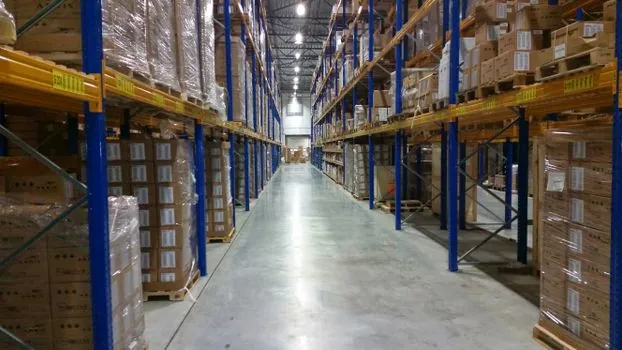
Three failure modes show up repeatedly in automotive parts stacks. First, under-specifying load capacity: 1.0 t or 1.2 t walkies get purchased to save cost, then run at 80–90% of rated load continuously, which shortens lift-motor and mast-roller life. Second, ignoring mast height: a 3.0 m simplex mast will not reach the second beam of a standard 4.5 m rack, so plants end up stacking pallets on the floor in violation of rack-load planning. Third, mixing pallet types: a straddle stacker set up for a 1200 × 800 mm automotive pallet will not pick a 1219 × 1016 mm North-American spec pallet without re-shimming the baselegs [S1][S5].
For duty cycles above 200 pallets per shift, the equipment class shifts toward ride-on stackers or stand-on units with suspended platforms, with single stacking cycle times of around 30 seconds as a realistic throughput target [S2]. Plants that need to coordinate stacker moves with conveyor or stacker crane flows should plan the stacker fleet around the WMS/WCS handshake rather than around truck-by-truck features.
Sourcing, Standards, and Trackable Signals
OEMs with publicly published automotive-relevant 2 t class line-ups include Linde Material Handling (L06–L16 AC, L10–L12, L10–L12 AS straddle), Toyota (BT Staxio HWE100/HWE100S light pallet stackers), Raymond (6210 Walkie, with adjustable baseleg design), and Cat Lift Trucks (double-pallet handling variants) [S3][S4][S8]. Lithium-battery fast-charge and AC drive are the converging technology choices across these lines for new automotive deployments [S2][S3].
Two signals to watch over the next 12 months: the migration of stand-on 2 t stackers from gel to lithium as default battery in mid-tier OEM catalogues, and the spread of telematics-driven load-weight indication (analogous to Linde's Load Management assistance system) into mid-priced non-premium lines [S4]. For related reading on adjacent electric-truck duty cycles and racking strategies, the air-cargo spec map and the port-logistics duty-cycle piece both translate the same load/lift/battery decision tree to higher-throughput environments Electric Pallet Truck Spec Map for Air-Cargo Terminals and Electric Pallet Truck Specs for Port Logistics: Capacity, Duty Cycle, and Power.