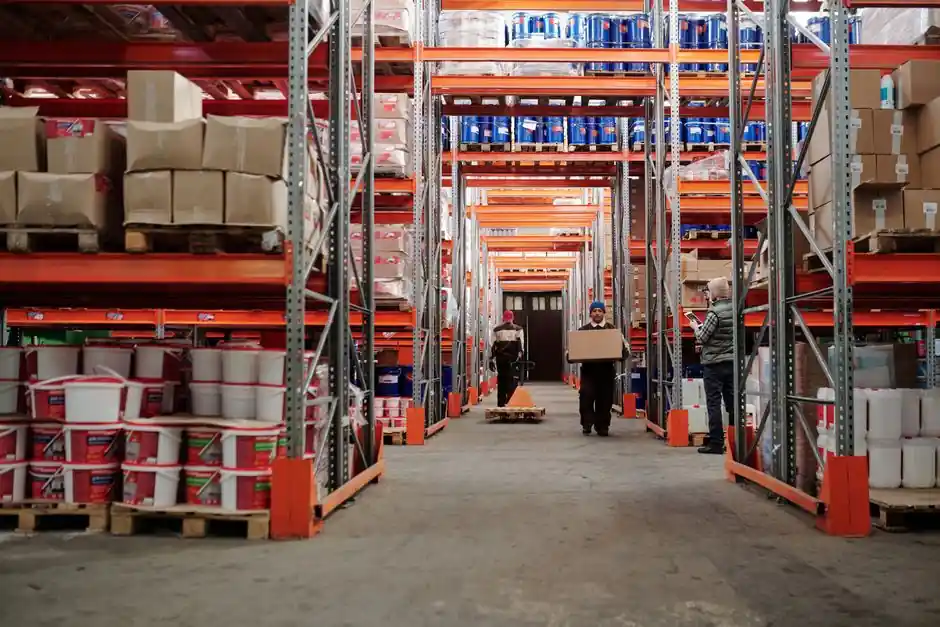
Air-cargo terminals running 24/7 ULD build-up and break-down cycles need electric pallet trucks in the 1,500–3,500 kg rated-capacity band, the same envelope that covers most narrow-body and wide-body ULD loads moving at floor level [S4].
Rental fleets in the U.S. industrial market now offer electric pallet jacks at 4,000 lb, 5,000 lb (hydraulic), 6,000 lb, and 8,000 lb tiers, with the 6,000 lb (~2,720 kg) Electric 6K specifically positioned for heavy-duty warehouse and distribution transport [S5]. For ramp and warehouse zones, the spec is no longer just capacity; turning radius, brake class, battery chemistry, and hazardous-area zoning carry equal weight in the decision matrix.
Capacity Classes and Where Each One Fits a Cargo Flow
Battery-powered pallet jacks cover 1,500–3,500 kg across most OEM model lines, while manual hydraulic pallet jacks span 2,000–5,000 kg, and stainless-steel variants run 2,000–3,000 kg for corrosive or hygienic environments [S4]. On the air-cargo floor, that bands cleanly: a 2,500 kg rated unit (such as the i-Lift AC25S or AC25L with 1150 mm or 1220 mm forks) handles standard 88"×125" GMA and 96"×125" igloo pallets comfortably, while 3,000 kg units (AC30S or AC30L) absorb the overage from heavier ULD subassemblies and engine dollies [S3].
Going beyond 3,000 kg on a single-mast electric pallet truck is rarely the right answer, because anything heavier usually means vertical lift, and a forklift or reach truck becomes the correct tool [S1]. A 6,000 lb (≈2,720 kg) Electric 6K rental unit hits the practical sweet spot for high-throughput air-cargo warehouses needing short-to-medium-distance moves, with compact dimensions for narrow-aisle navigation [S5].
ULD Geometry, Aisle Width, and Fork Dimensions
Fork length options of 1150 mm and 1220 mm, paired with overall fork widths of 540 mm or 680 mm, define the standard sizing matrix for both 2,500 kg and 3,000 kg manual trucks, and the same envelope carries over to the electric variants in this class [S3]. Minimum fork heights of 75 mm or 85 mm matter on ramps and cargo rollers, where a 75 mm low-profile unit can pick up dollies and ULD bases that have settled under load.
Air-cargo terminals running automated guided vehicle (AGV) lanes or container dollies should match the truck's turning radius to the lane width before any capacity discussion, because a 3,000 kg unit that physically cannot turn in a 2,800 mm aisle is a non-starter regardless of rated load. For very low-clearance ULD platforms, low-profile pallet trucks in the 1,000–2,000 kg manual class can be specified, although most electric air-cargo work does not require that envelope [S4].
Power Source, Battery Runtime, and Brake Class
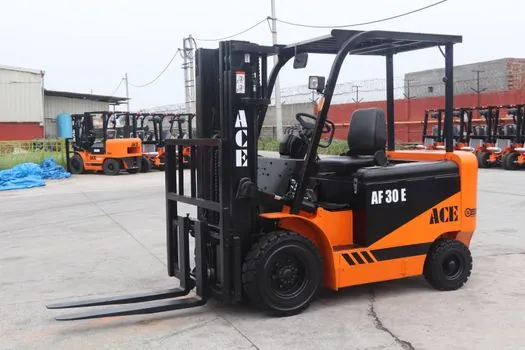
Electric pallet movers use a battery-powered motor to drive the wheels and, in most modern units, to lift the forks as well, with operators controlling direction and speed through a handle-mounted head [S1]. For air-cargo shift patterns, lithium-ion battery options have largely displaced lead-acid in new tenders because opportunity charging during 15-minute break windows is the dominant operating mode.
Brake class is the silent killer of air-cargo specifications: an electric pallet jack specified for indoor warehouse duty usually carries an electromagnetic parking brake only, while ramp-duty units near the aircraft stand need a fail-safe dynamic brake plus a grade-hold function. Net weight also matters when an empty truck has to be manually pushed off a ULD roller track: 2,500 kg-rated manual units come in around 75–78 kg, while 3,000 kg units run 78–81 kg, and that 3 kg delta changes operator fatigue over an 8-hour ramp shift [S3].
Hazardous-Area Zoning: ATEX and IECEx for Fuel-Vent Envelopes
Within 3 m of a fuelled aircraft, or inside a GSE refuel point, the electric pallet truck must be specified to ATEX or IECEx for the gas group present, typically Zone 2 for routine ramp operations and Zone 1 for hot refuel panels. Flameproof enclosure and surface-temperature class T4 or T6 are the typical sub-clauses invoked on the nameplate. [S3]
Specifiers should require Ex rating markings on the truck data plate and confirm that the battery compartment and motor housing carry the same certificate number, because mixed-certificate trucks are a common audit finding. The 2,000–3,000 kg stainless-steel class exists primarily for chemical and pharmaceutical hygiene, but the same stainless build also helps in fuel-vapour exposure on outdoor ramps where corrosion is a service-life constraint [S4].
Onboard Weighing for ULD Build-Up Verification
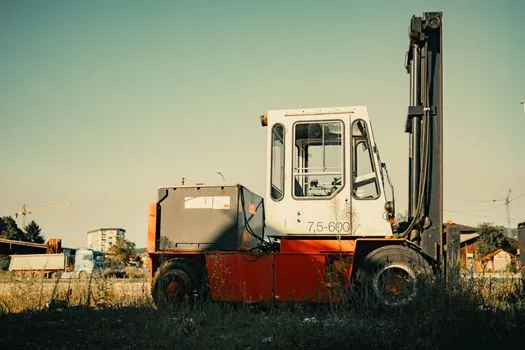
Mobile weighing technology lets the same electric pallet truck record a ULD's mass during the build-up move, transmitting it to a cab display via cabling or wireless link, which removes the separate floor-scale stop [S2]. The technology works by inserting load cells into the fork structure, and the same load-cell fork plate concept scales up to forklift trucks for high-accuracy work in recycling and invoicing scenarios.
For air-cargo operations, where weight-and-balance documentation drives load-sheet accuracy, an integrated scale truck is a process improvement that pays for itself in a single quarter at any hub moving more than 200 tonnes per night. The relevant decision point is whether the truck needs OIML or legal-for-trade accuracy for invoicing, in which case a calibrated weighing fork board is the spec, or whether a ±0.5% in-process indication is sufficient for load planning [S2].
Comparison: Electric Pallet Truck vs Forklift for Air-Cargo Work
The decision between an electric pallet truck and a forklift is functional, not hierarchical. An electric pallet mover is built for horizontal, ground-level movement, lifting the pallet just enough to clear the floor and transporting it across the warehouse or apron [S1]. A forklift adds vertical lift, raising pallets onto racks, into ULD storage stillages, or onto elevated truck decks [S1].
For air-cargo terminals, the typical split is: electric pallet trucks own ULD break-down, build-up, and feeder-line transport, while forklifts own pallet racking, elevated loading, and any vertical ULD staging above 1.5 m. Specifying electric where vertical lift is required is the most common over-spec, because it leaves the operator with no option to clear a stacked lane or stage a pallet onto a high-bay rack [S1].
Limitations, Failure Modes, and Out-of-Scope Operations
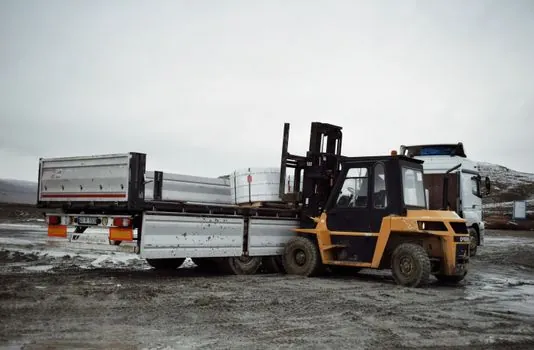
Electric pallet trucks are not designed for racking work, and any spec that pushes them into vertical-lift duty is a misuse that wears the mast and the load wheels within months, not years [S1]. Equally, manual hydraulic pallet jacks in the 2,500–3,000 kg class are a poor choice on long ramp runs, where the cumulative operator effort drives injury rates up and slows the cycle.
Battery temperature derating matters in unheated cargo sheds during winter: lead-acid capacity drops visibly below 5 °C, while lithium iron phosphate holds rated capacity down to -10 °C with a small cold-soak penalty. The other out-of-scope case is wet or washdown apron work, where only IP-rated or stainless-steel builds survive, and standard paint-and-zinc trucks will show corrosion inside 12 months. For terminals that move food-cargo or pharmaceutical tonnage, the related Electric Pallet Truck Specs for Food and Beverage criteria around hygienic build, capacity, and battery sealing apply directly, and the Electric Pallet Truck Spec for Pharma Distribution map covers the cold-chain overlay that some air-cargo hubs also need to handle. A broader foundation on the equipment class sits in the electric pallet truck reference page.
Trackable signals for the next procurement cycle: confirmation of lithium-iron-phosphate standardisation in OEM 2026 model-year releases, and any move by IATA's ULD Regulations (ULD Regulations 2026 edition) toward mandatory in-line weight capture at the build-up station, which would shift mobile-weighing truck specs from optional to standard.
Component reference pages worth checking: air pick, and electric actuator.