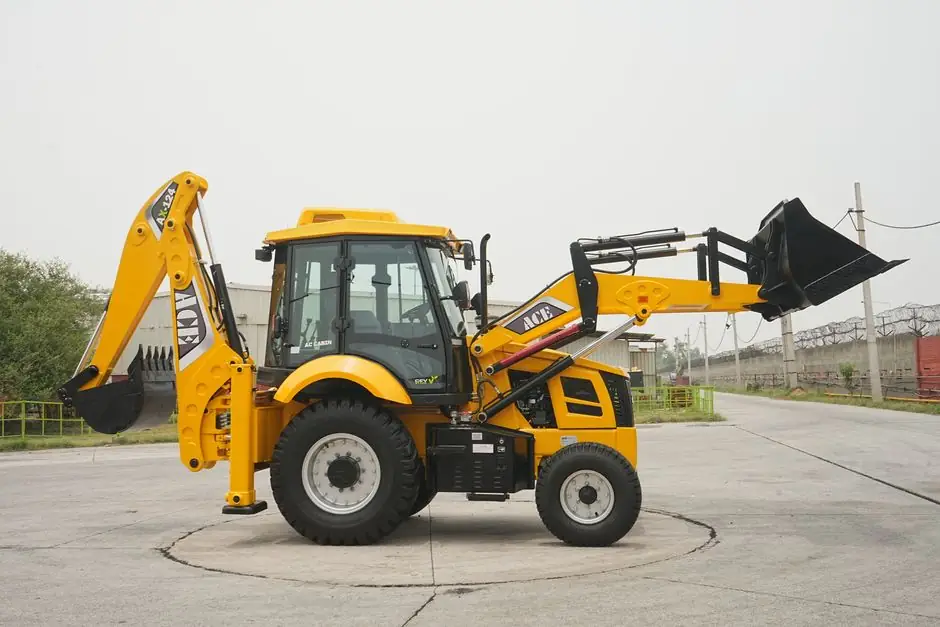
Backhoe loader safety is governed less by machine horsepower than by four pre-operable gates: a documented pre-shift inspection, seat belt and ROPS use, a 20 ft (6.1 m) clearance envelope from energized overhead lines, and a confirmed working backup alarm, with NCDOT SOP 12A-22 listing these as mandatory procedural steps [S1].
The hazard surface is wider than most operators admit: mount/dismount falls, backing struck-by events, silica-dust inhalation when cabs lose door-seal integrity, and rollover on uneven ground. The 20 ft rule, the seat belt mandate, and the never-work-under-a-raised-bucket rule are the three non-negotiables in any municipal or DOT SOP [S1]. For a broader view of the machine class itself, see the backhoe loader reference.
Pre-Shift Inspection and Required PPE
Operators must perform a documented pre-operational check and be familiar with the manufacturer's manual before any unsupervised use, with all defects reported and the machine taken out of service until repaired [S1]. Required PPE on a typical DOT job is a safety vest, safety shoes, hard hat, and safety glasses, selected from a job-specific hazard review rather than a generic checklist [S1]. Field practice expands this set: ear protection for sustained cab noise, gloves for grip on hydraulic controls, and steel-toed boots against crushing foot injuries, with all items inspected for wear and replaced when degraded [S3].
Visibility checks belong inside the pre-shift pass: windshield, wipers, side windows, and mirrors must be clean, and mirrors adjusted to deliver the largest possible rear view, because backing blind spots are a primary struck-by vector [S1]. The cab itself is part of the PPE envelope: it must be filtered, with functioning door seals and closing mechanisms plus working heating and cooling, and it must be wet-cleaned when dust loads accumulate, since silica-dust exposure is a documented chronic hazard for operators [S1]. For comparison with other compact iron that shares these visibility and PPE requirements, the wheel loader operating envelope follows the same logic at a larger mass class.
Mounting, Controls Familiarization, and Maintenance Logging
Mounting and dismounting must use the steps and handholds provided; jumping from the machine is prohibited because the most common lost-time injury on this class is a fall during egress [S1]. Before any production work, the operator is expected to read the model-specific manual, since control layouts differ between manufacturers, and to practice lever, pedal, and switch functions in a controlled area with both hands on controls [S3].
Routine maintenance is the second safety pillar: visual checks of hydraulic hoses, tires, buckets, and attachments for leaks, cracks, and loose bolts, plus fluid-level verification on hydraulic, engine oil, coolant, and fuel, all logged against the manufacturer's service schedule [S3]. A maintenance log is not paperwork theater: it creates a defensible record that the back-up alarm, fire extinguisher charge, and parking brake were verified on the day of any incident. For similar pre-shift discipline on a related machine class, the road roller daily inspection checklist follows the same pass/fail logic on tires, fluids, and alarms.
Power-Line Clearance, Backing, and Struck-By Rules
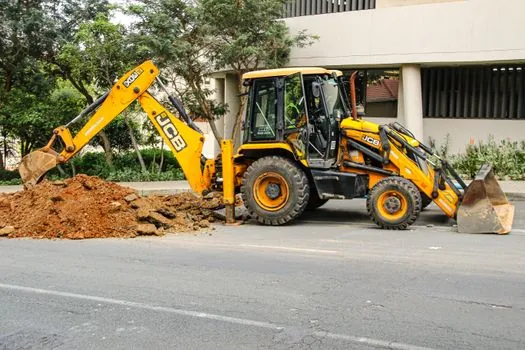
Do not operate the backhoe boom within 20 feet of an energized power line, with this distance treated as an absolute clearance envelope rather than a target, because arc-flash contact can occur without direct mechanical touch [S1]. Before any swing, the operator must clear personnel from the area, and stabilizers or outriggers must be fully set before backhoe work begins; only the operator is permitted on the machine during operation, and nobody may work under a raised bucket [S1].
Backing is the highest-frequency struck-by event: plan the work to minimize reverse travel, check behind the machine before every reverse move, use a ground observer when one is available, and confirm the back-up alarm is functional at the start of every shift [S1]. Parking is part of the same risk surface: choose the safest location, avoid other equipment's blind spots, and never leave the machine unattended with the engine running, since shut-down plus parking brake is the documented unattended state [S1]. Transport between sites calls for a trailer wherever practical, with swing and boom locking pins engaged and four independent tie-downs plus a chain or strap across the lowered bucket [S1].
Slope Work, Trenching Pre-Reqs, and Cab Sealing
On slopes, swing the bucket in the uphill direction for dumping and keep the loader bucket low while moving, because a high bucket raises the center of gravity and the rollover threshold drops sharply; loading areas should be selected as level as ground conditions allow [S1]. Before any dig, the operator must review the excavating, trenching, and shoring guidelines applicable to the jurisdiction, which in DOT work is chapter 11E of the workplace safety manual [S1].
Silica control sits inside the cab specification: the operator stays inside with the door closed, the cab is kept dust-free and wet-cleaned when needed, and door seals plus closing mechanisms must work with the HVAC system so that positive pressure can be maintained against dust ingress [S1]. Attachments are not left raised when the machine is parked: the SOP is to lower everything to the ground, because hydraulic creep can drop a suspended load onto a worker who has stepped into the swing radius [S1]. For procurement-side detail on a related machine category, the road roller spare parts guide covers the same hydraulic-hose and fluid-discipline logic at a different mass class.
Comparison: SOP Categories vs. Operator Action Triggers
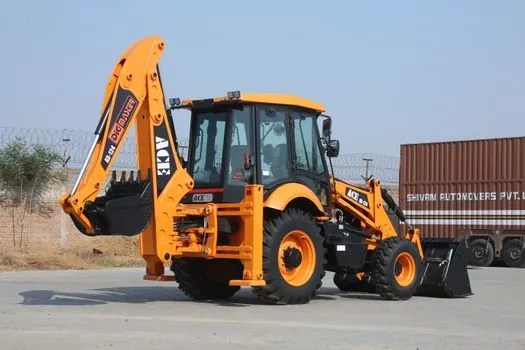
Four procedural categories dominate any backhoe loader SOP, and each maps to a specific operator action with a hard pass/fail trigger: (1) Pre-shift inspection, with trigger = defect reported and machine locked out until repaired [S1]; (2) Personal protective equipment, with trigger = vest, shoes, hard hat, and glasses worn plus hearing, gloves, and steel-toed boots where job-hazard review demands them [S1][S3]; (3) Clearance envelope, with trigger = 20 ft to energized lines, no personnel under raised bucket, and outriggers set before digging [S1]; (4) Slope and stability, with trigger = level loading area, uphill dumping, low loader bucket while traversing, and attachments lowered at park [S1]. The cab-sealing and door-closure requirement is the fifth trigger, and it is what separates a compliant DOT-class machine from a generic contractor unit [S1].
Standards, Documentation, and the Fire Extinguisher Pass
Documentation backs every rule: the operator's manual is the primary reference for controls and service intervals, the SOP adds site-specific overrides (silica, shoring, slope), and the maintenance log captures each pre-shift and service event [S1][S3]. Fire extinguishers on the machine are not optional: their location must be known, their charge verified, and the monthly inspection tag initialed, with the SOP using these checks as a routine readiness marker rather than an emergency-only item [S1].
The operator certification gate is the upstream control: supervisors shall verify that drivers are capable and qualified on each type of equipment before allowing unsupervised operation, and that gate is what makes every downstream rule enforceable [S1]. Two trackable signals to watch: revision updates to the workplace SOP itself (SOP 12A-22 is currently revision 2, dated August 2018) [S1], and any change in state-level OSHA excavating and shoring guidance that would flow into the chapter 11E reference cited in the SOP.
The underlying component specifications are covered under skid steer loader.