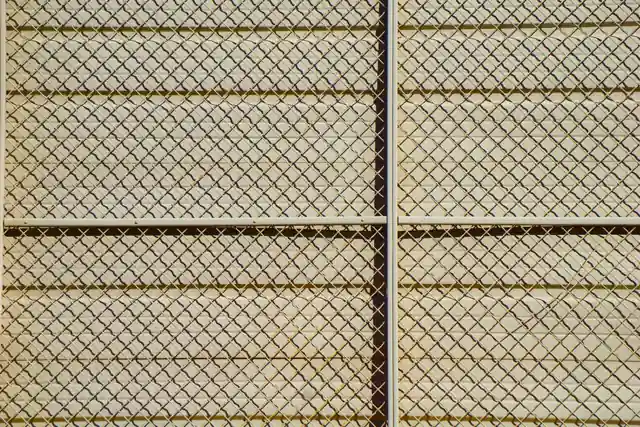
Balanced weave belts are built from alternating left-hand and right-hand wire spirals joined by a single crimped connector per spiral row, with welded edges, while flat wire belts are formed from straight flat wire strips interlocked by cross rods and driven by sprockets or pulleys [S2][S7].
Both belong to the broader mesh belt conveyor family, but their geometry, drive interface and mechanical limits diverge enough that a wrong choice typically shows up as edge unravelling, sprocket tooth wear, or premature belt stretch in the first 3-6 months.
Construction Geometry and How It Sets the Limits
Balanced weave uses helical coils, so the belt can flex around small terminal drums; Ashworth specifies a minimum drum diameter of 180 divided by the second count/CB number for friction-driven woven belts, which is what allows a tight-turn spiral freezer or cooling spiral layout [S2]. Flat wire belts, by contrast, are made from formed flat wire strips locked by hinge-style cross rods, and Keystone's flat-wire tech manual states they are driven by either a sprocket system or a pulley system, with internal welds on the strip joints [S7].
Because flat wire strips cannot coil, the minimum pulley diameter scales with strip thickness and pitch rather than mesh count; this is why flat wire is the default for long straight-run heavy loads and balanced weave dominates curved or reversing paths. The structural difference also shows up in lateral pitch tables: Ashworth lists balanced weave lateral pitches from 12 (min 3.00 in / 76.2 mm belt width) down to 144 (min 0.25 in / 6.4 mm belt width), showing how the same weave family can be tightened or coarsened by changing the cross-rod count [S2].
Open Area, Airflow and Drainage
Flat wire belts are specified when the application calls for an open mesh that allows efficient drainage and the flow of air, gases or liquids through the belt and around the product, which is the working definition used in flat-wire conveyor literature [S3][S7]. Typical flat-wire geometries reach 70-85% open area depending on wire width and pitch, which is why they are common in washing, coating, freezing and frying lines.
Balanced weave has a tighter, more uniform aperture pattern, and the open area depends on the relationship between wire diameter, spiral pitch and cross-rod pitch. For delicate or small products, double balanced weave uses paired spirals to allow closer spacing across the belt width, giving better product support while keeping airflow [S5]. The trade-off is real: as the mesh tightens, the live load the belt can carry per unit width drops because the smaller spirals have less cross-section to absorb tension.
Drive Selection: Friction vs Positive Sprocket

Balanced weave is most often friction-driven on flat-faced drums, which is the default arrangement called out in the selection guide: a roller drives the belt through contact with the mesh [S2][S5]. This means tracking depends on drum alignment, belt tension and edge condition, not on mechanical tooth engagement, so a balanced weave line is more forgiving of thermal expansion and stretch over time.
Flat wire belts accept positive sprocket drive, where sprocket teeth pass through the openings between flat wire strips and pull the belt positively with no slip [S3][S7]. Positive drive is required when the process demands exact indexing (e.g. inline frying, spray coating, or feeding a packaging machine) or when the belt is running on a long, inclined or heavily loaded section where friction alone would slip. A sprocket-driven flat wire belt will hold speed under wet, oily or high-load conditions that would force a friction-driven balanced weave to slip.
Load, Tension and Material Limits
Allowable tension for a balanced weave belt is dependent on mesh count and wire gauge, not a single published value, and the conveying surface is the full belt width up to a maximum of 216.00 in (5486.4 mm) for friction-driven woven belts [S2]. Double balanced weave provides a stronger edge and more coverage than standard balanced weave, but the cost rises because more material is used, which is the explicit caveat in Wire Mesh Belt's catalogue entry [S3].
Material temperature ceilings drive the alloy decision: carbon steel tops out near 1000 deg F (538 deg C), stainless steel reaches 2050 deg F (1121 deg C), and Inconel 601 is rated to 2200 deg F (1204 deg C) in the Ashworth woven-belt specification table [S2]. Flat wire belts in stainless are typically held to the same austenitic-stainless envelope, but because flat wire is often used in washdown food lines, 304 and 316 stainless are the two grades most commonly considered; 316 is preferred when chloride-bearing cleaners or salt-bearing product are present [S5].
Decision Matrix: Pick by Application, Not by Habit
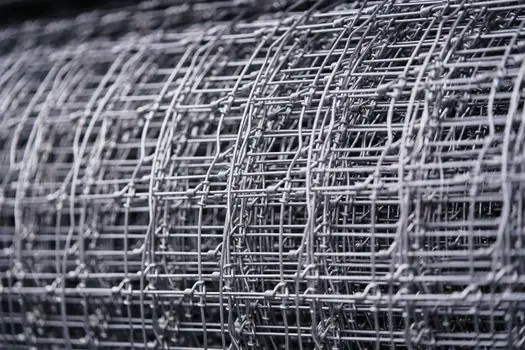
For a small-radius spiral freezer, a frying or coating line with indexing, or a long straight wet line where drainage matters, the natural pick is a sprocket- or pulley-driven flat wire belt because of the positive drive and the high open area [S3][S7]. For a reversing, flexing, or accumulating conveyor carrying delicate bakery, snack, or small-parts loads, a friction-driven balanced weave in 304/316 stainless is the conservative choice, and double balanced weave should be specified when product retention at small openings matters more than peak tension [S2][S5].
For furnace or heat-treatment service above 1000 deg F (538 deg C), carbon steel balanced weave is excluded, and the choice collapses to stainless steel balanced weave (up to 2050 deg F / 1121 deg C) or Inconel 601 balanced weave (up to 2200 deg F / 1204 deg C); flat wire is rarely specified in this temperature class because strip-formed flat wire loses stiffness faster than round-wire spiral coils [S2]. Cost-wise, balanced weave in standard spirals is generally more economical than equivalent double balanced weave or flat wire, especially at common mesh counts, which is the working assumption used in belt-supplier catalogues [S3].
Edge, Tracking and Maintenance Notes
Balanced weave edges are normally welded, with optional relieved and turned-up guard edges, or relieved and reinforced turned-up guard edges where hairpin reinforcements are inserted into disconnected spirals to stiffen the edge against curl [S2]. Tracking is handled at the conveyor level: Ashworth recommends its Model 1 or Model 2 control system to keep the belt centered on the terminal drums and prevent the belt from contacting the oven framework, a practical detail that matters more than mesh choice once the line is running [S2].
Flat wire belt tracking is set by sprocket alignment and tension, and because the cross rods are the only wearing hinge, edge unravelling is the dominant failure mode when a flat wire belt is mis-tensioned or run on a pulley that is too small for the chosen pitch [S7]. Both belt types share the same upstream rule: maximum recommended opening is 75% of minimum product size, a sizing rule of thumb that prevents small parts from catching in the mesh and either damaging the belt or the product [S2].
One trackable signal for the next buying cycle: suppliers are still publishing the same standard balanced weave versus flat wire distinction without a new family entrant in 2026 catalogues, so spec sheets older than five years remain representative for design, and any new decision should be driven by the four variables above (drive type, open area, load, temperature) rather than by a newly launched product line.