
Ball spline accuracy is assigned to the spline nut and divided into normal (N), high (H), and precision (P) grades, with tighter grades specifying lower angular runout [S1][S5].
Use normal grade for ordinary positioning, high grade for tighter repeatability, and precision grade where angular error directly affects the process or product.
Accuracy grade selection by operating requirement
The first decision is not the grade name but the permissible angular runout of the nut at the specified inspection positions. Thomson identifies accuracy as a property of the spline nut and separates it into N, H, and P classes [S1].
Normal grade suits mechanisms where the primary requirement is load capacity, travel, and economical installation rather than minimum angular error. High grade is appropriate when the nut must return to a repeatable angular position after reversing direction. Precision grade is the defensible choice for high-accuracy positioning, robots, automation, and applications combining rotary and linear motion [S1][S3].
The supplier’s inspection method matters. NB measures spline accuracy at defined points and identifies its series as high grade or precision grade, marked by a blank designation or P designation respectively [S4]. Grade labels are therefore not interchangeable across manufacturers unless the underlying numerical limits and inspection conditions are comparable.
Normal versus high versus precision tolerances
Across the main options, normal grade prioritizes manufacturing economy, high grade reduces angular runout for better repeatability, and precision grade applies the tightest control where angular positioning directly determines performance [S1][S5].
Normal (N) is the baseline accuracy class in the three-grade system. It does not mean rough, untoleranced manufacture; it means the nut is manufactured to the standard accuracy range. High (H) adds a tighter tolerance class, while precision (P) is the tightest class in that system [S1][S5].
Accuracy must be evaluated together with the ball spline’s mechanical configuration. The grooved shaft carries linear travel and torque through the spline nut, while the rolling elements transmit load between the shaft and nut [S1][S4]. A precision-grade nut does not correct a bent shaft, poor bearing support, contaminated lubricant, or a housing bore that is out of position.
For related guidance on how rolling-element circuits affect force and stiffness, see single versus double ball circuit nut design. This comparison is useful when the accuracy grade is fixed but the ball-circuit architecture still needs selection.
Preload, torque, and positional error

Preload removes clearance between the balls and spline grooves, improving rigidity, positioning accuracy, and response to small shaft rotations, while excessive preload raises rolling friction and accelerates wear [S3].
Angular backlash occurs when the nut and shaft can move relative to each other before the balls fully engage the groove geometry. Preload forces that movement out of the clearance region, so even a high-accuracy spline can perform poorly if the installation is not preloaded correctly [S3].
Torque capacity depends on the number of shaft grooves and the number of ball contact points in each groove. The shaft uses three rows of load grooves with Gothic-arch geometry and a 30° angular contact angle, allowing the grooves to withstand clockwise or counterclockwise torque while increasing service life and rigidity [S5]. This geometric selection is independent of the N, H, or P accuracy designation.
Use the accuracy grade to control angular error, and use groove geometry, preload, shaft diameter, and nut support to control load capacity and stiffness. A precision nut installed on an undersized or lightly supported shaft will not deliver a proportional increase in usable accuracy.
Fit, alignment, and mounting constraints
Flanged and cylindrical nuts solve different installation constraints. A flanged nut mounts through a flange and requires a rough bore plus tapped mounting holes, while a cylindrical nut uses a key and requires a matching keyway in the housing or block [S1]. Either configuration can be precision-graded, but mounting alignment determines whether that grade survives installation.
Failure modes and operating limits
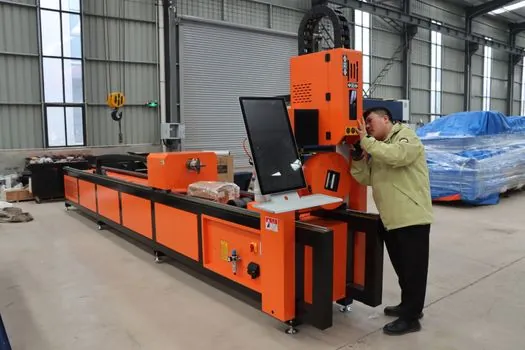
Misalignment, inadequate lubrication, excessive preload, contamination, and overload can defeat a specified accuracy grade by increasing friction, wear, or angular error [S3].
Speed cannot be selected from the N, H, or P label alone. The allowable rotational speed depends on the spline geometry and operating conditions, so the manufacturer’s shaft-size table should be checked for the selected load, speed, lubrication method, and duty cycle [S4].
Precision-grade components also need realistic contamination control. NB notes that matching raceway grooves to the ball elements creates a large contact area, supporting load capacity and travel life, while rolling-element retention simplifies assembly and prevents balls from falling out of the nut [S4][S5].
Preload creates a deliberate balance: it reduces clearance and assembly deformation, but higher ball force increases rolling friction. Select the lowest preload that meets the required rigidity and repeatability, then verify life and allowable speed using the manufacturer’s calculation method [S3][S4].
Application-specific recommendations
For a robot actuator with direct rotary positioning, use precision (P) when angular repeatability governs tool alignment, use high (H) when the machine needs better reversal behavior without the tightest grade, and use normal (N) when cost and basic positioning dominate [S1][S3].
For transport equipment, wire winding, and automatic tool changing, normal or high grade can be sufficient when torque transmission, service life, and compact mounting outweigh sub-degree positioning requirements. These are established ball-spline application categories [S5].
For a machine-tool feed axis requiring continuous rotary drive and precise axial travel, compare a ball screw with a spline on function, not name. A ball screw is normally selected when the requirement is driven axial feed and positioning, while a ball spline is selected when a rotating nut must translate linearly or when torque must pass through the spline [S3][S4].
For a purchased assembly, require the grade code, allowable angular runout, inspection points, preload condition, shaft diameter, usable stroke, allowable speed, and mounting tolerance on the purchase specification. That prevents a supplier’s proprietary “precision” label from replacing an enforceable numeric requirement.
Close the specification by recording the selected N, H, or P grade and the numeric angular-runout limit in the assembly drawing, then validate it at assembly by checking mounting alignment, preload, lubrication, and rotational repeatability.