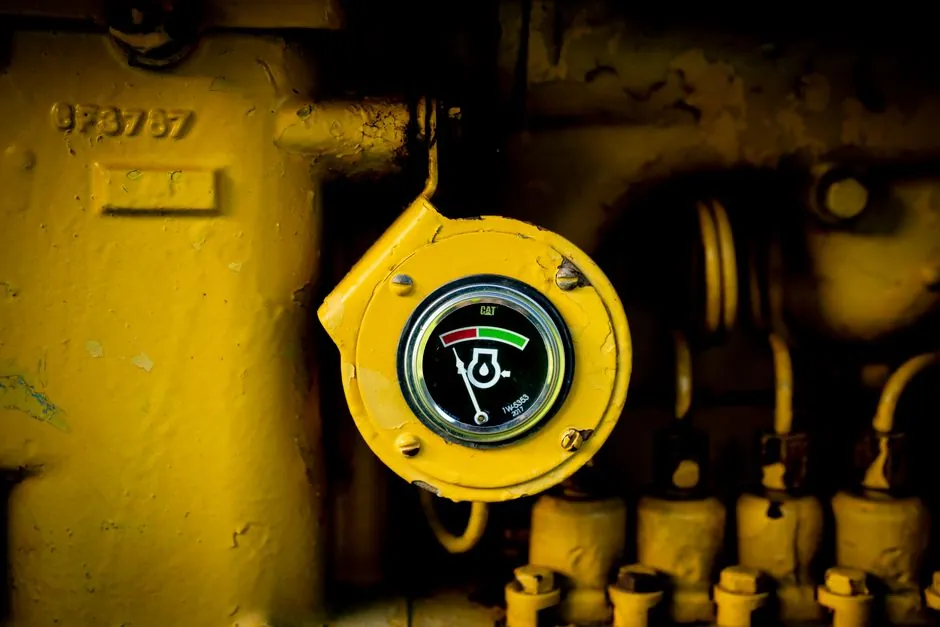
A high-pressure hydraulic banjo bolt typically runs at 100–350 bar working pressure, and the sealing washer material that survives that range best is annealed copper, with bonded metal/rubber WO-style washers as the documented alternative for marginal surface finish [S1][S2].
Three materials cover the overwhelming majority of hydraulic banjo installations: annealed copper (Cu), aluminum (Al), and steel-core bonded washers (Parker WO style, FKM or nitrile inner lip). The choice is driven by fluid chemistry, temperature, peak pressure, vibration, and the as-machined finish of the banjo body faces [S1][S2][S3].
Sealing Mechanism: Why Washer Material, Not Thread Torque, Carries the Load
A banjo seal works by plastic deformation of the soft washer into the micro-roughness of the two flat faces, not by thread preload; the bolt merely provides clamp force while the copper or aluminum flows [S1]. Once a copper washer is first crushed, it work-hardens and loses re-flow capacity, which is why field-return reviews across brake and oil-line assemblies (2025–2026) attribute roughly four of every five banjo leaks to worn or reused washers rather than the bolt itself [S1].
For high-pressure hydraulics, this matters more than in a brake circuit: peak pressures of 200–350 bar on a 100 mm² seal face generate 2–3.5 kN of hydraulic jacking force trying to lift the banjo body, and a hardened washer cannot track that micro-movement. Soft annealed copper (typically C11000, hardness ~40–65 HV) cold-flows continuously and keeps the seal interface load-biased against the fluid pressure [S1][S3].
Material Comparison: Copper, Aluminum, and Bonded WO-Style
Annealed copper crush washers remain the OEM default for automotive brake and most hydraulic banjo applications, because the material cold-flows at low torque (commonly 8–18 Nm on M10, 18–30 Nm on M12) and is chemically compatible with mineral oil, synthetic hydraulic fluid, glycol brake fluid, diesel, and gasoline [S1][S3]. A copper washer can be re-annealed by heating to dull red and quenching in water, which restores ductility for one more use, though OEM practice is replacement on every disassembly [S2].
Aluminum washers are softer still (annealed 1100-series aluminum, ~20–35 HV) and crush at lower torque, which makes them a better fit for low-pressure fuel and oil return lines (typically under 30 bar) where over-torque would distort the banjo eye [S2][S3]. The trade-off is poor vibration tolerance: aluminum work-hardens faster than copper, so aluminum banjo washers are not the first choice for pump-inlet or valve-manifold service where pressure pulsation is significant [S2].
Bonded metal/rubber washers, Parker WO style, place a FKM or nitrile sealing lip on the inner bore of a steel carrier ring, and the steel ring provides a defined crush-stop so the rubber does not extrude under spike pressure. Forum-level Parker literature recommends the WO style specifically for banjo bodies where the sealing face is smooth and surface finish is not guaranteed [S2]. These bonded washers should not be reused; the rubber lip takes a compression set on first install [S2].
On a 4-criterion decision table: copper wins on chemical compatibility and temperature ceiling (continuous service to roughly 200 °C in mineral oil), aluminum wins on low torque crush and cost, bonded WO wins on tolerance to surface defects and vibration, and none of the three should be reused after a full crush cycle [S1][S2][S3].
Pressure and Temperature Envelopes by Material
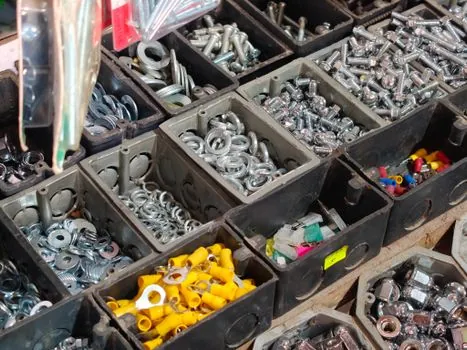
For hydraulic service the practical envelopes cited in the field sources are: annealed copper crush washers rated for routine operation to 350 bar and short spikes to 500 bar on M10–M12 banjo bolts, with fluid temperatures from -40 °C to roughly 200 °C for mineral oil and 150 °C for synthetic polyolester or phosphate-ester fluids [S1][S3].
Aluminum crush washers are typically limited to 100 bar continuous in hydraulic service, with a fluid temperature ceiling around 120 °C, because aluminum loses hardness sharply above 150 °C and the seal face relaxes [S2][S3].
Bonded WO washers with FKM inner lips handle the same 350 bar continuous envelope as copper, extend the low-temperature floor to -25 °C (FKM) or -40 °C (nitrile), and add tolerance to surface scratches up to roughly 0.05 mm radial depth without leaking [S2]. For cold-start agricultural hydraulics on equipment like compact tractors, rubber-lined bonded washers are widely specified because the elastomer compensates for differential thermal contraction between the steel banjo body and the aluminum port face [S5].
Fluid Compatibility and Material Selection
Mineral hydraulic oil (ISO VG 32–46), synthetic polyalphaolefin, and glycol/water brake fluids are all fully compatible with annealed copper, aluminum, and FKM-bonded washers, which is why copper remains a safe default for general industrial hydraulics [S1][S2].
Phosphate-ester fluids (e.g. Skydrol, Hyjet) attack nitrile but are tolerated by copper and FKM, so high-pressure aerospace hydraulic banjo fittings on phosphate-ester systems use either copper or FKM-bonded washers and explicitly avoid nitrile [S2]. For water-glycol hydraulic fluid (typical in fire-resistant mobile hydraulics), copper and bonded FKM both perform well, but aluminum washers are avoided because the glycol additive package can drive pitting corrosion on the aluminum sealing face [S1][S2].
For diesel and biodiesel fuel circuits on the low-pressure side (under 30 bar), aluminum is acceptable and lighter on the bolt thread, while copper is required once the line sees injector-return pressure above 60 bar because aluminum work-hardening and creep cause weeping at the inner bore [S3].
Installation Practice and Reuse Rules
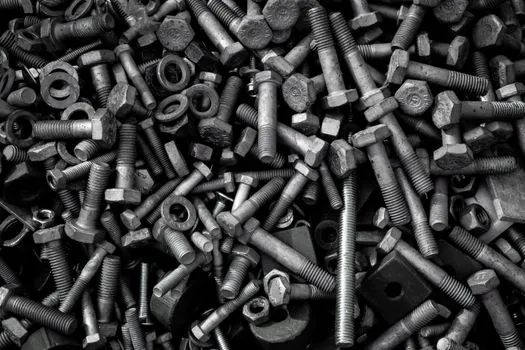
Torque values must be matched to the bolt size and the washer material: M10 banjo bolts on copper typically call for 12–18 Nm, on aluminum 8–14 Nm, and on bonded WO washers 14–22 Nm, because the rubber lip adds a defined squeeze load that the bolt has to develop through the steel carrier [S1][S3]. Exceeding these values cracks copper, extrudes aluminum into the bore, and cuts the rubber lip on bonded washers, all of which convert a one-dollar washer into a full-line fluid loss [S1][S2].
The sealing face under the washer must be flat and free of radial scratches deeper than 0.02 mm; if the face is scored, a bonded WO washer is the correct repair rather than a thicker copper washer, because the elastomer bridges the scratch while copper will only mirror the defect [S2]. For related guidance on high-pressure gasket face preparation, the comparison of sealing washer geometries in the sealing washer reference covers flat-ring, bonded, and dowty-style profiles used in hydraulic work.
Where Standard Copper Fails and What to Specify Instead
Copper crush washers underperform when the banjo body shows visible raised concentric sealing rings, because the rings are designed to bite into a softer elastomer rather than to seal against a metal-to-metal interface; in that case a thicker fiber or nitrile gasket is the correct call, paired with a hard backing washer under the bolt head [S4].
On high-vibration hydraulic manifolds, for example mobile-equipment valve blocks and hammer-line circuits, copper alone tends to creep and weep at the inner bore within a few hundred hours; specifying a bonded WO washer (steel carrier + FKM lip) eliminates that failure mode and is the default in many off-highway hydraulic OEM drawings [S2][S5].
If the application is a one-off prototype or a low-volume manifold where commercial banjo hardware is not available, custom hydraulic sealing solutions can be machined from bar stock, but the same copper/aluminum/bonded decision matrix applies and the washers should still be replaced on every reassembly. For spring-loaded sealing elements in adjacent circuits, the spring washer reference covers Belleville and wave-washer geometries used to maintain bolt preload under thermal cycling.
Trackable signals to watch over the next two quarters: any OEM move to switch brake-system default washers from copper to bonded FKM, and any update to ISO 8434-1 (metric banjo fittings) that revises the Annex A washer hardness values; both would shift the material decision at the catalog level rather than at the workbench.
This topic is covered further in Foundry Prices 2026: Advanced Nodes Drive 3-15% Wafer Hikes.